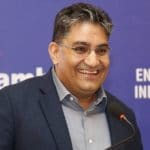
“We ensure zero rejection in Radcom's components

Radius Industries has been in the business of components for a decade, offeriing active and passive electronic components under their own brand name—Radcom. Its team of technical specialists and engineers ensure quality and reliability of its range. The company provides component solutions to a range of industries like communication, power electronics, consumer electronics, lighting solutions, to name a few.

Amidst the growing competition in the semiconductor industry and the recent market fluctuations, Radcom has built a place for itself in the semiconductor business. In a conversation with Nitasha Chawla of Electronics Bazaar, MS Bindra, president, Radius Industries, shares his view on China’s advantage over India and what Radcom offers to its customers.

EB: What is the USP of brand Radcom? What edge does it have over other semiconductor component brands?

The USP of our brand is consistency and quality. We make sure that we don’t compromise on our quality standards even if we are taking a beating due to fluctuations in the market. Also, to ensure that ourcustomers get nothing but the best in quality and zero rejection in Radcom’s components, we have set up our own in-house testing facilities in New Delhi. The testing facilities have been installed with CNC (computerised numerically controlled) diode testing machines, capacitor testing machines, computerised transistor testers, temperature profilers and various other machines.

EB: What has the Radius’ growth rate been in the last two years?

- Advertisement -

The company has been growing at a rate of 10-15 per cent year on year.

EB: What are your plans with respect to expansion? Any tieups planned for the future?

We would like to have our own production unit in India in the future. Regarding tieups, there are no plans as of now.

EB: Why is it more cost effective to manufacture in China than India?

China has an advantage over India mainly because of the high volumes it can produce, which has been possible because of their government support and policies, its low power cost, good infrastructure and a proper ecosystem for manufacturing. India had an industrial base earlier and China was nowhere near us, but now most of manufacturing (not only electronics) has moved to China. In my opinion, the way China has progressed compared to other countries, in India this can happen with full support of policy makers. China’s industry fluorished because the Chinese government gave the industry a free hand, better financial incentives and labour laws. Before setting up their industries, the Chinese made sure that they had the required infrastructure (road network, train network). Our government should try and emulate the China model.

EB: The European crisis, a US economy that still hasn’t quite recovered, the weakening rupee, high domestic interest rates, and a stronger Japanese Yen have all added to the woes of India’s domestic electronics manufacturing. What’s the impact on the components distributors in India, as India imports almost 60 per cent of its electronics components?

The import cost has definitely gone up with these crisis and fluctuations in the currency. Since we are selling at the same price to our end users, we are bearing the extra cost without compromising on the quality of our product. We are hoping for the rupee to strengthen soon.


- Advertisement -
Loading form…

Industry's Buzz

QNu Labs Gets ₹150 Crore For Indigenous Quantum Security Technologies

0
The project has a total cost of ₹300 crore, with the TDB support structured as optionally convertible debt (OCD) The Technology Development Board (TDB), under...
data centre

Datacentre Infrastructure Market Soars 27% to $14B

0
Surging AI demand drives historic growth despite mounting power shortages and regulatory hurdles.   Global revenue for the datacentre physical infrastructure (DCPI) market jumped 27 per...

Hyundai Mobis Targets 2029 For Local Automotive Chip Integration

0
Hyundai Mobis has launched 13 domestic automotive semiconductor development projects, with nine linked to selected Hyundai and Kia models, as South Korea seeks to...

Amber Seals INR 176 Crore Deal For Full Power-One Ownership

0
Amber Enterprises is acquiring the remaining 40% of Power-One Micro Systems through a ₹176 crore share swap, securing full control of its solar, energy-storage,...
TSMC

TSMC Plans 3nm Chip Production At Second Japan Factory

0
JASM is a joint venture established by TSMC and its partners to operate semiconductor manufacturing facilities in Kumamoto, Japan Taiwan Semiconductor Manufacturing Company (TSMC) plans...

Learn From Leaders

Pravin Patel, Founder and Chairman, Brio Agri, India

“Our goal is not to replace farmers, but to empower them with better tools,...

0
In an exclusive interaction with EFY's Saba Aafreen, Pravin Patel, Founder and Chairman of Brio Agri, discusses building hydroponics and controlled-environment agriculture in India,...

Does India’s Chip Packaging Growth Need Local Materials At Scale?

0
What will it take for specialised semiconductor materials manufacturing to grow in India? Packaging volumes will be a key factor as OSAT facilities move...
Ronak Kumar Samantray, Founder, TM2Space Technologies Pvt Ltd.

“Our goal is to build data centres in space.” – Ronak Kumar Samantray, TM2Space

0
A space startup aims to build orbital data centres, letting users run AI models and store data on satellites while also supplying satellite hardware...

India’s Photonics Puzzle Is Finally Coming Together 

0
Can India turn its scattered photonics capabilities into a stronger industry? A new association aims to connect the ecosystem and strengthen the domestic value...
Jin Bains, CEO, Mini-Circuits

Mini-Circuits CEO Jin Bains on Navigating High-Frequency Component SWaP-C Constraints, Emerging Markets, and Career...

0
In this exclusive, Jin Bains, Chief Executive Officer (CEO) of Mini-Circuits, explains in a conversation with Dilin Anand of EFY about areas of emerging...

Startups

UST Selects 19 Startups for D3 Startup Challenge 2026 in Bengaluru

0
The programme is designed to identify technologies that address business challenges, assess their practical applications and determine their potential to scale UST, an AI and...

Compcarta Reduces The Cost And Complexity Of End-To-End Chip Design

0
Building a chip should not require assembling an entire design ecosystem. A Noida-based startup is developing a browser-based EDA platform that aims to reduce...

Aquaexchange Brings Monitoring And Automation To Shrimp Farming

0
The startup has developed an AI- and IoT-enabled platform that helps shrimp farmers manage farms, access financing, monitor operations, and connect with markets. The startup...

Drone-Like Aircraft For Logistics From BluJ Aerospace

0
Hyderabad-based BluJ Aerospace is developing indigenous electric and hydrogen-powered vertical take-off and landing (VTOL) aircraft for remote cargo transport. BluJ Aerospace, a Hyderabad-based aerospace startup...
Jash Jetly, Co-founder and CEO of EVE

“The cloud isn’t the only way to run AI. We’re proving it can happen...

0
A startup is building a decentralised AI and communication network that runs across everyday devices instead of centralised cloud servers. In an interview, Jash...