Chinese customers are facing the steepest price increases as US curbs on exports of advanced chipmaking equipment to China has increased reliance of local firms on foreign foundries.
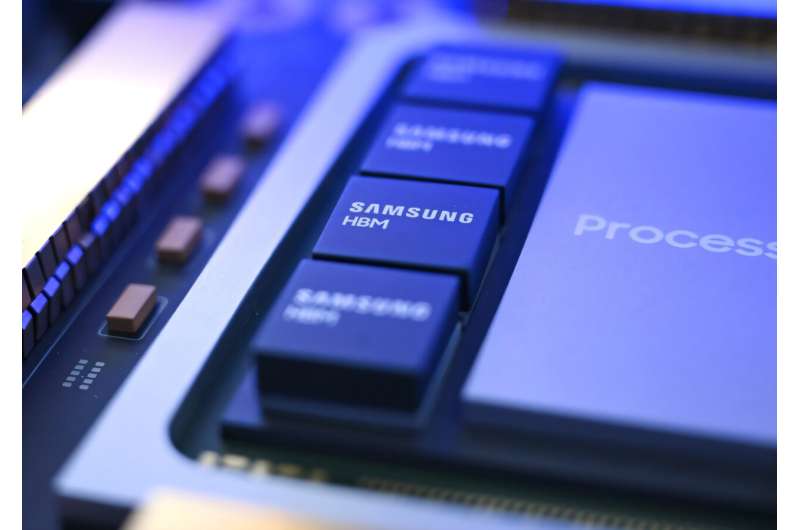
Samsung electronics have hiked the prices of certain advanced chipmaking contracts by as much as 15%, according to a Reuters report. The hike comes as demand for AI chips tightens capacity in a business long dominated by TSMC.
Demand is particularly strong from China, but Samsung is unable to meet the demand as it has to serve US customers and receive part of its capacity to support its own chip production.
Chinese customers are facing the steepest price increase as US curbs on exports of advanced chipmaking equipment to China has increased reliance of China’s local firms on foreign foundries.
Samsung, in July, increased prices for its chips produced using the 4 nanometer process or SF4, by 10 to 15 percent in the US and China. Similarly, prices for SF5 were hiked by 10 to 15 percent and those chips produced by the 8 nanometer process (SF8), were hiked by 10 percent.
Samsung declined to comment on the Reuters report which comes days after Samsung said that it will delay its 1.4 nm process (SF1.4) to 2029.
Samsung produced 7 percent of global foundry revenue in the first quarter of 2026, compared to 70 percent by TSMC, according to research firm counterpoint.
Price hikes currently, may mark a turnaround in Samsung’s foundry business which has been a loss maker since 2022, according to industry estimates. The division has struggled to close the gap with Taiwan Semiconductor Manufacturing Co.
However, as TSMC faces tight capacity and raises prices, customers are shifting to rivals such as Samsung and Intel according to Lee Min-hee, a Seoul-based analyst at BNK Investment and Securities.
“If Samsung raises prices from here, its foundry business could potentially become profitable as early as next year, earlier than previously expected,” Lee said.
Samsung said in July that it expects its foundry business to score profit in near future, with higher factory utilization, better production yields, and firmer pricing.