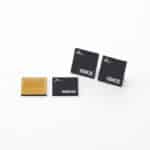

The UK’s expanded Semiconductor Catapult will give semiconductor companies access to integration, testing and validation facilities to reduce technical risks and advance AI hardware, defence electronics and other technologies towards commercial production.
The UK has expanded its government-backed Semiconductor Catapult to help startups, SMEs and larger companies integrate, test and validate semiconductor technologies for AI hardware, defence and other applications, with a phased plan towards scale-up and small-volume production.
The centre, formerly the Compound Semiconductor Applications Catapult, will provide access to engineering expertise, laboratories and specialist equipment at facilities in Newport, Bristol and Glasgow.
Its four priority areas are advanced packaging and heterogeneous integration; power electronics and thermal management; photonics and optical interconnects; and radio-frequency (RF) and mixed-signal integration.
The initial phase will establish integration and core silicon capabilities to validate semiconductor architectures and reduce technical risks. A second phase will develop system-level integration and routes towards scale-up and small-volume production.
“The market opportunity for the UK in AI hardware and defence is moving quickly,” said Caroline O’Brien, Chief Executive of the Semiconductor Catapult. “The Semiconductor Catapult ensures more of the technologies, supply chains and economic benefits created by semiconductor innovation are developed and retained in the UK.”
The expansion forms part of the UK’s £1.1 billion AI Hardware Plan, which includes £400 million for next-generation AI chips, including £150 million for novel chips from startups and UK companies, and £18 million for hardware security research and development.
A government-commissioned study estimated that the UK semiconductor industry generated £10.6 billion in revenue in 2024/25, with 297 dedicated companies employing around 16,350 people. The Catapult will also support semiconductor applications in data centres, communications, clean energy and transport.