



Can India build a semiconductor ecosystem beyond fabs? Indiesemic believes thousands of diversified chip companies are needed to make that possible.
India’s semiconductor push is gaining momentum, but building a broad electronics ecosystem will require more than fabrication and packaging capacity. The country will also need a much larger base of companies designing and developing silicon for different applications, says Nikul Shah, CEO and founder of Indiesemic.
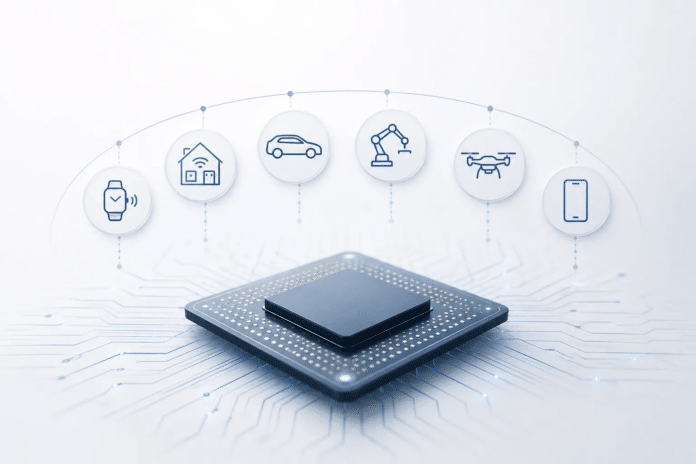
“We need 10,000 companies in India to build 10,000 different chips,” Shah says. He believes India’s semiconductor requirements cannot be addressed by a limited number of companies, as applications spanning consumer electronics, home appliances, automotive, robotics, drones, and smart devices require different semiconductor solutions.
Government support plays an important role in enabling this expansion. Shah points to the recently launched India Semiconductor Mission (ISM) 2.0, which he says is helping startups address some of the challenges involved in semiconductor development, including access to design tools and funding support.
The need for a larger chip ecosystem is already evident in the products being developed in India. A mobile phone, for instance, can contain hundreds of chips, yet Indian companies have historically had limited participation in developing and supplying that silicon. Expanding domestic chip design could therefore help bridge the gap between India’s growing electronics manufacturing ambitions and its independence of imported semiconductor components.
The startup began with internet of things (IoT) modules and has since developed around 20 SKUs, with more than 100,000 units sold, according to the company. It is now moving towards its own system on chip (SoC) designs, including a general-purpose microcontroller incorporating the centre for development of advanced computing (C-DAC’s) Vega processor.
The company is preparing for its first commercial multi-project wafer (MPW) tape-out of the SoC, following an earlier tape-out to validate selected IPs. Its roadmap continues to target the application segments already served by its IoT products.
For the broader semiconductor push, however, the opportunity extends well beyond any single company or chip. A larger base of fabless companies could allow India to develop silicon for a wider range of products while creating demand for the manufacturing and packaging infrastructure being established in the country.
What could India’s fabless ecosystem look like as more companies move towards commercial silicon? What gaps still need to be addressed, and where could the next opportunities emerge? Our exclusive interaction with Indiesemic explores these questions and the roadmap ahead.

