


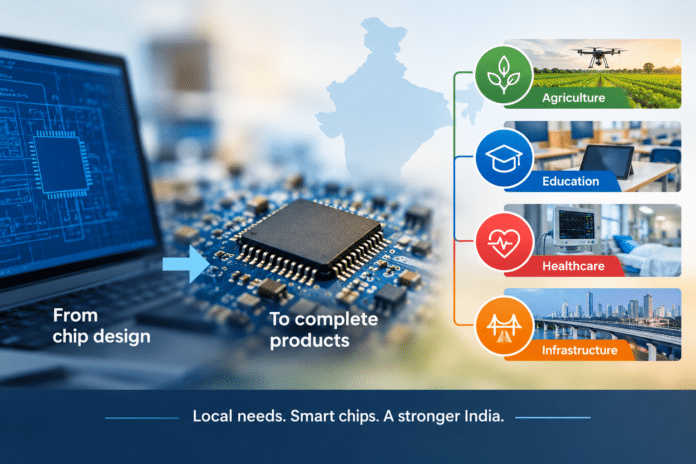

Indian chip startups must identify unmet market needs and give customers clear reasons to choose their products.

Indian semiconductor startups need to look beyond chip design to develop affordable, application-specific products that can compete with established suppliers. In a recent interaction, Gokul V. Subramaniam, President of Intel India and Vice President of Intel’s Client Computing Group, said startups should identify challenges in India that semiconductor-based solutions could address.

He pointed to agriculture, education, healthcare and infrastructure as sectors where local challenges could create opportunities for Indian chip developers.
“Nowadays nobody can just put a chip out there and expect it to be a fantastic product,” he said. A chip must also be integrated into a working product, with the firmware and software required for its intended application. Depending on the product, this may include an operating system and application software.
India’s varied geography, demographics, and purchasing power create different requirements across markets. However, meeting local demand does not guarantee commercial success. Indian chip startups also face competition from semiconductor suppliers, including Chinese companies producing chips for agricultural equipment, brushless DC (BLDC) fans, and household appliances. Engineering expertise, market demand, and manufacturing capacity all influence an Indian chip startup’s ability to compete.
Subramaniam said startups must differentiate their products from existing alternatives by offering distinct features or meeting specific customer requirements more effectively. Simply matching established suppliers’ offerings may not be enough to build a sustainable business.
He also highlighted product definition and management as areas that India’s semiconductor ecosystem needs to develop alongside engineering capabilities. Startups must determine what to build, define product specifications, understand customer requirements and position their products in the market.
For Indian chip startups, the challenge is to turn semiconductor design capabilities into products that meet local needs and can compete commercially.

