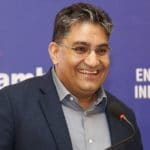
With 20 years’ experience in supplying high quality active and passive components for the electronics and semiconductor industry, Power Palazzo Pvt Ltd aims to assert itself as the most dominant player in the electronics industry. “In the long run, we aim to establish ourselves as a regional and emerging global player through fruitful collaborations with vendors and clients,” says Micky Shah, managing director, Power Palazzo, in an interview with Srabani Sen of Electronics Bazaar.
Besides selling components, Power Palazzo believes in giving some added value to its customers by providing the most reliable, next generation components, and by continuously striving to explore new products and devices with innovation and cutting-edge technology, which can harness the potential of circuits to the optimum level. It also keeps its customers well informed about the latest trends and products.
EB: Please share with us the major changes that have taken place in the capacitor market in India over the last five years.
The capacitor market has undergone tremendous changes in terms of technology and price, in recent times. Today, capacitors like electrolytic capacitors come in high voltage foil, while capacitors with specifications like low leakage current, high ripple current, etc, are available at much more competitive prices. In fact, the prices have gone down, for example, the compact size capacitors with good performance efficiency are now available at a much cheaper rate. In India, unfortunately, electrolytic capacitor production is almost negligible compared to the total market size.
‘Film capacitors’ is another market that has seen a sharp rise in demand from various sectors. We do have local manufacturers for this product, producing good quality film capacitors. For ceramic capacitors, people still have to depend entirely on imports, and the technology for this segment is stable. Indian manufacturers should grab the opportunity presented by the rising demand for capacitors.
One innovation is the 125 degree capacitor that has a very long life and very critical specs, and is especially required for LED lighting. We also have capacitors now that can withstand wide fluctuations and any kind of spikes in the circuit.
EB: What are the current business trends in the Indian capacitor market?
In terms of demand, the Indian capacitor market is growing at about 25 per cent per annum, and it is likely to maintain the same pattern for the next four to five years.
There is tremendous scope for more manufacturing activity in India because China is losing its edge with labour becoming expensive, and the incentives are drying up. So, the consumption of all components will go up in the next four to five years if Indian manufacturers improve the quality and build volumes to meet other countries’ demands. This can be a good opportunity to export as well as meet the demands of the domestic market.
EB: What is the current demand for capacitors in India, and how much has it grown since 2010-11?
The current demand for electrolytic capacitors can be easily pegged at 3.7 billion pieces for the Indian market, which includes all aluminium capacitors, and most of the demand is fed by imports only.
The film capacitor market is growing because more capacitors are being employed in each circuit and applications have also increased, which propels the demand further. Demand for film capacitors in India should be about 2.4 billion pieces. Demand for ceramic capacitors, mainly driven by imports, would be around 3 billion pieces including very small value capacitors.
EB: Which are the sectors that are driving growth in the capacitor market in India?
Automobiles, fan regulators, lighting (including CFL and LED drivers), energy meters, inverters and UPS systems, medical electronics, defence equipment, automation products, home appliances, telecommunications, and marine equipment are the major drivers of growth.
EB: With the government taking initiatives to boost electronics manufacturing in India, do you think that the M-SIPS, the EMC policy, and the PMA policy will boost manufacturing in the electronics industry?
These policies have the scope to get the manufacturers interested in components production again, but the Indian industry needs major incentives like continuous electricity at a subsidised rate, land availability at a special rate and the capital required for the project at a very nominal rate, while labour laws should also be flexible.
EB: With the aim to assert yourself as a dominant player in the electronics industry, what marketing strategies do you follow? Are these strategies working well? Or would you like to make changes?
We are focusing mainly on a few segments. There is immense scope to enter the untapped markets, and we aim to establish our presence in those areas.
The next strategy we plan to follow is to offer customers products with cutting-edge technology at very competitive rates, with an aim to expand the market.
Apart from our core areas, we would like to concentrate on new application areas as well with the support of world class manufacturers. We intend to bring teams from global manufacturers to India to have productive interactions with the design engineers so that they can develop products as per Indian conditions.
EB: What are the products you offer?
We are mainly focused on ELCOS, poly caps, transistors, diodes, SMD components and drum cores. Ceramic capacitors, MOV, NTC and resistors with value addition and sensors of very high precision will be added to our product range.
EB: What is your business model? Do you work through channel partners?
No, we deal directly with OEMs because this helps us to understand their requirements better as we have a good technical background. This year, we will establish a dealer network that will help us garner more market share through their local contacts, and they will drive the smaller and medium scale markets.
We are looking for distributors who have a strong local presence and are in a good financial position, for each region.
We use the best technology products, so the criteria for choosing a vendor are very clear to us. We deal with only those suppliers who are among the top three companies in their respective fields.