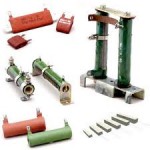

Resistors are the basic building blocks of any circuit. With production of circuits growing rapidly, the demand for resistors is also strengthening, but gradually. However, the Indian resistor manufacturing market is small compared to the various global markets that exist in the US, UK, Germany, China, Taiwan, Brazil and Mexico. “The utilisation of India-manufactured resistors is fairly frugal as a lot of items that require resistors are assembled abroad and imported in complete packages or kit forms. Also, the India-made resistors’ export contribution is not so significant when compared to the world markets,” points out Yogesh Goradia, partner, Kiyosh Electronics.
Sujata Soparkar, managing director, Integrated Electronics Technology Pvt Ltd, begs to differ. “The resistor market in India is a mature market with well-established players in different segments. Each manufacturer has his own client base, which is usually not encroached upon by others.” However, Soparkar stresses that resistors, being under the zero duty regime, have created fierce competition amongst importers and indigenous manufacturers, eating into the latter’s profit margins. “It has also resulted in the conversion of many manufacturers into mere traders,” says she.
By Jesus Milton Rousseau S
 Wednesday, May 20, 2009: “About 90 per cent of our purchases are from manufacturers based in other countries. We import primarily from the US, China, Singapore and European countries. Also, we procure goods from Indian manufacturers, wherein the customer is specific and has evaluated the same to suit his project requirements,” shares N S Ravishankar, vice-president, sourcing, Rangsons Electronics.
Currently, Indian makes are not sufficiently globalised, making it difficult to convince the customer for any replacement. ” As we are into the high-mix high technology segment, we prefer to buy what our customers insist on because any change represents a large cycle for validation and replacement. Also, foreign suppliers are more willing to support defects arising from manufactural errors and will go to any length and breadth to resolve our issues, which is not the case with Indian manufacturers. Being an EMS, it is our key concern that the supplier abides by the support that had been promised during the quote phase, as we extend the same to our customers,” states Ravishankar.
The resistor market can be branched into two broad categories—consumer electronics, which comprises low-power resistors and industrial requirements, which use resistors of higher power. “The markets that are emerging belong to automotive, medical electronics and industrial electronics,” says Soparkar. The immense growth in the resistor market can also be attributed to the various electronics manufacturing services (EMS) companies, which are establishing bases in India.
Trends that rule the market
Sizes of resistors are becoming smaller while their power to size ratio is increasing with new developments in materials. This is in keeping with the inclination towards miniaturisation that pervades all manufacturing sectors nowadays. “Also, the accelerated use of surface mount devices (SMD) components is very common now,” states A V Mohanan, unit head, Keltron Resistors Ltd. Consumer utilisation of resistors is also rising as the number of consumer electronics gadgets is increasing at a rapid pace. However, the pace of utilisation of discrete resistor elements in this market segment is mitigated by the fact that electronic devices are increasingly eliminating the need for resistors in their circuits. This trend is abetted by using efficient and innovative design principles for electronic circuits and incorporating more and more components and their control within monolithic semiconductor.
“Higher power resistors, on the other hand, will show a marked accession in utilisation with more applications demanding higher power requirements and control of high power devices,” opines Goradia. He further adds, “Over the last 5-10 years, there has been a marked increase in high-voltage and dynamic breaking and snubber applications. To serve this growing segment, companies have developed water-cooled resistors, which have the tremendous advantage of a smaller size and greater cooling efficiency.”
The latest in resistors
Bulk ceramic resistors, which are made from conducting material enclosed in a ceramic matrix, have been developed over the past 10-15 years. Distinct benefits of bulk ceramic resistors include high temperature withstanding capacity, coupled with negligible inductance property. Zero inductance is a requirement for high frequency and impulse applications such as wireless communications. Higher power ratings are also required for powerful communication systems and bulkceramic resistors fill this need effortlessly.
However, they suffer from poor temperature stability of resistance and low yield manufacturing processes. Ongoing research worldwide in this field has been targeting to escalate the production yield and stabilise the temperature coefficient of resistance. Other advancements in the field of resistors include the integration of resistors into the printed circuit board (PCB) itself. “The resistive material is coated or deposited onto the glass epoxy itself and etched to get the resistors along with the interconnections,” informs Soparkar.
Buyers’ benchmark
It is wiser to invest in value-for-money resistors than to go in for the cheapest ones available. “Resistors, although possessing a small percentage cost in the circuit, if not chosen judiciously, could turn out to be the weakest link and can cause a lot of damage,” warns Soparkar.
In order to source the suitable resistor for a particular application, customers need to specify their complete requirements and spell out the final application and parameters. Mohanan cautions, “Buyers of resistors are generally misled in terms of price and many buyers are not even aware which resistor is best suited for which type of application.”
Companies that buy resistors also consider certain parameters while purchasing them, to ensure that their end-users get the best possible products.
Ravishankar admits, “We prefer resistors that offer recognised traceability, redundant quality, support for a wide range of values, tolerances, post-order support and the ability to be converted into a known brand, which the customer is also familiar with.”
He further adds, “Parts change notice (PCN) is given to mark the shelf life of these resistors. If the life span of a particular part of a resistor is short, it will require replacements far more frequently, thereby, increasing the cost of maintenance. Hence, we usually prefer parts of global standard.”
Why resistors are imported
- A large percentage of resistors are being imported from other countries. Some of the chief reasons for imports are:
- Availability of raw material (wafers), which determine pricing
- Ample global capacities are available; demand is never a challenge for these manufacturers
- Global manufacturers already have an established distribution chain in India, which makes it easy to buy resistors
- Freight cost for these parts are never a concern due to the negligible weight and size of components
Call for govt help
Commenting on the problems faced in the production of resistors in India and the government’s role, Mohanan says, “The biggest encumbrance is the threat created by cheap imported products available freely in the Indian market. Also, Indian manufacturers have to de pend for all their raw material needs on foreign countries, impacting price-fixing. Therefore, the government must exert some control in the import of goods.”
Showing concern P N Khadilkar, director, Cermet Resistronics Pvt Ltd, says, “Majority of the raw materials are imported and the depreciation of rupees has made the raw materials costly, whereas the Chinese import products hasn’t increased their prices. Hence, there is a tough competition. Also, the government has to make import of raw materials and finished goods at par. Today, a lot of cost on paper work is involved for importing raw materials, whereas importing finished products is much easier.”
Kumar of Elcoteq, comments, “Better government policies, which induce resistor manufacturing and yield good benefits to manufacturers can attract global businesses to establish manufacturing units in India. These features are not apparent in India as of now, the main reason why India’s contribution to the world’s electronics manufacturing is extremely less compared to China and Taiwan.” Today, local suppliers are far behind their global competitors and hence, are importing in large quantities. Kumar concludes, “The current market information signifies that the future will be positive as within the last two years, many original equipment manufacturers (OEMs) and EMS companies have ramped up electronics manufacturing in India. Hopefully, we will witness some component manufacturing also in the country, once the global economical situation gets better.”
Players in this business
G V Electronics:
The company manufactures wire-wound rheostats, wire-wound resistors, dynamic break resistors, non-inductive resistors, aluminium housing resistors, SSgrid/punchgridresistors, load banks and toro pots. GV Electronics has been manufacturingresistors since the last 40 years and was formerly working under the name of GB radio electronics.
Sure Resistors:
Sure Resistors has transformed itself into a broad-based, professional grade wire-wound resistor manufacturer with computerised design and ERP software capabilities. At present, it has a high production capacity, with a team of 50, including engineers and skilled staff. Sure resistors has a capacity to manufacture a wide range of stable wire-wound resistors, which also includes a ceramic encased, silicon-coated, aluminium housed and low ohm type with multiple physical configuration in power rating of 1 watt and 100 kilowatts. The company is ISO 9001: 2000-certified. They manufacture resistors without compromising on quality at any stage of the product realisation process and are committed to ensuring that the supply chain to the customers is maintained at all times. They manufacture various types of resistors including wire-wound resistors-axial terminal/radial terminal, aluminium housed resistors-luf terminal/screw terminal braking resistors, load banks, rheostats. The USP of their products is high power to size ratio, exceptional stability and reliability. They plan to introduce surface mount power resistors shortly.
Cermet Resistronics Pvt Ltd:
Cermet Resistronics Pvt Ltd is a leading manufacturer of electronics/electrical resistors in India. An ISO 9001:2000certified company, Cermet has a growth rate of 40 percent a year. It manufactures carbon film resistors (CFR), metal film resistors (MFR), wire-wound resistors (WWR), power resistors, metal oxide resistors (MOR), high-voltage resistors, metal glaze resistors, etc. The company provides solutions for varied application areas such as high-voltage and high mega ohm, current sense and shunts, fusible wire-wound, network, precision metal film and metal glaze.
Electronics Bazaar, South Asia’s No. 1 electronics B2B sourcing magazine