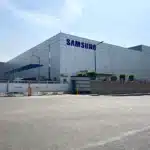
South Korean electronics giant accelerates mass production of next-gen HBM4 memory for AI systems.
Samsung Electronics has begun large-scale production of its next-generation high-bandwidth memory chips, a major technology leap aimed squarely at the surging global artificial intelligence infrastructure market.
The company started mass production and initial commercial shipments of HBM4 memory a type of high-performance memory critical for AI accelerators and data centers signaling a strategic effort to secure early leadership in a fiercely competitive segment. Shares of the South Korean firm climbed more than 6 % on the stock market following the announcement, reflecting strong investor confidence in its memory business momentum.
HBM (High-Bandwidth Memory) chips sit at the heart of sophisticated AI processors from industry leaders like NVIDIA, where rapid data transfer and bandwidth are essential for training and running large AI models. Samsung says this new HBM4 generation delivers performance gains over 40 % above older models, helping satisfy escalating demand as global cloud and AI workloads expand.
According to industry analysts, Samsung’s early push into HBM4 production could give it an edge over rivals and position it as a frontrunner in advanced memory supply, a market segment valued for its profitability and technical complexity. South Korea’s government has also expressed ambitions to place the country among the leading AI powers alongside the United States and China, adding geopolitical weight to Samsung’s technological momentum.
However, Samsung’s memory division has faced challenges in the past, particularly in the development and yield of previous HBM generations compared with close competitors such as SK Hynix and Micron, both of which are also racing to expand HBM4 output. Demand for advanced memory chips continues to grow as major technology companies invest heavily in AI infrastructure from data centers to edge computing. Forecasts project the global memory chip industry could hit over $840 billion in revenue by 2027, with HBM products playing a significant role in that expansion.
Samsung’s timely ramp-up of HBM4 production underscores the company’s broader push to strengthen its semiconductor portfolio and capture a larger slice of the AI hardware ecosystem, a critical battleground in the ongoing tech race.