


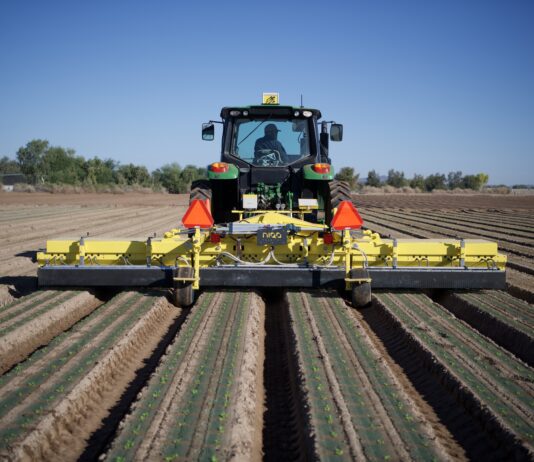

How do you build India’s physical AI future when critical robot components still come from overseas? Niqo Robotics reveals where the gaps remain.
India’s push towards physical AI and robotics is creating demand for sophisticated electronics, but the hardware powering these systems still depends heavily on imported semiconductor components. For agricultural robotics, this dependence extends across GPUs, FPGAs, memory, MEMS sensors, and other ICs.
In an exclusive interaction, Jaisimha Rao, Founder, Niqo Robotics, explained that while the company designs and manufactures key parts of its agricultural robotic platform in India, much of the underlying semiconductor stack comes from outside the country. Its robots use NVIDIA GPUs for AI computing, Lattice FPGAs for image-signal processing, and several ICs for Ethernet communication and actuation. The company also sources MEMS sensors from Japan.
The dependence becomes particularly significant as robotics moves from prototypes to commercial deployment. Rao identified memory as the biggest current hardware constraint, citing long lead times and rising prices for solid-state storage. “Given the AI data centre rollout, something as simple as a 256 gigabyte solid-state memory, the lead times are crazy,” he said, adding that memory prices have also risen sharply.
For Rao, India’s opportunity may not necessarily begin with the most advanced semiconductor nodes. Instead, he sees a more immediate opportunity in developing high-volume chips and components that can support robotics and other physical-AI systems.
“Before you go to two nanometre levels like super high-end stuff, I think knocking down high-volume ICs and chips can really help the Indian robotic system,” Rao said.
Memory, in particular, could become a strategic capability. While he described it as “basic”, Rao pointed out that advanced memory manufacturing remains technically demanding and concentrated among only a few companies globally. He believes developing domestic expertise here could create significant value for India’s robotics ecosystem.
Beyond semiconductors, the supply chain also has gaps in MEMS and optics. While Rao said he is satisfied with India’s PCB design and fabrication ecosystem, he identified MEMS sensors and image-sensor optics as areas where domestic capabilities could strengthen robotics manufacturing.

“Our MEMS sensors are imported from Japan,” he said. “So maybe optics engineering, when it comes to image sensor design and lenses, is another clear way forward and India should own that.”
The larger question is whether India can build a component ecosystem around physical AI as robotics moves towards commercial scale. As products prove that there are paying customers and viable margins, Rao believes this could create demand for indigenous component suppliers.
Can India reduce its dependence on imported chips without compromising the performance and reliability expected from commercial robots? Which semiconductor capabilities should India prioritise first? And can robotics startups become an early demand driver for a stronger domestic electronics ecosystem?
The full discussion also covers how Niqo Robotics processes plant-level data at the edge, why its robots have a 60–90 millisecond decision window, the challenges of running GPUs and sensors in harsh farm environments, its custom electronics architecture, and what it has learnt from deploying robots across more than 200,000 acres.

