



Every downstream system depends on what happens at Goods Inward. It may be time to stop treating receiving as a routine warehouse task and start treating it as the foundation of digital manufacturing.
Over the last two decades, enterprise resource planning (ERP) systems have become the backbone of manufacturing operations. They have transformed procurement, inventory management, production planning, finance, and supply chain coordination — delivering measurable gains in visibility, efficiency, and control across the enterprise. Yet despite these advancements, one of the most critical processes in electronics manufacturing remains largely manual: the Goods Inward process. Every day, thousands of electronic components enter manufacturing facilities carrying information embedded in supplier labels. Before these components can enter inventory and become part of the digital manufacturing ecosystem, someone must interpret those labels, extract the relevant information, validate it, and enter it into the ERP system. The challenge is not that ERP systems are inadequate. The challenge is that ERP systems were never designed to solve this problem. This white paper examines the structural gap between physical material receipt and digital manufacturing data, why it persists despite decades of ERP evolution, and what the emerging layer of Inward Intelligence means for manufacturers pursuing Industry 4.0 transformation.
The ERP success story
ERP systems represent one of the most significant technological achievements in the history of manufacturing management. Over the past three decades, they have unified disparate business processes under a single data model, replacing fragmented paper-based and siloed software systems with integrated, real-time operational intelligence.
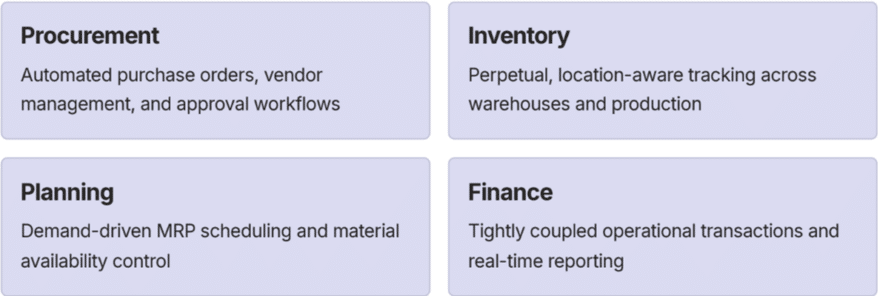
ERP systems successfully digitised the core processes that drive manufacturing performance. Procurement workflows became automated and auditable. Inventory management shifted from periodic physical counts to perpetual, location-aware digital tracking. Material requirements planning enabled demand-driven scheduling and prevented costly stock-outs and overstock situations. Financial controls became tightly coupled to operational transactions, enabling faster closes and more accurate reporting.
Supply chain visibility extended upstream to supplier performance and downstream to customer fulfilment.
For structured business processes — processes where data already exists in defined fields, standardised formats, and known schemas — ERP systems excel without equal. They are exceptional engines for processing, validating, routing, and reporting on structured records. The challenge is not ERP capability within its design parameters. The challenge is that Goods Inward exposes a fundamental and often overlooked limitation in what ERP was architecturally designed to do.
The assumption every ERP makes
Every ERP system is built upon a foundational architectural assumption that is rarely stated explicitly but is embedded in every transaction, every field, and every workflow: data already exists in a structured digital format before it enters the system. This assumption is so fundamental that it is almost invisible — until you encounter a process where it breaks down entirely.
ERP systems can validate material codes against a master data library. They can match purchase order numbers to open procurement records.
They can verify that batch numbers conform to expected formats, that quantities fall within acceptable tolerances, and that vendor identifiers correspond to approved supplier records. They can flag mismatches, trigger approval workflows, and generate exception reports with remarkable precision.
But here is the critical distinction: before any of this validation can occur, the data must first be created. Someone — or something — must convert the information on a physical supplier label into a structured digital record with defined fields, correct values, and proper relationships to existing ERP master data. ERP has no mechanism for this conversion. It was never designed to have one.
The hidden dependency in every electronics factory
Walk into any electronics manufacturing facility, from a small contract manufacturer to a global Tier 1 supplier, and you will find a remarkably consistent scene at the Goods Inward dock. Incoming reels, tubes, trays, and bulk packages arrive from dozens or hundreds of different suppliers. Each carrier bears a label that contains critical manufacturing information: manufacturer part numbers, customer part numbers, lot numbers, and date codes, reel quantities, and unit of measure, country of origin, RoHS and compliance declarations, and supplier-specific internal references.
This information is not optional. It is the foundational data that enables traceability, quality control, production scheduling, and regulatory compliance. Without it, components cannot be safely allocated to production orders, yield data cannot be correlated to material lots, and compliance records cannot be maintained. The data on that physical label must become a trusted digital record in the ERP system.
In most factories, a human operator acts as the translator between the physical world and the ERP system. The operator reads the label, often printed in small type, sometimes in a foreign language, sometimes partially damaged, interprets what each field means, maps it to the correct ERP field, and manually keys the data into the system. This process is slow, error-prone, and impossible to scale. Yet it sits at the very foundation of every downstream manufacturing operation. Every material allocation, every production build, every traceability record, and every compliance report depends on the accuracy of what that operator entered.
Why this problem is unique to electronics manufacturing
Manufacturing sectors that rely on standardised, commodity materials, bulk chemicals, standard steel profiles, commodity plastics, benefit from relatively consistent supplier labelling and well-established industry standards. Electronics manufacturing is categorically different. The supply base for electronic components is extraordinarily diverse, spanning thousands of component manufacturers, distributors, and brokers operating across dozens of countries with no universal labelling standard.
Barcode diversity
A single shipment may carry Code 128, Code 39, QR codes, DataMatrix, and PDF417 barcodes, each encoding different fields in different sequences with no standard mapping to ERP data fields.
Multi-language labels
Suppliers in Asia, Europe, and the Americas print labels in their local languages, using region-specific date formats, quantity conventions, and field naming practices that differ from factory standards.
Label format variability
Even within the same component category, label layouts differ dramatically by supplier, product line, and geography. The same data field may appear in a different position, with a different label name, on every incoming shipment.
Physical label quality
Labels arrive wrinkled, partially obscured, thermally faded, or damaged in transit. Automated barcode readers frequently fail, falling back to human interpretation, creating inconsistent data quality.
The result is a highly unstructured data environment at the precise moment when structured, validated data is most needed. No two suppliers label the same way. No single barcode standard covers all fields.
No existing ERP configuration can anticipate and correctly interpret the full diversity of incoming label formats across a real-world supplier base.
Why ERP systems cannot solve this challenge
The challenge at Goods Inward is not workflow automation. It is interpretation. The process requires understanding an image of a physical label, recognising which fields are present and where they appear, decoding what each barcode encodes, inferring the correct mapping to ERP data fields despite inconsistent naming conventions, and validating the extracted data against existing master records, all in real time, across a continuously expanding and changing supplier base.
ERP systems were designed to process structured records according to predefined rules. They were never designed to understand images, interpret supplier labels, decode visual information from physical media, learn new label formats without reprogramming, handle ambiguity or partial information, or adapt to new suppliers without explicit configuration work. These are not gaps that ERP vendors overlooked. They are capabilities that belong to an entirely different class of technology, one that did not exist in mature form when ERP architectures were established.
Attempting to solve this with ERP customisation is architecturally equivalent to asking a spreadsheet to perform machine vision. The tool is not wrong; it is simply not designed for the task. Recognising this distinction is the first and most important strategic insight for manufacturing leaders considering Goods Inward modernisation.
ERP design purpose
Process structured records according to predefined rules and schemas
Goods Inward requirement
Interpret unstructured physical information and create structured records
The gap
Understanding, inference, ambiguity resolution, and format learning — capabilities ERP was never architected to provide
The missing layer between materials and ERP
Recognising the structural gap between physical materials and ERP systems leads to a clear architectural conclusion: a new functional layer is required between the physical receiving dock and the ERP transaction engine. This layer does not replace ERP — it completes the data journey that ERP cannot begin on its own.
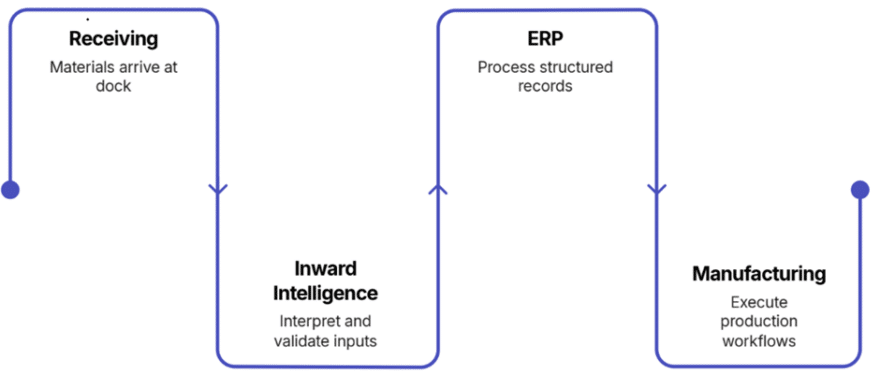
This architecture represents a meaningful evolution from how manufacturers have historically thought about the receiving process. Goods Inward has traditionally been viewed as a warehouse transaction — a simple acknowledgement that materials have arrived. The emerging view is fundamentally different: Goods Inward is the first and most critical act of data creation in the manufacturing process.
What the Inward Intelligence layer does
Understanding: Reads and interprets supplier labels regardless of format, language, or condition
Validation: Cross-references extracted data against ERP purchase orders and master data
Standardisation: Maps supplier-specific field names and codes to factory data standards
Digital identity creation: Generates a trusted, complete digital record before ERP ingestion
Exception management: Flags discrepancies and ambiguities for human review with full context
What this enables downstream
ERP inventory records reflect accurate, validated component data from the moment of receipt
Production scheduling can rely on correct quantities and specifications without manual verification
Full material traceability is established at the earliest possible point in the manufacturing chain
Compliance records are created automatically with verified lot, date code, and origin data
Quality correlation between material lots and production yield becomes analytically possible
The emergence of Inward Intelligence
The technological capabilities required to build an effective Inward Intelligence layer have matured significantly over the past five years. Modern AI systems — combining computer vision, optical character recognition, machine learning, and natural language processing- can now perform the interpretation tasks that human operators have historically handled, with greater consistency, speed, and scalability.
Critically, these systems learn. Each new supplier label format encountered becomes part of an expanding knowledge base. The system improves over time without requiring manual reprogramming for every new supplier or label revision. This adaptive capability is precisely what makes AI the right technology class for this problem — and precisely why ERP, with its rigid schema-based architecture, cannot replicate it through customisation alone.
Label capture
Image or scan of incoming component label captured at the receiving dock via camera or scanner
AI interpretation
Computer vision and OCR extract all text, barcodes, and relevant fields from the label image
Intelligent mapping
Extracted fields mapped to factory data standards using learned supplier-specific format models
ERP validation
Structured record validated against open POs, material master, and vendor data in real time
Trusted record creation
Validated, standardised digital identity committed to ERP — or exception routed for human review
Why this matters for Industry 4.0
Industry 4.0 initiatives — digital twins, AI-driven quality control, predictive maintenance, closed-loop manufacturing intelligence — share a common prerequisite that is rarely examined with sufficient rigour: trusted, accurate, complete data at every stage of the manufacturing process.
This prerequisite begins not on the production floor, but at the receiving dock. Every downstream system in the smart manufacturing stack inherits the data quality established at the first point of capture. A digital twin populated with inaccurate component lot data produces inaccurate simulations. A yield analytics system built on incorrectly recorded date codes cannot produce valid correlations. A traceability system seeded with erroneous material records cannot support a valid quality investigation or regulatory audit.
The phrase commonly used in data engineering applies with particular force here: garbage in, garbage out. No amount of sophisticated analytics capability downstream can compensate for systematically flawed data at the point of inward. Industry 4.0 transformation that does not address the Goods Inward data creation challenge is building on an unstable foundation.
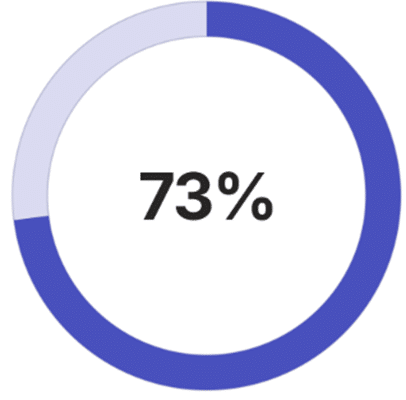
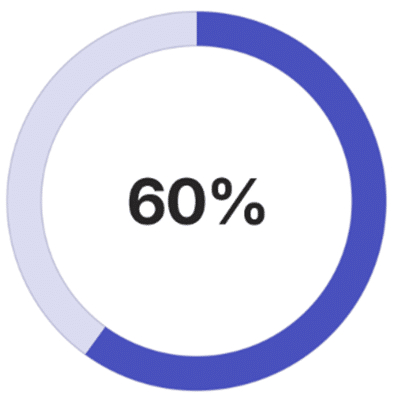
Data quality impact: Manufacturers report that poor incoming data quality negatively impacts production planning accuracy
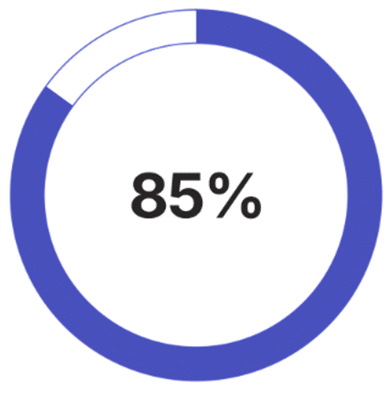
Manual entry rate: Electronics manufacturers still rely on manual keying for Goods Inward data capture in most or all scenarios
The strategic shift manufacturers must make
Leading manufacturers are beginning to make a strategic reframing that has significant operational and investment implications: Goods Inward is not an administrative warehouse activity. It is the most critical data acquisition process in the factory. This reframing changes how the process is resourced, measured, governed, and improved.
When Goods Inward is viewed as a warehouse transaction, the performance metrics are throughput-focused: how many lines processed per hour, how many operators required, how quickly the dock is cleared. These metrics measure labour efficiency, not data quality. They optimise the wrong outcome — and they create organisational incentives that actively work against data accuracy.
When Goods Inward is viewed as a data acquisition process, the performance metrics shift: data accuracy rate, exception rate by supplier, field completion rate, validation pass rate, and time-to-ERP from physical receipt. These metrics directly measure what matters for downstream manufacturing performance. They create accountability for data quality at the point of creation — before errors have the opportunity to propagate.
Old view
Administrative warehouse transaction — optimise for speed and labour efficiency
Strategic view
Critical data acquisition process — optimise for accuracy, completeness, and validation rate
Competitive outcome
Trusted data foundation enabling full Industry 4.0 capability across the manufacturing enterprise
The future manufacturing stack
The next decade of manufacturing transformation will not be driven by replacing ERP systems. ERP systems are deeply embedded, heavily customised, and represent enormous institutional investment.
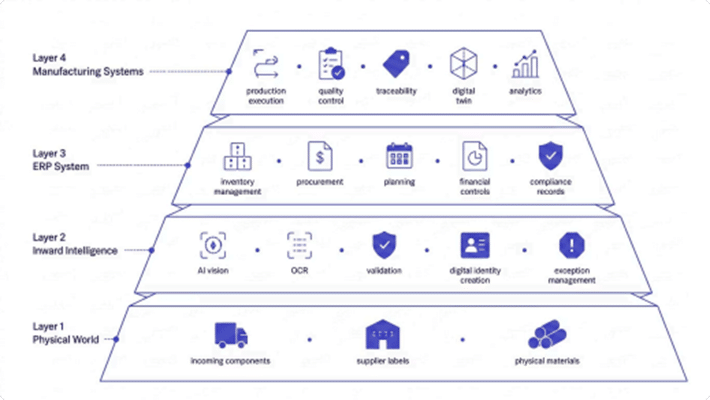
The Inward Intelligence layer is the first and most foundational of these intelligence additions. It is the bridge between the physical world of materials and the digital world of manufacturing data. Without it, every other intelligence layer in the stack operates on data that was created by a manual, error-prone, unscalable process. With it, the entire manufacturing data chain gains a trusted, validated, complete foundation from the very first moment a component enters the facility.
The manufacturers who will lead the next decade of competitive performance are those who recognise this architectural reality today — and who begin building the Inward Intelligence capability that turns the receiving dock from a data liability into a data asset. The technology is ready. The business case is clear. The strategic window for first-mover advantage is open now.
The Goods Inward challenge is not a transaction problem — it is an interpretation problem. ERP systems were designed to process structured data with precision and speed. They were not designed to understand the physical world, interpret supplier labels, or create digital records from unstructured sources. This is not a criticism of ERP — it is a precise description of its architectural scope.
The gap between physical materials and trusted digital records has existed since the first ERP system was deployed in a manufacturing facility. For most of that time, human operators have bridged this gap through manual effort — at high cost in labour, time, accuracy, and scalability. The emergence of AI and computer vision has, for the first time, made it possible to bridge this gap systematically, at scale, with a level of consistency and accuracy that manual processes cannot match.
The strategic imperative for operations leaders, manufacturing engineers, and supply chain decision-makers is clear: recognise that the future of smart manufacturing begins not on the production floor — but at the receiving dock.
ERP digitises transactions.
Artificial Intelligence digitises interpretation.
The future of manufacturing belongs to organisations that can seamlessly connect the two.
The foundation
Trusted inward data is the prerequisite for every Industry 4.0 initiative
The technology
AI and computer vision have matured to make systematic Inward Intelligence achievable today
The imperative
The strategic window for first-mover advantage in Inward Intelligence is open now

