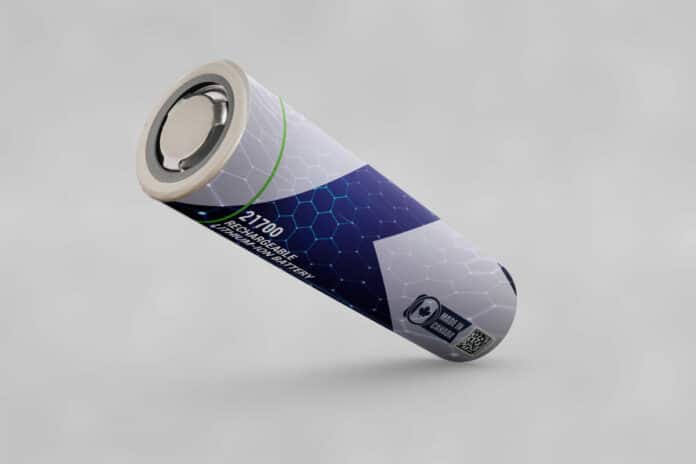

Canadian battery maker VoltaXplore is shifting its 21700 lithium-ion cells from mass-market EVs to defence drones, UGVs, and portable electronics to pursue specialised demand without EV-scale capital requirements.
VoltaXplore, the wholly owned subsidiary of Canadian battery and graphene materials company NanoXplore, is redirecting its cylindrical 21700 lithium-ion cell strategy from mass-market electric vehicles towards defence drones, unmanned ground vehicles (UGVs), portable electronics, and other dual-use applications.
The Montreal-based operation is focusing on high power, specialised performance, domestic sourcing, and secure supply chains for Canadian and US defence customers. Its existing facility, commissioned in 2022, remains a 1-MWh production and development line supporting prototyping, pre-production, testing, and performance analysis. Cells are being supplied to interested parties for testing and qualification.
The strategy marks a significant departure from earlier EV ambitions. VoltaXplore was established in 2021 to develop graphene-enhanced lithium-ion batteries for electric transportation and grid storage. After NanoXplore acquired Martinrea’s 50% stake in 2023, VoltaXplore announced terms for supplying 1 GWh of cells annually for 10 years to an unnamed heavy commercial-vehicle maker. A planned gigafactory expected to begin production in 2026 has not materialised on that timetable.
Defence demand is being supported by Canadian procurement preferences and interest in secure domestic battery supply. Natural Resources Canada lists NanoXplore’s ultra-high-power 21700-cell initiative, with an agreement value of about C$3.44 million and total project value of roughly C$4.69 million. The long-term objective includes up to 2 GWh of production.
In September 2025, VoltaXplore signed an LOI with Volatus Aerospace for Canadian-made cells for next-generation unmanned aircraft, targeting improved endurance, faster charging, and cold-weather performance.