Early buying and rising component costs set to curb second-half PC shipments following advanced inventory stocking.
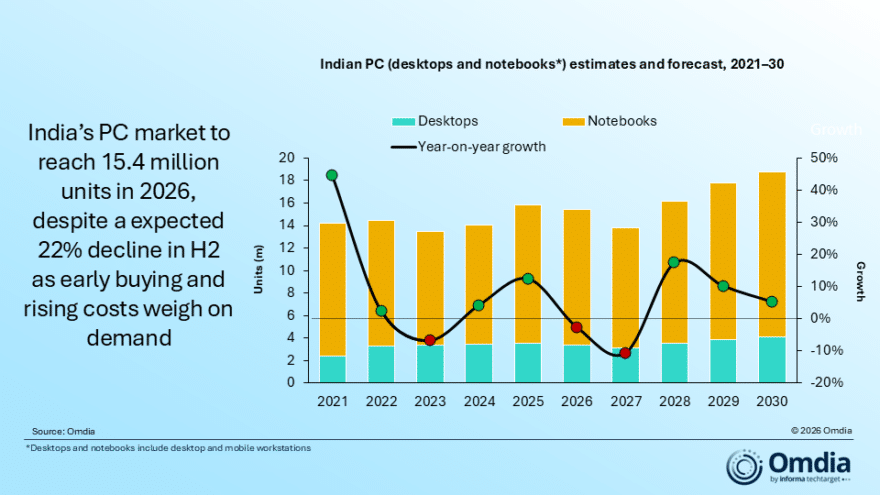
India’s PC market faces a sharp 22 per cent contraction in the second half of 2026, as elevated component costs and front-loaded purchasing weigh on demand, according to research firm Omdia.
Although the market grew 14 per cent year-on-year in the second quarter to reach 4.1 million units—driven by a 13 per cent rise in notebooks and a 15 per cent increase in desktops—the surge largely reflected advanced buying. Vendors and channel partners rushed to stock inventory ahead of anticipated price hikes later in the year.
Ashweej Aithal, Senior Analyst at Omdia, noted: “The growth in Q2 looks strong on the surface, but much of it reflects purchases brought forward by both end customers and channel partners to secure PCs before the next round of price increases.”
Commercial demand led second-quarter growth, expanding 19 per cent as small and medium businesses accelerated fleet refreshes. Enterprise buying remained healthy, while government education procurement drove notebook shipments up by 191 per cent.
In the consumer market, promotions sustained momentum, and Apple’s notebook shipments nearly doubled following the launch of its updated MacBook line-up, including the Neo. Simultaneously, AI-capable notebooks increased their market share from 28 per cent to 44 per cent.
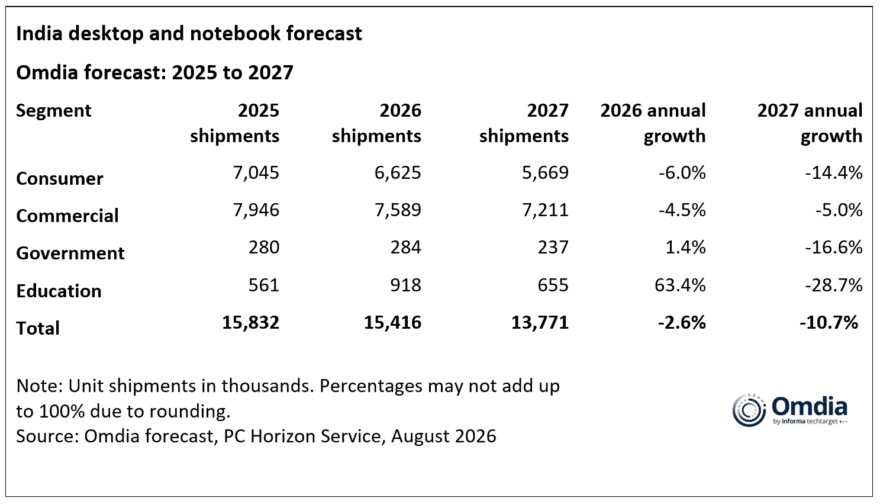
Full-year PC shipments in India are forecast to fall 2.6 per cent to 15.4 million units, with consumer and commercial segments expected to drop by 6 per cent and 5 per cent respectively. Entry-level devices face the strongest pressure as cost increases hit price-sensitive buyers.
Aithal explained: “Higher component costs will weigh most heavily on entry-level PCs, where budget-conscious consumers in India are particularly sensitive to price increases. Premium and gaming PCs should have more room to absorb higher costs, while enterprise buyers are likely to push ahead with necessary fleet refreshes.”
He added: “The market is likely to become more divided, with higher-value PCs better able to absorb cost increases while entry-level demand faces greater pressure.”
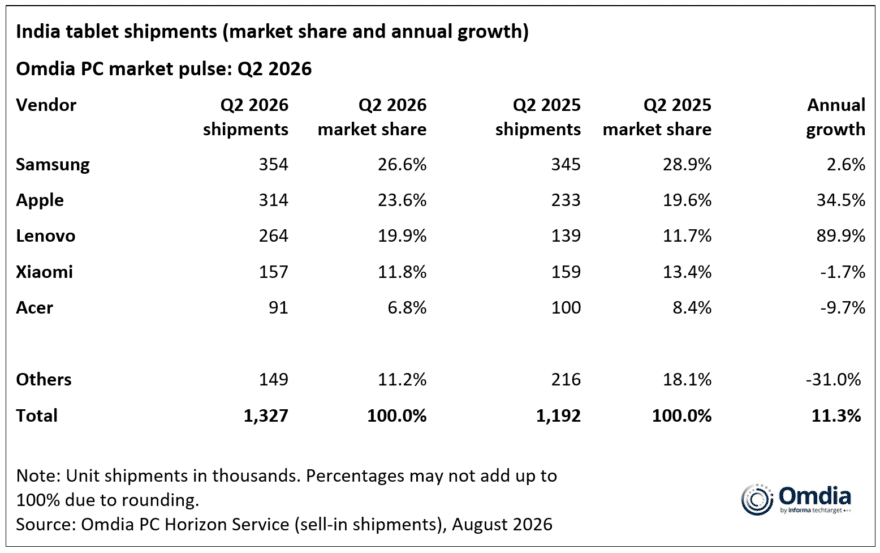
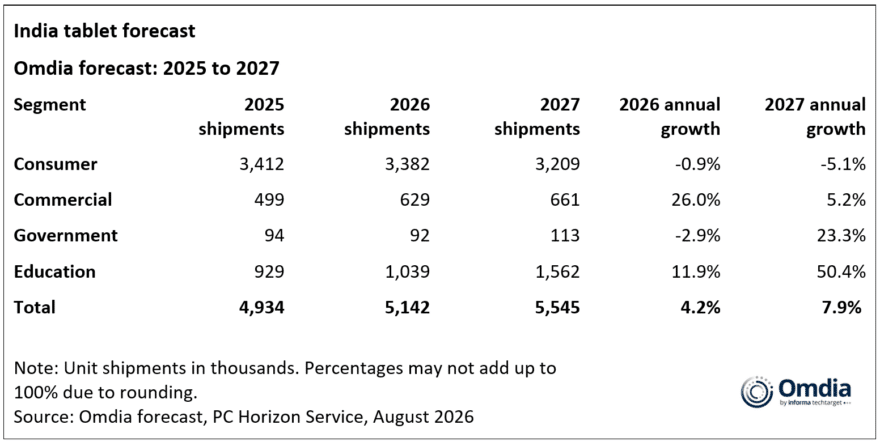
India’s tablet market is similarly adjusting, with full-year shipments projected to grow by 4.2 per cent to 5.1 million units following an 11 per cent rise in the second quarter. Demand is pivoting toward higher-value devices, with Apple and Lenovo recording shipment growth of 35 per cent and nearly 100 per cent respectively. At the same time education shipments fell 12 per cent as government tenders remain on hold.
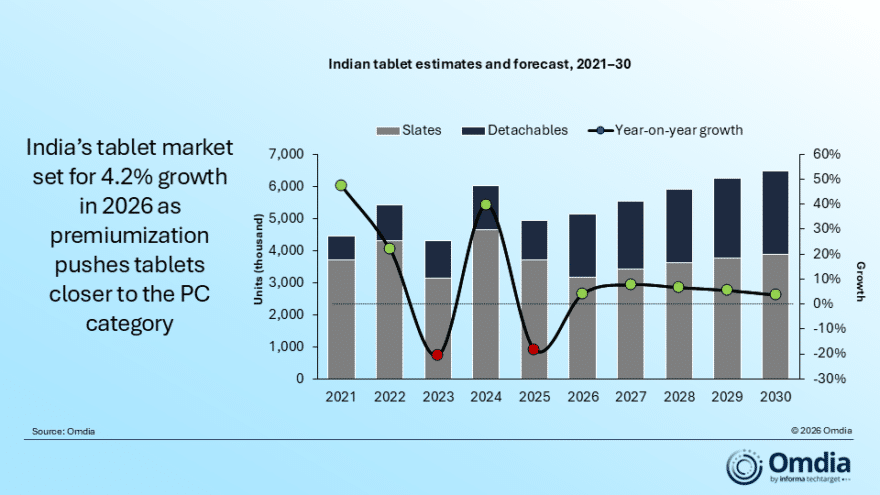
Aithal observed: “The market is clearly shifting toward higher-value tablets, supported by demand for newer devices and higher specifications. However, the Q2 2026 increase needs to be viewed with some caution, as channel partners also stocked up ahead of expected price increases.”
Local manufacturing initiatives are offering vendors greater operational resilience, with brands like Samsung and Lenovo using domestic production to serve both local and export markets.
Aithal concluded: “The longer-term outlook for tablets in India is more positive. As larger displays, better specifications and productivity use become more common, tablets are moving closer to entry-level PCs in terms of user experience.”