
The companies aim to address the growing demand for high-quality imaging in compact medical devices
OMNIVISION and Myriad Fiber Imaging (MFI) have partnered to develop advanced vision integration technology for next-generation endoscopic and robotic surgical applications. The collaboration aims to improve imaging quality in minimally invasive medical devices with increasingly smaller diameters.
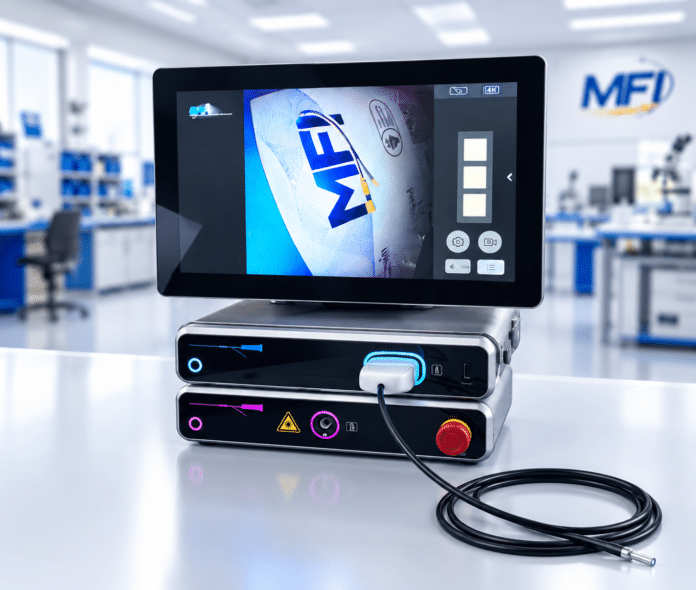
The partnership will combine OMNIVISION’s medical image sensors and image-processing technologies with MFI’s VINERA Surgical Visualisation platform. The integrated platform is designed to help medical-device manufacturers develop advanced visualisation systems for minimally invasive procedures.
The VINERA platform incorporates OMNIVISION’s OVMed medical imaging technology, MFI’s patient-isolated post-processing architecture and an ultra-small laser illumination fibre. The fibre delivers high-intensity, wide-angle illumination through a structure as small as 100 microns (µm).
The companies aim to address the growing demand for high-quality imaging in compact medical devices, particularly those used in endoscopic and robotic procedures.
“Medical-device OEMs need to deliver more functionality and higher image quality within increasingly constrained distal spaces,” said Tehzeeb Gunja, Director of Medical Marketing, OMNIVISION. “As a result, designers face increasingly difficult tradeoffs among image resolution and quality, illumination, thermal management and available distal space. By bringing imaging, processing, patient isolation and illumination together within an integrated platform, we can help OEMs reduce system-integration complexity and accelerate the path from concept to functional prototype.”
MFI President Tyler Gauvin adds, “The addition of MFI’s new laser illumination fiber technology addresses another major limitation in small-diameter endoscopes by enabling high-intensity illumination through an extremely small fiber with a wide 140-degree light distribution. Together, these technologies from OMNIVISION and MFI allow medical-device OEMs to pursue higher image quality and stronger illumination without requiring a proportional increase in distal scope diameter, while also reducing the amount of custom system development required to create a complete surgical imaging platform.”