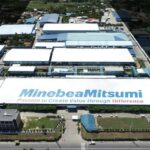
The 6 GWh factory of Ola, at Krishnagiri, in Tamil Nadu uses a dry cell coating method to make cells, which lowers the need for very high upfront investment but is a much harder process to master.
Ola Electric’s strategy to make in-house batteries,as the electric scooter business lost momentum, has hit a roadblock as the factory at the heart of the plan is struggling to meet the production targets. Two executives of the cell-business, Hyun Shik Park, the chief operating officer, a former LG executive and Vishal Chaturvedi, the division head, have already left.
The manufacturing challenges are increasing as the firm is not able to increase yields as per the targets given by the managing director, Bhavish Aggarwal. According to Alekhya Datta, director of energy and renewables at Teri (The energy and resource institute), cell operations are commercially viable when 90 to 95 per cent of produced cells hit the quality checks. Without that yield losses pile up, he added. Battery cells are critical for Ola’s profitability as they consist a third of the EV cost and lower yield raise the cost of every cell.
Ola’s 6 GWh factory, at Krishnagiri, in Tamil Nadu, can supply batteries for over a million e-scooters annually. It registered 12,100 e-scooters in October, roughly 15 per cent of designed capacity. In May 2025, Aggarwal said that Ola would raise battery cell yield from 60 to 80 per cent within months. In August 2026, he said the yields were about 80 per cent.
The company commissioned 6 GWh capacity in September. However its November update shows that the yield for nickel-manganese cobalt (NMC) cells was about 70 to 75 per cent. Ola plans to shift about 70 per cent of its scooter portfolio to lithium iron phosphate (LFP) batteries, the yield for which is expected to reach 90 per cent by Q1 FY28. It will retain its NMC cells for high-end models.
Ola’s gigafactory uses a dry cell coating method to make cells, which lowers the need for very high upfront investment but is a much harder process to master, according to industry executives. Tesla has struggled to commercialise the technology, while Chinese manufacturers use wet-coating. Ola scooter sales have fallen from their peak of 41,843 units in October 2024.