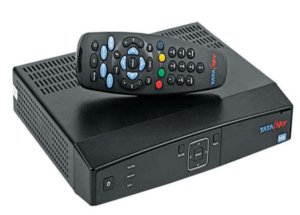

Industry experts, on the other hand, feel that since most international brands sold in India already have much higher and more stringent standards than those proposed by BIS, such a move will not be an effective barrier to imports
By EB Bureau
 Thursday, June 20, 2013: The Department of Electronics and Information Technology (DeitY) is serious about promoting the indigenous manufacturing of set-top boxes (STB). Recently, it held a meeting of stakeholders in the STB sector to not only facilitate the design, development and manufacture of domestic STBs but also to set standards for these devices.
The Core Advisory Group for Research and Development (R&D) in Electronics Hardware (CAREL), the empowered group that reports to the principal scientific adviser to the Government of India, has identified STBs as one of the six products to be designed, developed and manufactured indigenously. The 2013 Budget announcement to increase import duty on STBs from 5 per cent to 10 per cent underscores DeitY’s effort to promote domestic manufacturing. STBs are now being covered under the Special Focus Product Scheme of the Foreign Trade Policy as well.
STB standards are a must
At the meeting, DeitY emphasised that there is a need to make the existing standards for STBs more stringent to put a stop to the cheap imported STBs, particularly from China. According to a CAREL report, in the financial year 2011-12, domestic production catered to roughly only 30 per cent of the total of 12 million STBs installed. The import component of these STBs was around 55 per cent. As there is no proper enforcement framework to check the quality standards of imported STBs, cheap imports are substituting good quality domestic products. The BIS standards for STBs that were introduced in 2003 are very basic and relatively outdated now.
In the present scenario, the dependence on acquired technologies or imported components is high, resulting in a sizeable import bill as well as depriving local vendors from benefiting from a big market opportunity.
Explaining the motive behind DeitY’s effort to make the existing standards tougher, Amit Kharbanda, executive director, MyBox Tech Pvt Ltd, one of the participants in the DeitY meeting, says, “DeitY wants to make these standards more stringent so that only Tier I and II companies can match them, as meeting these standards will increase the cost of production. This will also help to prevent domestic firms from developing inferior quality STBs.”
As far as reducing imports is concerned, Kharbanda says that this is a fruitless exercise as the overseas companies that sell their products in India have much higher and more stringent standards than that of BIS. “So there is not much DeitY can do by making the existing standards tougher,” he adds.
Industry participants at the DeitY meeting also said that there is a need to develop STBs that could withstand the wide power fluctuations in India, come with local language access and are energy efficient.
Besides adopting stringent standards, the two other important steps taken by DeitY to promote domestic manufacturing of STBs are: to offer incentives under the Modified Special Incentive Package Scheme (MSIPS); and the development of the indigenous Conditional Access System (CAS), which will be provided to domestic manufacturers at a lower price.
With the mandatory digitalisation of the broadcast network in India, there is a projected demand of nearly 200 million set-top boxes for TV sets and educational purposes.
With a product life span of five to seven years, India will witness a huge replacement market in two to four years from now, as about 45 million STBs have already been installed. There will also be a huge opportunity for the export of STBs, as other countries are also taking up digitisation of cable TV. India can leverage this opportunity to become a dominant player in the export market.