February 14, 2015: India Electronics & Semiconductor Association (IESA), the premier trade body representing the Indian Electronic System Design and Manufacturing (ESDM) industry today disclosed details of their key role in enabling the Memorandum of Understanding (MoU) between Cricket Semiconductor and the government of Madhya Pradesh for an analog fab proposed to be set up in the state. They provided a strategic roadmap to the company for locating the proposed unit in the country. The industry body is also helping Madhya Pradesh for their investment promotion initiatives. The proposed investment is expected to be Rs 60 billion to set up an analog wafer fab in the country.
The creation of this fab ecosystem coupled with the products and systems value chain is expected to create close to 450,000 new jobs, making a potential future economic impact of $40 billion, over its project life span and reduce electronics import burden for the nation.
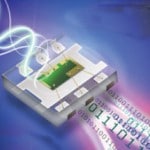
Cricket Semiconductor is a US based company focused on the creation of a speciality foundry in India. Their goal is to establish India’s first high volume, globally competitive production wafer fab. As semiconductors are the key component of any electronic product, the presence of a wafer fab will help in faster growth of the ESDM industry in the state.
Madhya Pradesh recently approved the Analog Semiconductor Fabrication [FAB] Investment Policy that provides for free government land, reimbursement for the cost of building the shell of the manufacturing unit, 24X7 power supply from two separate power grids and quality water supply at the doorsteps of the FAB units at an internationally competitive price fixed for 10 years. With this new policy, the state government will extend support to any fab investment that exceeds Rs 30 billion in the state.
Department of Electronics and Information Technology (DeitY) has been instrumental in attracting large scale investments in India’s ESDM sector by formulating conducive policy framework. Policies such as Modified Special Incentive Package Scheme (M-SIPS) have played a vital role in bringing investors’ attention to the country. DeitY and Government of India are working relentlessly to ensure ‘Ease of doing business’ to realize the country’s huge potential in bringing similar large scale investments in the days to come.
“It is our great pleasure to announce the intent of US based Cricket Semiconductor to set up India’s first Analog fab unit in Madhya Pradesh. We have been the fastest growing state in the country with over 17 per cent CAGR in GSDP over last 10 years. It is our constant endeavour to transform the state into a fundamentally strong manufacturing based economy and the electronics system design and manufacturing (ESDM) sector is a thrust area for us. We commend IESA’s role towards investment promotion for the state and its continual effort in elevating the country’s ESDM ecosystem and enabling the electronics industry to use semiconductor products manufactured internally. The government of Madhya Pradesh aims for the state to serve as the heart of the Indian ecosystem for the ESDM sector. This is our commitment to achieving the goal of “Make in India” through a strong manufacturing sector that shall provide jobs to our citizens,” said Bhupendra Singh, Minister for Science and Technology, Government of Madhya Pradesh.
Emphasising the need for fabs in India, Ashok Chandak, Chairman, IESA said, “We commend and applaud Shivraj Chauhan, Chief Minister of Madhya Pradesh for his vision and Bhupendra Singh and Hari Ranjan Rao, Secretary to CM, Science and Technology, Government of Madhya Pradesh for the speedy action on analog fab policy and announcement of MoU with Cricket Semiconductor towards India’s first Analog fab. The fab decision along with two approved EMC’s will bring Madhya Pradesh state at the center stage of global ESDM ecosystem with immense potential.”
“The speciality fab will enable the electronics industry to better utilise the Indian skill sets, give fillip to start up’s and enable innovations of electronic products designed in India at lower cost of technology development, lower investment cost and lesser risk. With Cricket Semiconductor team’s deep experience in design, technology, and manufacturing of analog / power semiconductors, we hope to see the analog and power semiconductors being made in India very soon,” he added
“India has a large and fast growing electronics market. A speciality wafer fab focused on analog/power semiconductors is well suited to catalyse the Indian ESDM ecosystem. We are confident that we can establish a high-volume, globally competitive speciality wafer fab in India. We are thankful to IESA for their strategic insights and support for this project and help in finalizing the MoU with the Government of Madhya Pradesh towards making this a reality,” said Lou Hutter, CEO, Cricket Semiconductor.
“This project differs fundamentally from typical wafer fab projects in several ways. The project outlay, at around Rs 60 billion, is less than less than 1/10th of a leading edge digital fab. The emphasis will be on processes and technologies that align to Indian as well as global requirements such as industrial and automotive. Importantly, the cost of analog / power semiconductor product development is significantly less than digital semiconductor products. This lowers the investment entry barrier for Indian entrepreneurs to bring innovative products to the market, stimulating the ESDM ecosystem and leading to the creation of many thousands of jobs,” he added
Every electronics system contains significant analog/power chip content. Analog / mixed signal chips are used in the functioning of mobile phones, UPS inverters, smart meters, automotive and industrial production and thousands of other electronic products; therefore the chips developed at an analog fab cater to various industry segments. India evolved from the PC to the mobile era and is now gradually stepping into the Internet of Things (IoT) era. IoT is very dependent on analog / mixed signal and this factor is spurring the prominence of analog fab in today’s context.