
Govt targets indigenous supercomputers, three-phase plan laid out

As part of the Modi government’s ‘Make in India’ initiative, supercomputers will be manufactured in India under a three-phase programme, officials said.
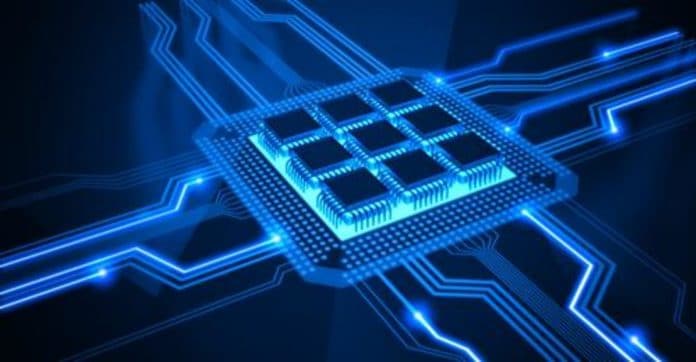
According to PTI, in the initial two phases of the National Supercomputers Mission, the focus will be on designing and manufacturing subsystems such as high-speed Internet switches and compute nodes indigenously.

The Rs 4,500-crore project was approved by the cabinet committee on economic affairs in March last year.

A Request for Proposal (RPF) for the project is in its final stages and is being executed by the Centre for Development of Advanced Computing (C-DAC), Pune, a research and development institution under the Ministry of Electronics and Information Technology.

- Advertisement -

The NSM envisages nearly 50 supercomputers in three phases. The government has plans to make these high-precision computing machines available for scientific researches across the country.

Milind Kulkarni, a senior scientist with the ministry of science and technology who is over-looking the project, said the plan is to “have six supercomputers in the first phase”.

In the first phase, three supercomputers will be imported. System assemblies for the remaining three will be manufactured abroad, but assembled in India. C-DAC will responsible for the overall system design.

Two supercomputers will have a peak operational capacity of two petaflops and the rest will be of 500 teraflops.

Floating point operations per second (FLOPS) is the standard unit to measure computational power.

A petaflop can be expressed as a thousand trillion floating point operations per second. A teraflop is equal to one million million floating-point operations per second.

The six supercomputers will be placed at four IITs —Banaras Hindu University, Kanpur, Kharagpur and Hyderabad —Indian Institute of Science Education and Research, Pune, and Indian Institute of Science, Bengaluru.

“The goal is to have them by the end of this year,” Ashutosh Sharma, secretary in the Ministry of Science and Technology said.

In the second phase, major parts like high-speed Internet switches, compute nodes and network systems will be manufactured in India.

Kulkarni said that almost the entire system will be built in India in the third phase.

India started its own supercomputing mission in 1988 under which the first series of Param supercomputers were manufactured. The mission lasted 10 years and since 2000, there has been no major push for the project.

Currently, countries such as the US, Japan, China and the European Union (EU) make up a major share of the top supercomputing machines in the world. The NSM will enable India to leapfrog to the league of world-class computing power nations.

There are nearly 25 supercomputers in India in different institutes. These are used for varied purposes, including to deduce complex phenomena like weather, climate change, nuclear reactions etc.


- Advertisement -
Loading form…

Industry's Buzz

BEL Senior Executives to Visit Their Alma Maters to Bridge Industry-Academia Gap

0
Through its TechConnect programme, BEL aims to familiarise students with defence electronics and prepare them for careers in public sector undertakings (PSUs). Bharat Electronics Limited...
Representational image of telecom equipment

RAN Market Shoots Green in Five Years

0
The market remains highly concentrated with top five RAN suppliers, Huawei, Ericsson, Nokia, ZTE, and Samsung occupying 97 per cent of the market in...
Karnataka

LAMT Mulls to Manufacture in Karnataka: Minister Patil

0
LAMT’s expertise include manufacturing high-purity semiconductor materials and physical vapour deposition (PVD) sputtering targets.  Karnataka Minister MB Patil announced last week that the US-based Linde...
Qnity

Qnity Acquires Meridian’s Electronics Business For USD 840 Million

0
Qnity's $840 million deal brings specialised electronic adhesives for semiconductor packaging, optical connectivity and thermal management into its portfolio, with AI data centres among...
LG Electronics

KT And LG Electronics Test Quantum Communication System, File 13 Patents

0
KT and LG Electronics have demonstrated quantum communication hardware that sends and recovers image and text data, with the joint development resulting in 13...

Learn From Leaders

Rohin Y, CEO and Co-Founder, LightSpeed Photonics, India

“We reduce latency by shortening the distance signals travel through copper and extending that...

0
As AI data centres scale, how can optical connectivity overcome the limits of electronic interconnects? In an interview, Rohin Y of LightSpeed Photonics speaks...
SK Venkataraghavan, Director, Solutions and Services Group, Lenovo India

“Everybody wants to jump into AI, but many organisations are still not ready from...

0
In an exclusive interaction with EFY's Saba Aafreen, Lenovo's S. K. Venkataraghavan discusses the challenges of moving enterprise AI from pilots to production, with...
Santhosh Kumar, Managing Director at Texas Instruments India

“India Is Becoming A Place To Design Products For The World”- Santhosh Kumar, TI...

0
As Texas Instruments marks 40 years in India, Santhosh Kumar, managing director and president, TI India, speaks about the company’s evolution towards end-to-end product...

The Eye That Spots Defects Before They Happen

0
https://youtu.be/vanxJYT2LIo Most inspection machines tell you a board failed. Delvitech's tells you when it is about to.Every inspection stage in a factory traditionally needs its...
Pravin Patel, Founder and Chairman, Brio Agri, India

“Our goal is not to replace farmers, but to empower them with better tools,...

0
In an exclusive interaction with EFY's Saba Aafreen, Pravin Patel, Founder and Chairman of Brio Agri, discusses building hydroponics and controlled-environment agriculture in India,...

Startups

Jaisimha Rao, Founder and CEO, Niqo Robotics

“Our Robots Are Tractor-Mounted, With the Tractor Providing Propulsion, So the System Does Not...

0
A robot may work perfectly in a lab, but taking it to a real farm is a different test altogether. In an exclusive interaction...

RHIA’s PLC Slayer Eliminates Fragmented Architectures In Industrial Automation

0
The startup’s innovation integrates separate controllers, sensors, and motor drivers into a single, flexible industrial automation platform. Does building industrial-grade automation always have to be...

EVE NET Turns Spare Smartphone Capacity Into An AI Cloud

0
What if the phone in your pocket could help run AI? A Mumbai-based startup wants to cut AI computing costs by tapping into millions...

Vimag Labs’ Magnet-Free Motors Set To Redefine EV Efficiency

0
Can software replace rare-earth materials? This Bengaluru startup uses virtual magnets to eliminate traditional permanent magnets, boosting EV motor efficiency up to 95 per...

Pine Labs Q2 FY27 Profit Soars 6.5x

0
Pine labs said that it processes 25 million transactions per day, a 22 per cent increase from the previous year. Fintech company Pine Labs, reported...