E-waste in India is going to informal sector

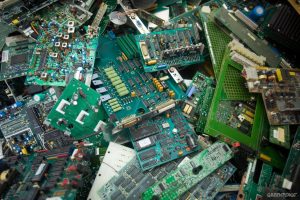
India produces an abysmally high amount of e-waste every year and due to the lack of effective implementation of the Extended Producer’s Responsibility (EPR) rules of 2016 introduced by the Ministry of Environment, Forest and Climate Change, a large chunk of such waste is pumped into the informal centres of e-waste recycling, causing health and environmental hazards.
E-waste, informal sector, electronics, India

The Ministry of Environment, Forest and Climate Change rolled out the E-waste (Management) Rules in 2016 with the aim of reducing e-waste production and increasing recycling in the most efficient manner.

Under these rules, the government introduced EPR which makes producers liable to collect 30% to 70% (over seven years) of the e-waste they produce, but according to environmentalists, not much is being done on the ground.

India generated about 1.7 million tonnes of electronic waste in 2016, ranking among the top three countries in Asia with the highest e-waste generation in absolute quantities after China and Japan. But, only 1.5% of the total e-waste generated is recycled by formal recyclers or “institutional process” of recycling, according to a study done by Assocham.

The study also suggests that by 2020, India’s e-waste from old mobiles and computers will rise by about 1800% and 500% respectively, compared to levels in 2007.

- Advertisement -

Swati Singh Sambhyal, Project Director at the Centre for Science and Environment, told an English daily that 98% of the e-waste goes into the informal sector for recycling which causes serious environmental and health hazards.

The EPR rules need to be strongly implemented to fix responsibility with producers as is done in many developed nations like in the Europe. Even when the government has laid down rules for companies to take back their products after they run out of their life, we do not see any such initiatives from these companies to meet their targets. Presently, they are not even taking back 10% of their products, nor do we see companies making their consumers aware of such a scheme run by electronic manufacturing companies.” Swati Sambhyal added.

Even when some companies have their e-waste recycling boxes at some stores, lack of awareness and incentive among consumers is also a contributing factor to a large chunk of such e-waste landing at the informal sector.

The Central Pollution Control Board (CPCB), India’s apex pollution regulator, issued notices to 225 electrical and electronics manufacturers for failing to meet provisions under the new e-waste management rules. For producers to meet their e-waste recovery targets, they have to obtain authorisation from the CPCB. The notices were issued for failing to even apply for the Extended Producer Responsibility authorisation. Only 143 have received authorisation so far.

By Baishakhi Dutta

- Advertisement -
Loading form…

Industry's Buzz

Anoop Kumar Rai Takes Charge as BEL Director (Marketing)

0
Beyond defence applications, Rai has driven BEL’s diversification into civilian infrastructure Bharat Electronics Limited (BEL) has appointed Anoop Kumar Rai as its Director (Marketing), effective...

BEL Appoints Ambrish Tripathi as Director (Human Resources)

0
Tripathi’s appointment comes as BEL continues to expand its capabilities across defence and strategic technologies Bharat Electronics Limited (BEL) has appointed Ambrish Tripathi as Director...

Suzlon Adds 250 MW Torrent Order, Crosses 1.1 GW in FY27 Orders 

0
Suzlon has secured a 250 MW wind energy order from Torrent Green Energy, taking their cumulative partnership to more than 1.3 GW across three...
Chip Making (representational Image)

India to Revise Semiconductor Rules Within Two Months, Says Piyush Goyal 

0
The planned changes aim to simplify approvals and make it easier for semiconductor manufacturers to source equipment and components from global suppliers.  India will amend...

North American EMS Book-to-Bill Ratio Rises to 1.29 in July 2026

0
The Association cautioned that month-to-month movements can be affected by seasonality and short-term volatility The North American electronics manufacturing services (EMS) sector recorded a book-to-bill...

Learn From Leaders

(L-R) Nikesh Gondchawar, Strategic & Technical Advisor – Robotics Manufacturing; Shrikrushna Kakade, Founder Partner; Nikhil Kakade, Senior Technical Advisor – Robotics & Control Systems, SlightGen Solutions LLP

“A Made-In-India Robotic PCB Soldering System That Automates The Through-Hole Soldering Process!” – Shrikrushna...

0
Electronics manufacturing is complex, and automation often comes at a high cost. To bridge this gap and offer a more affordable solution in India,...
Navdeep Narula, Executive Director, Client and Endpoint Solutions, Ingram Micro, India

“Enterprise Computing Is Shifting From CPU to GPU And Now Toward NPU-Based Systems ”...

0
The shift from CPU to GPU to NPU-based computing is redefining today’s enterprise endpoints. In an exclusive conversation, Navdeep Narula from Ingram Micro discusses...

India’s Robotics Push Opens New Hardware Opportunities

0
How do you build India’s physical AI future when critical robot components still come from overseas? Niqo Robotics reveals where the gaps remain.  India’s push...
Gadhadar Reddy, CEO and Founder, NoPo Nanotechnologies

How A Material Thinner Than Human Hair Could Transform EV Batteries And Electronics –...

0
What if a material 200,000 times thinner than a human hair could transform EV batteries, semiconductors, and advanced electronics? NoPo Nanotechnologies is making that...
Raja Rajeev Kumar, Mentor at IIT Startups, Chairman of the Board of Trustees, LaxmiRamaVarma Holdings International, and Founder and CEO, ChromoSoul Ventures

“Build Strong Startups, and Funding Will Follow”- Raja Rajeev Kumar, IIT Startups, LaxmiRamaVarma Holdings...

0
While AI and software startups attract attention and capital, electronics ventures often struggle for both. Raja Rajeev Kumar from IIT Startups, LaxmiRamaVarma Holdings International...

Startups

Akshar Vastarpara, Founder and CEO, Vicharak

“Our SBCs Are Designed As Complete Edge-Computing Platforms That Combine Everything On A Single...

0
An Indian startup builds affordable edge AI boards for robots, drones, and industry, positioning them as Raspberry Pi alternatives. In an EFY interview with...
(L-R) Sri Kusulu Devalla, Co-Founder and Hetendra Singh Rathore, Founder, Segritech

“We don’t just sort fruit; we match every quality grade with the right buyer.”...

0
An agritech startup has developed an AI-powered machine that sorts and grades fruits directly on farms, helping reduce post-harvest losses by connecting produce with...
Dr Naveen Yanduru, CEO, Axiro Semiconductor Private Limited

“India Can Lead In IP—If It BacksIts Own Builders”

0
Axiro Semiconductor designs RF and satellite chips, ships millions worldwide, and retains its startup mindset while tackling complex technical challenges. In a conversation with...
Dr Sanjay Ahuja, Founder and CEO of Cionlabs, India

“We are solving India-specific challenges rather than offering generic ‘black box’ IoT solutions.”

0
From hybrid mesh networking to AI-enabled edge devices, an Indian IoT startup is developing home-grown solutions to improve connectivity, strengthen privacy and support the...
RTLS

Amimotion’s World-Smallest UWB Tags That Give Factories A Digital Nervous System For Physical AI

0
A Bengaluru startup is turning factories into intelligent spaces with tiny UWB tags, AI-powered visibility, and real-time tracking that can automate workflows, improve safety,...