
Solar companies ask regulators of Haryana, Uttarakhand to remove bottlenecks

Solar developers have moved the power regulators of Haryana and Uttarakhand to smoothen out anomalies which are impeding the growth of solar capacity in these two states.
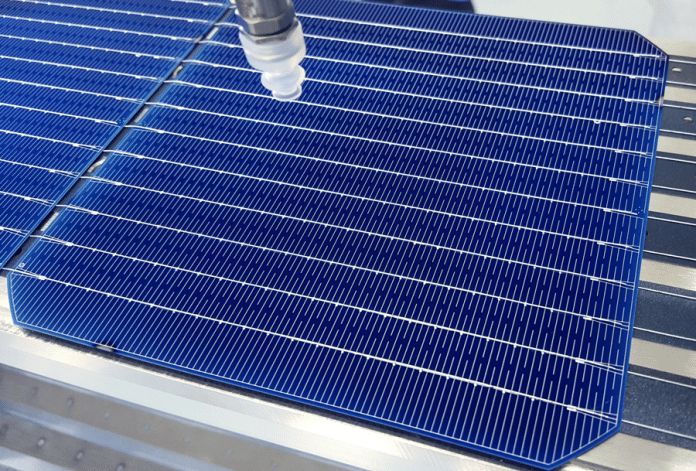
Image for representational purpose

In one petition, the Distributed Solar Power Association (DISPA) has noted that the regulator, the Haryana Electricity Regulatory Commission (HERC) has yet to implement a key recommendation of the Haryana Solar Policy announced in March 2016. In another, it has appealed to the Uttarakhand Electricity Regulatory Commission (UERC) to remove the limit of 500 kW it has imposed on the size of rooftop solar plants.

Haryana’s solar policy clearly states that both ground-mounted and rooftop solar projects should be exempted from “all electricity taxes and cess, electricity duty, wheeling charges, cross subsidy charges, transmission and distribution charges and surcharges”. However, HERC has not yet passed any order making these concessions effective. “While there is a declining trend, the current cost of solar power projects is high,” the petition says. “In the circumstances, certain incentives are required for effective development of solar power in the state. In the absence of the order, any developer of solar power is forced to pay the normal wheeling charges which are applicable to conventional plants… (which) makes solar power a much more expensive option… and the development of the solar energy sector is hindered.”

The petition before the UERC argues that the 500 kW limit for rooftop solar plants is entirely arbitrary. Its origins lie in the guidelines issued by the Ministry of New and Renewable Energy (MNRE) in June 2014, which imposed “a limit of 500 kW in respect of installed solar capacity for projects under net metering arrangement”. (Only solar rooftop plants have net metering which enables their owners to both sell power to the grid and consumer power from it if they fall short.) The UERC simply simply copied this provision. The petition points out that the limit was placed by MNRE on projects “which wanted to avail capital subsidy, due to the limited funds at its disposal, and not on any technical ground”. It notes that subsequently the MNRE scrapped the subsidy and thereby the limit as well.

“The imposition of an absolute restriction on the capacity of a rooftop solar plant without any basis is arbitrary and unreasonable,” the petition says. “No restrictions have been imposed on the size or capacity of rooftop plants in other states.”

- Advertisement -

Earlier in September last year, DISPA had also moved the Gujarat Electricity Regulatory Commission (GERC) to provide net metering and other incentives for putting up solar rooftop plants not only to house owners, but also to solar developers so that they can lease roofs from house owners. House owners were often reluctant to set up solar rooftop projects as they were unaware of the technicalities or could not afford the initial upfront costs. That petition is still pending.


- Advertisement -
Loading form…

Industry's Buzz

Garuda

Bengaluru Based Airbound Raises $37 Million in Series A Funding to Expand Its Drone...

0
The company targets commercial scale across India, aiming to make aerial logistics cheaper than road transport while laying the foundation for modern aviation.  Indian aerospace...
Solar Panels (Representational Image)

Avaada Electro Files UDRHP for ₹7,600 Crore IPO 

0
The proposed IPO includes a ₹1,600 crore fresh issue, with around ₹1,200 crore earmarked for debt repayment and letter-of-credit obligations.  Avaada Electro has moved closer...
NVIDIA

AM Intelligence to Deploy 9,000 Nvidia Rubin GPUs in Hyderabad 

0
AM Intelligence has ordered 9,000 Nvidia Rubin GPUs for a 30MW Hyderabad AI facility, forming the first phase of its planned 1GW compute-as-a-service network.  Data...

Homegrown IndieSemiC Launches Wi-Fi Module for IP Cameras and CCTV

0
Indian fabless startup offers local manufacturers a seamless, USB-based plug-and-play solution for wireless surveillance integration.  Fabless chip design startup IndieSemiC has launched the “ISC-8188-B”, a...

LOGIC Announces Dedicated Academy to Train Educators

0
LOGIC Academy has so far trained more than 60,000 teachers across 5,000 educational institutions LOGIC has recently announced the launch of LOGIC Academy. This platform...

Learn From Leaders

(L-R) Nikesh Gondchawar, Strategic & Technical Advisor – Robotics Manufacturing; Shrikrushna Kakade, Founder Partner; Nikhil Kakade, Senior Technical Advisor – Robotics & Control Systems, SlightGen Solutions LLP

“A Made-In-India Robotic PCB Soldering System That Automates The Through-Hole Soldering Process!” – Shrikrushna...

0
Electronics manufacturing is complex, and automation often comes at a high cost. To bridge this gap and offer a more affordable solution in India,...
Navdeep Narula, Executive Director, Client and Endpoint Solutions, Ingram Micro, India

“Enterprise Computing Is Shifting From CPU to GPU And Now Toward NPU-Based Systems ”...

0
The shift from CPU to GPU to NPU-based computing is redefining today’s enterprise endpoints. In an exclusive conversation, Navdeep Narula from Ingram Micro discusses...

India’s Robotics Push Opens New Hardware Opportunities

0
How do you build India’s physical AI future when critical robot components still come from overseas? Niqo Robotics reveals where the gaps remain.  India’s push...
Gadhadar Reddy, CEO and Founder, NoPo Nanotechnologies

How A Material Thinner Than Human Hair Could Transform EV Batteries And Electronics –...

0
What if a material 200,000 times thinner than a human hair could transform EV batteries, semiconductors, and advanced electronics? NoPo Nanotechnologies is making that...
Raja Rajeev Kumar, Mentor at IIT Startups, Chairman of the Board of Trustees, LaxmiRamaVarma Holdings International, and Founder and CEO, ChromoSoul Ventures

“Build Strong Startups, and Funding Will Follow”- Raja Rajeev Kumar, IIT Startups, LaxmiRamaVarma Holdings...

0
While AI and software startups attract attention and capital, electronics ventures often struggle for both. Raja Rajeev Kumar from IIT Startups, LaxmiRamaVarma Holdings International...

Startups

(L to R) C2i Semiconductors Founders—Vikram Gakhar, Founder & Director, Mixed Signal; Preetam Tadeparthy, Founder, CTO, VP, Engineering; Ram Anant, Founder & CEO; B.S. Dattatreya, Founder & Director, Power

Bengaluru Startup Targets AI Data Centre Power Delivery

0
C2i is building power systems that can help AI servers use electricity more efficiently and reliably. Two friends, Ram Anant and Preetam Tadeparthy, were working...
Akshar Vastarpara, Founder and CEO, Vicharak

“Our SBCs Are Designed As Complete Edge-Computing Platforms That Combine Everything On A Single...

0
An Indian startup builds affordable edge AI boards for robots, drones, and industry, positioning them as Raspberry Pi alternatives. In an EFY interview with...
(L-R) Sri Kusulu Devalla, Co-Founder and Hetendra Singh Rathore, Founder, Segritech

“We don’t just sort fruit; we match every quality grade with the right buyer.”...

0
An agritech startup has developed an AI-powered machine that sorts and grades fruits directly on farms, helping reduce post-harvest losses by connecting produce with...
Dr Naveen Yanduru, CEO, Axiro Semiconductor Private Limited

“India Can Lead In IP—If It BacksIts Own Builders”

0
Axiro Semiconductor designs RF and satellite chips, ships millions worldwide, and retains its startup mindset while tackling complex technical challenges. In a conversation with...
Dr Sanjay Ahuja, Founder and CEO of Cionlabs, India

“We are solving India-specific challenges rather than offering generic ‘black box’ IoT solutions.”

0
From hybrid mesh networking to AI-enabled edge devices, an Indian IoT startup is developing home-grown solutions to improve connectivity, strengthen privacy and support the...