
Customs duty hike might fall short to reform mobile manufacturing in India

The Budget presented by finance minister Arun Jaitley gave a push to ‘Make In India’ by raising the customs duty on mobile phones and some components that are used to make phones.

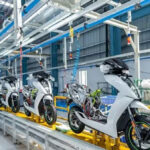
Image for representational purpose only

As it seems, this measure might prove to be insufficient in making substantial changes to the mobile manufacturing ecosystem in the country. The Budget has raised customs duty on cellular phones (completely built up) from 15 per cent to 20 per cent. On some low-value components, the hike varies from 10 to 15 per cent. The key component like PCB (printed circuit board) of the cellular phones, which accounts for about 55 per cent of the total mobile cost, remains untouched.

The expectations were ripe that the government, by increasing customs duty on PCB assembly, will promote manufacturers to bring SMT (surface mount technology) in India which will increase the percentage of value addition done in the country. SMT is a process where electronic components are assembled with automated machines on the surface of a board (PCB).

With the changes in the customs duty, the percentage value addition done in India is expected to rise from about 10 per cent currently to 17 per cent in a year. By shifting SMT work to India, this would have gone up to 20-25 per cent. “You cannot push Make In India unless there are steep excise duty on key components like PCB assembly, battery and display,” says Neil Shah, Research Director, Counterpoint Research.

The decision to increase customs duty on phones is likely to affect companies like Apple and some homegrown brands like Micromax who are shipping CBU units (completely built units) from outside the country. Some homegrown brands were behind the curve at the time of the shift from 3G to LTE. As a result, they had to import handsets from China. Most Chinese brands like Xiaomi, Vivo and Oppo are doing SKD-level production in the country. As against CBU units which are final products, SKD (semi-knocked down) requires some labour to assemble five-six key components which are imported.

- Advertisement -

“If the government wants to push ‘Make In India’, they have to promote for higher imports of completely knocked down (CKD) kits that increases the local value addition as the assembling of mobile phones requires more labour and an assembly line,” says an expert. In India, Samsung is the largest handset company to assemble CKD kits.

With such half-hearted measures, the government might not be able to make significant strides with its ‘Make In India’ mission.

- Advertisement -
Loading form…

Industry's Buzz

NVIDIA

AM Intelligence to Deploy 9,000 Nvidia Rubin GPUs in Hyderabad 

0
AM Intelligence has ordered 9,000 Nvidia Rubin GPUs for a 30MW Hyderabad AI facility, forming the first phase of its planned 1GW compute-as-a-service network.  Data...

Homegrown IndieSemiC Launches Wi-Fi Module for IP Cameras and CCTV

0
Indian fabless startup offers local manufacturers a seamless, USB-based plug-and-play solution for wireless surveillance integration.  Fabless chip design startup IndieSemiC has launched the “ISC-8188-B”, a...

LOGIC Announces Dedicated Academy to Train Educators

0
LOGIC Academy has so far trained more than 60,000 teachers across 5,000 educational institutions LOGIC has recently announced the launch of LOGIC Academy. This platform...
NVIDIA

Rising Memory Costs Push Nvidia AI Server Prices Higher 

0
Nvidia-based AI servers could become more than 15% costlier as rising HBM and DRAM prices increase the cost of AI infrastructure.  Nvidia-based artificial intelligence servers...
Ather

Hero MotoCorp Subscribes to Rs 960 Crore Ather Energy Warrants 

0
The investment forms part of Hero MotoCorp’s previously announced plan to invest up to Rs 1,000 crore in Ather Energy through a preferential issue.  Hero...

Learn From Leaders

(L-R) Nikesh Gondchawar, Strategic & Technical Advisor – Robotics Manufacturing; Shrikrushna Kakade, Founder Partner; Nikhil Kakade, Senior Technical Advisor – Robotics & Control Systems, SlightGen Solutions LLP

“A Made-In-India Robotic PCB Soldering System That Automates The Through-Hole Soldering Process!” – Shrikrushna...

0
Electronics manufacturing is complex, and automation often comes at a high cost. To bridge this gap and offer a more affordable solution in India,...
Navdeep Narula, Executive Director, Client and Endpoint Solutions, Ingram Micro, India

“Enterprise Computing Is Shifting From CPU to GPU And Now Toward NPU-Based Systems ”...

0
The shift from CPU to GPU to NPU-based computing is redefining today’s enterprise endpoints. In an exclusive conversation, Navdeep Narula from Ingram Micro discusses...

India’s Robotics Push Opens New Hardware Opportunities

0
How do you build India’s physical AI future when critical robot components still come from overseas? Niqo Robotics reveals where the gaps remain.  India’s push...
Gadhadar Reddy, CEO and Founder, NoPo Nanotechnologies

How A Material Thinner Than Human Hair Could Transform EV Batteries And Electronics –...

0
What if a material 200,000 times thinner than a human hair could transform EV batteries, semiconductors, and advanced electronics? NoPo Nanotechnologies is making that...
Raja Rajeev Kumar, Mentor at IIT Startups, Chairman of the Board of Trustees, LaxmiRamaVarma Holdings International, and Founder and CEO, ChromoSoul Ventures

“Build Strong Startups, and Funding Will Follow”- Raja Rajeev Kumar, IIT Startups, LaxmiRamaVarma Holdings...

0
While AI and software startups attract attention and capital, electronics ventures often struggle for both. Raja Rajeev Kumar from IIT Startups, LaxmiRamaVarma Holdings International...

Startups

(L to R) C2i Semiconductors Founders—Vikram Gakhar, Founder & Director, Mixed Signal; Preetam Tadeparthy, Founder, CTO, VP, Engineering; Ram Anant, Founder & CEO; B.S. Dattatreya, Founder & Director, Power

Bengaluru Startup Targets AI Data Centre Power Delivery

0
C2i is building power systems that can help AI servers use electricity more efficiently and reliably. Two friends, Ram Anant and Preetam Tadeparthy, were working...
Akshar Vastarpara, Founder and CEO, Vicharak

“Our SBCs Are Designed As Complete Edge-Computing Platforms That Combine Everything On A Single...

0
An Indian startup builds affordable edge AI boards for robots, drones, and industry, positioning them as Raspberry Pi alternatives. In an EFY interview with...
(L-R) Sri Kusulu Devalla, Co-Founder and Hetendra Singh Rathore, Founder, Segritech

“We don’t just sort fruit; we match every quality grade with the right buyer.”...

0
An agritech startup has developed an AI-powered machine that sorts and grades fruits directly on farms, helping reduce post-harvest losses by connecting produce with...
Dr Naveen Yanduru, CEO, Axiro Semiconductor Private Limited

“India Can Lead In IP—If It BacksIts Own Builders”

0
Axiro Semiconductor designs RF and satellite chips, ships millions worldwide, and retains its startup mindset while tackling complex technical challenges. In a conversation with...
Dr Sanjay Ahuja, Founder and CEO of Cionlabs, India

“We are solving India-specific challenges rather than offering generic ‘black box’ IoT solutions.”

0
From hybrid mesh networking to AI-enabled edge devices, an Indian IoT startup is developing home-grown solutions to improve connectivity, strengthen privacy and support the...