IoT Chip Market To Reach $525.4 Billion By 2025: ResearchAndMarkets

  • The demand for IoT chip is expected to significantly increase in aerospace and defence as IoT technology will provide increased insights through sensors data
  • APAC is expected to hold the second-largest share in the global IoT chip market in 2020
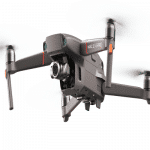
Image for representational purpose

The IoT chip market is projected to reach $525.4 billion by 2025 from $370.9 billion in 2019 as per a report by ResearchAndMarkets. It also said that this market is expected to grow at a CAGR of six per cent from 2020 to 2025.

The growth of application-specific MCUs and flexible SoC-type designs, adoption of IPv6, which provides more IP address space, technologies like AI fueling IoT adoption, development of internet connectivity, and growth of low-cost smart wireless sensor networks will help to speed up growth in this sector. Concerns regarding the security and privacy of user data may hamper the growth of this market.

IoT technology in the consumer electronics segment

The report said, “The consumer electronics end-use application mainly comprises smart consumer appliances. With the evolution of consumer appliances that can connect to the Internet and smartphones, the growth of IoT technology in the consumer electronics segment is expected to receive a boost. Smart appliances, also known as intelligent appliances, have the ability to measure and control their energy usage and communicate it to homeowners and utility departments.”

It continued, “These appliances can be connected to smart energy meters or home energy management systems and can help reduce electricity usage during off-peak hours. The growth of this segment is attributed to the increase in the market of smart home appliances such as smart TVs, smart speakers, smart washing machines, and smart refrigerators.”

- Advertisement -

Increased insights through sensors data

As per the report, the demand for IoT chip is expected to significantly increase in aerospace and defence as IoT technology will provide increased insights through sensors data. It helps the government to increase the overall efficiency, safety, and control of flights. This will lead to improved maintenance as performance data can be analysed in real time. It added that ground crew and engineers can diagnose issues quickly and reduce downtime which leads to a reduction of cost.

The report stated, “IoT in the aerospace and defence segment provides connectivity and integration and equips the manufacturer with a wide-ranging view of their operations. The aerospace & defence end-use application uses sensors to capture comprehensive machine data. These sensors can be used on key equipment, machines, and vehicles. IoT offers numerous opportunities to airlines for the improvement of baggage handling and equipment monitoring.”

APAC leads

The report added that few consumer electronic devices, industrial application devices, and healthcare application devices consume power in the range of 1-3 W. Some of them are fitness and heart rate monitors, blood pressure monitors, blood glucose meters, continuous glucose monitors, pulse oximeters, automated external defibrillators, programmable syringe pumps, wearable injectors, and multi-parameter monitors. It added that consumer electronic devices that contribute to the 1-3 W power consumption segment include smart TVs, smart refrigerators, smart dryers, smart dishwashers, smart deep freezers, and other home automation devices.

The report said that APAC is expected to hold the second-largest share in the global IoT chip market in 2020. It added that the growing penetration of the Internet across commercial as well as residential spaces, high consumer base, increasing disposable income, and improving IT infrastructure are major reasons for the growth in this region. It further said that the adoption of cloud-based services and the rising trend of industrial automation are the key growth drivers of the IoT chip market for commercial applications in countries such as China, South Korea, and Japan.

It added, “The commercialization of the applications of the IoT is estimated to be in its introductory stages in the developing economies of APAC. However, countries such as China, India, and Japan are aggressively taking initiatives, e.g., high investments in R&D, to encourage the adoption of IoT in this region, which is expected to boost the demand for IoT chips in the future.”

- Advertisement -
Loading form…

Industry's Buzz

NVIDIA

AM Intelligence to Deploy 9,000 Nvidia Rubin GPUs in Hyderabad 

0
AM Intelligence has ordered 9,000 Nvidia Rubin GPUs for a 30MW Hyderabad AI facility, forming the first phase of its planned 1GW compute-as-a-service network.  Data...

Aheesa Partners With Zigma to Take Indigenous VIHAAN-I Networking Chip to Market

0
VIHAAN-I is designed to support locally manufactured broadband devices and reduce dependence on imported networking silicon Chennai-based fabless semiconductor company Aheesa Digital Innovations (Aheesa) has...
Garuda

Bengaluru Based Airbound Raises $37 Million in Series A Funding to Expand Its Drone...

0
The company targets commercial scale across India, aiming to make aerial logistics cheaper than road transport while laying the foundation for modern aviation.  Indian aerospace...
Solar Panels (Representational Image)

Avaada Electro Files UDRHP for ₹7,600 Crore IPO 

0
The proposed IPO includes a ₹1,600 crore fresh issue, with around ₹1,200 crore earmarked for debt repayment and letter-of-credit obligations.  Avaada Electro has moved closer...

Homegrown IndieSemiC Launches Wi-Fi Module for IP Cameras and CCTV

0
Indian fabless startup offers local manufacturers a seamless, USB-based plug-and-play solution for wireless surveillance integration.  Fabless chip design startup IndieSemiC has launched the “ISC-8188-B”, a...

Learn From Leaders

(L-R) Nikesh Gondchawar, Strategic & Technical Advisor – Robotics Manufacturing; Shrikrushna Kakade, Founder Partner; Nikhil Kakade, Senior Technical Advisor – Robotics & Control Systems, SlightGen Solutions LLP

“A Made-In-India Robotic PCB Soldering System That Automates The Through-Hole Soldering Process!” – Shrikrushna...

0
Electronics manufacturing is complex, and automation often comes at a high cost. To bridge this gap and offer a more affordable solution in India,...
Navdeep Narula, Executive Director, Client and Endpoint Solutions, Ingram Micro, India

“Enterprise Computing Is Shifting From CPU to GPU And Now Toward NPU-Based Systems ”...

0
The shift from CPU to GPU to NPU-based computing is redefining today’s enterprise endpoints. In an exclusive conversation, Navdeep Narula from Ingram Micro discusses...

India’s Robotics Push Opens New Hardware Opportunities

0
How do you build India’s physical AI future when critical robot components still come from overseas? Niqo Robotics reveals where the gaps remain.  India’s push...
Gadhadar Reddy, CEO and Founder, NoPo Nanotechnologies

How A Material Thinner Than Human Hair Could Transform EV Batteries And Electronics –...

0
What if a material 200,000 times thinner than a human hair could transform EV batteries, semiconductors, and advanced electronics? NoPo Nanotechnologies is making that...
Raja Rajeev Kumar, Mentor at IIT Startups, Chairman of the Board of Trustees, LaxmiRamaVarma Holdings International, and Founder and CEO, ChromoSoul Ventures

“Build Strong Startups, and Funding Will Follow”- Raja Rajeev Kumar, IIT Startups, LaxmiRamaVarma Holdings...

0
While AI and software startups attract attention and capital, electronics ventures often struggle for both. Raja Rajeev Kumar from IIT Startups, LaxmiRamaVarma Holdings International...

Startups

(L to R) C2i Semiconductors Founders—Vikram Gakhar, Founder & Director, Mixed Signal; Preetam Tadeparthy, Founder, CTO, VP, Engineering; Ram Anant, Founder & CEO; B.S. Dattatreya, Founder & Director, Power

Bengaluru Startup Targets AI Data Centre Power Delivery

0
C2i is building power systems that can help AI servers use electricity more efficiently and reliably. Two friends, Ram Anant and Preetam Tadeparthy, were working...
(L-R) Sri Kusulu Devalla, Co-Founder and Hetendra Singh Rathore, Founder, Segritech

“We don’t just sort fruit; we match every quality grade with the right buyer.”...

0
An agritech startup has developed an AI-powered machine that sorts and grades fruits directly on farms, helping reduce post-harvest losses by connecting produce with...
Akshar Vastarpara, Founder and CEO, Vicharak

“Our SBCs Are Designed As Complete Edge-Computing Platforms That Combine Everything On A Single...

0
An Indian startup builds affordable edge AI boards for robots, drones, and industry, positioning them as Raspberry Pi alternatives. In an EFY interview with...
Dr Naveen Yanduru, CEO, Axiro Semiconductor Private Limited

“India Can Lead In IP—If It BacksIts Own Builders”

0
Axiro Semiconductor designs RF and satellite chips, ships millions worldwide, and retains its startup mindset while tackling complex technical challenges. In a conversation with...
Dr Sanjay Ahuja, Founder and CEO of Cionlabs, India

“We are solving India-specific challenges rather than offering generic ‘black box’ IoT solutions.”

0
From hybrid mesh networking to AI-enabled edge devices, an Indian IoT startup is developing home-grown solutions to improve connectivity, strengthen privacy and support the...