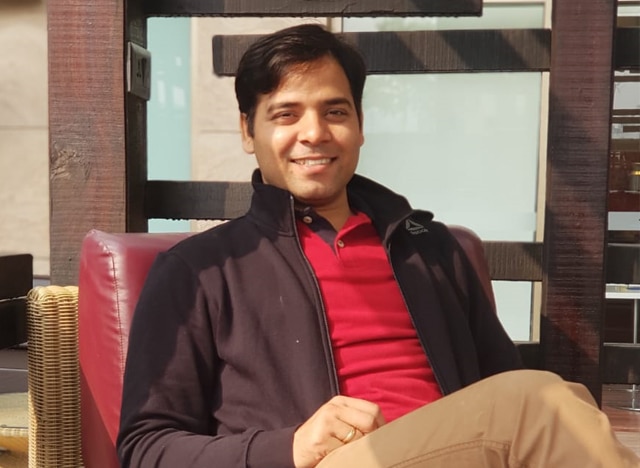

Samwha Capacitor Group, a Korean brand, has become an important part of the Indian electronic system design and manufacturing (ESDM) ecosystem with its global expertise and local presence. Anand Tripathi, Manager, Samwha India Energy Savings Pvt. Ltd., and Cho In Hee, Assistant Manager, Samwha Capacitor, in conversation with Sudeshna Das, consulting editor, EFY Group, share their views and company’s strategies both for global and the Indian market.

Q1. What is your view about the capacitor market both globally and in India?
Anand Tripathi: The capacitor market comprises a sizable part of the entire electronic industry. Considering the electronic industry is growing the capacitor market is also quite promising. We see a specific segment like mobile handset manufacturing has grown almost three times within the last five to six years span. According to Government data, electronic manufacturing is growing in the country steadily with an estimated CAGR of 7% per year for the next 10 years. A capacitor is an integral part of the printed circuit board (PCB). Capacitors ensure energy saving and noise filtration. Therefore, the demand for cleaner and greener products will also drive the growth of the capacitor market. The growth of the capacitor market also indicates the growth of the clean economy. .
Q2. What are the driving technology trends in the capacitor market?
Anand Tripathi: In India, the quick adoption of Light-emitting diode (LED) technology is driving the demand for capacitors. The lighting sector is a stable market for capacitors. The emergence of green mobility increases the number of electric vehicles resulting in increased demand for capacitors in the automotive sector. Moreover, emerging technologies like the Internet of Things (IoT), Artificial Intelligence (AI), Machine Learning, etc. will also create both new opportunities and new challenges for the capacitor market. At Samwha, we are developing innovative products to cater to these changing market opportunities.
Q3. Which innovative products are you planning to launch for these innovative applications?
Cho In Hee: Globally, the Internet of Things (IoT) and electric vehicles (EV) sectors are driving the capacitor market. We have separate types of applications like auto-grade products and also multilayer ceramic capacitors (MLCCs) which cater to the need for high-quality applications, such as the Internet of Things (IoT) enabled devices, two-wheeler, and four-wheeler automobiles, smart home systems, environment-friendly or the energy-saving products like solar power inverters or UPS, etc.
Q4. How important is the Indian Market for Samwha?
Anand Tripathi: Our global management team considers India as a future market where they want to grow. Samwha started its business more than 25 years back with our licensing office, then we developed and registered our company. Now we have our branches in more than one location in the country. Thus, we are expanding our footprints here.
Initially, our major focus was electrolytic capacitors. Now we are serving the Indian market with more product categories including MLCC, MOV, DCC, inductors, Sendust core and ferrite cores. , all these products we are already serving in the market. Our management team at the headquarter is proactive in nurturing the Indian market and supporting us to grow aggressively in the Indian market.
Q5. What are your focus areas in the Indian market?
Anand Tripathi: Currently, the electronics sector of India contributes around 3% of the country’s Gross Domestic Product (GDP). However, the figure has to increase manifold because of appropriate schemes and incentives from the government side, India is developing at a fast pace and is soon going to be a global electronic manufacturing hub. Therefore, our focus areas also cover the emerging application sectors which are under the focus of the Indian government. For example, we are expecting huge demand from the automotive sector because of the novel shift towards electric vehicles. Though there is an immediate dip in sales, after close analysis we expect a rise in demand from this sector. We always prioritize the Indian market. If a new product is developed and launched in Korea, we make sure the same is available in the Indian market for our customers with a similar level of services and options.
Q6. How you would position your company in the overall Indian electronics system design and manufacturing(ESDM) ecosystem?
Anand Tripathi: Samwha is a Korean brand established in 1956. Starting from its journey in India from more than 25 years back as a supplier, Samwha established itself as a brand in the Indian market with a larger vision and deeper presence. It was possible because we have developed our system as a part of the Indian ESDM ecosystem. We offer the best quality products at a competitive price.
Q7. Is there an ESG (Environmental, Social & Governance) Strategy in place at Samwha ?
Anand Tripathi: As a global company, Samwha Capacitor Group is working worldwide with our reputed customers like Samsung, GE, GM, Mercedes, etc. Therefore, we have been complying with the strict ESG policies of those customer companies for quite a long time.
As a responsible partner of the electronic industry, we have a pro-environmental system through the entire processes of design, manufacture, circulation, consumption, and disuse of products to be reborn to create value for mankind and the environment. Samwha Capacitor group is divided into 5 subsidiary companies. Each capacitor company follows Environment, Occupational Health, and Safety (EOHS) Policy and REACH regulations by adopting ISO standards, environmental standards, eco-friendly standards, and other relevant certifications related to sustainable manufacturing
Q8. How does Samwha nurture the startup ecosystem in India?
In the Indian ESDM ecosystem, our main focus is to support new talent and new companies which have an idea to develop something in the market. We provide them with samples required for prototyping and share technology and product-related knowledge so that they can emerge as a company and also develop new products. So that is actually our first focus. Thus, we nurture R&D initiatives, start-ups, and academia.