



This semiconductor design firm is expanding front-end chip design and verification as it moves towards developing its own chip products.
Ample Semiconductors is investing in front-end register transfer level (RTL) design and verification as it moves towards chip product development. The Bengaluru- and Hyderabad-based semiconductor design and services company provides RTL-to-GDS (graphics data system) design, post-silicon validation, and embedded firmware and software development.
In a recent conversation at SEMICON 2026, Sanjay Budhwar, Vice President, VLSI, Ample Semiconductors Pvt Ltd, said the company is strengthening its RTL design capabilities as it works toward developing its own chip products.

“We are investing in RTL design, front-end RTL design, and verification,” the company said. It added that while many companies focus on verification, Ample Semiconductors is looking to build RTL design capabilities directly. “We are ultimately looking to go into some product development as well,” Sanjay said.
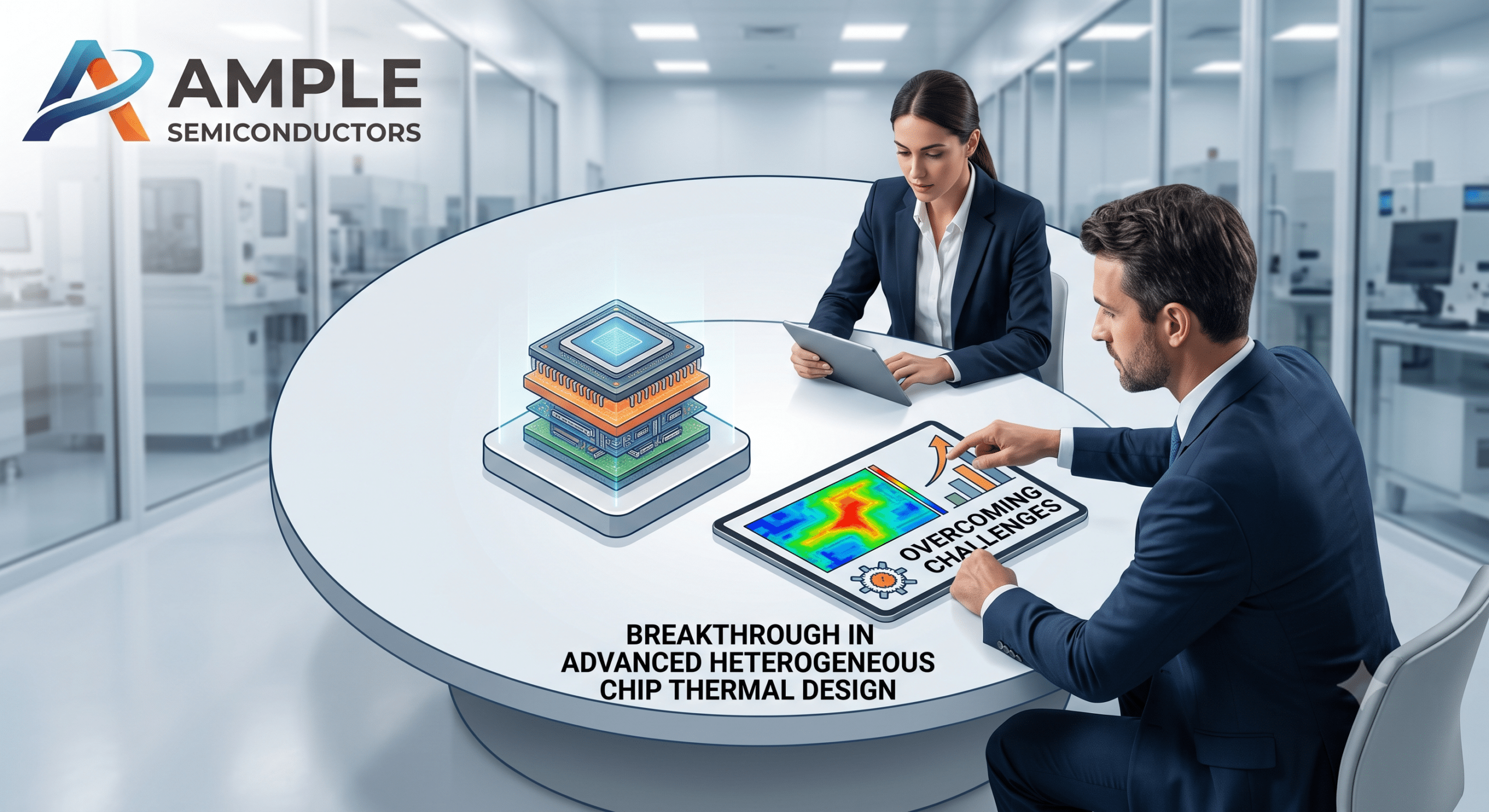
The company currently works with design companies and big original design manufacturers (ODMs). It named NXP, AMD, and Qualcomm among companies it is targeting as customers. The company is also building expertise in electromigration (EM), infrared (IR) thermal analysis, and heat dissipation. It said customers are increasingly asking about how heat can be removed from chips.
“One thing that customers keep asking is EM and IR heat, heat dissipation on the chips. How do you get rid of that?” Sanjay said. He added that the company has expertise in this area and is continuing to build on it. “As chips become smaller and smaller, heat dissipation becomes more and more challenging,” he said.
The company does not plan to build its own testing facilities. Most of its testing is currently done through external facilities. Sanjay said, “We don’t plan to develop any in-house testing facilities because that is very capital-intensive, requires a lot of money, and the technology keeps changing very quickly.”
On India’s semiconductor ecosystem, the company said the country has expertise in RTL and physical design but still lacks expertise in the specialised chemistry required for semiconductor fabrication.
“We have the RTL design and physical design expertise, but we don’t have the chemistry. The actual fabrication requires a lot of specialised chemistry,” Sanjay said. He added that this knowledge is being built gradually as the ecosystem develops.
The company also expects India’s Outsourced Semiconductor Assembly and Test (OSAT) ecosystem to move further up the value chain as companies gain experience. This could include advanced processes, chiplets, and multi-die wafers and packages.

