
Su-Kam Power Systems
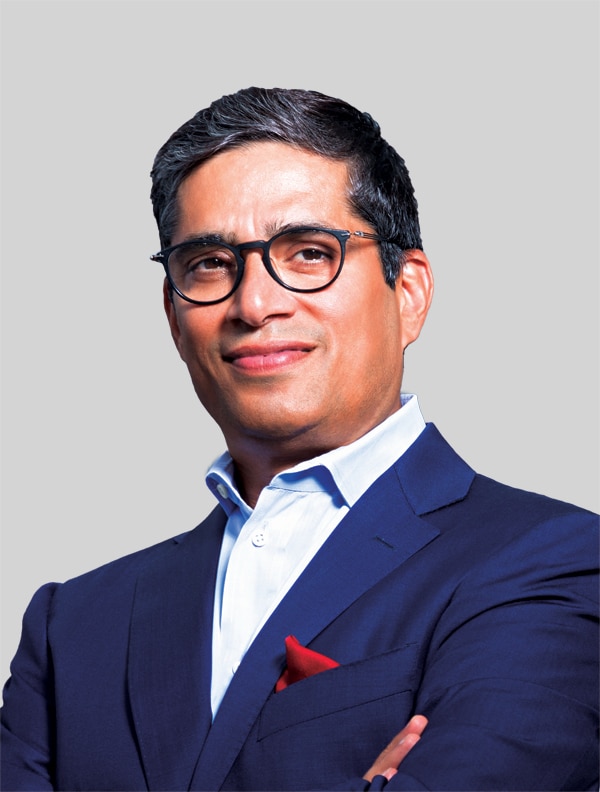
Inverters are critical for an uninterrupted power supply in the industrial and private sectors, to run infrastructure with zero downtime. The consistent gap between the demand and supply of electricity in India is a key growth factor in the inverter market. Kunwer Sachdev, managing director, Su-Kam Power Systems, talks to Baishakhi Dutta, senior business journalist, Electronics Bazaar, about the current state of the Indian inverter market and how inverter technology is evolving.
EB: What is the overall status of the inverter market in India?
India is among the leaders as far as the power backup industry is concerned. We have withstood competition from foreign players, including those from China. Vendors in India work towards designs specifically to cater to Indian needs—to withstand harsh local weather conditions and rough usage. A lot of manufacturing is being done domestically. The Indian industry players are exporting a lot. Our business has expanded into countries in Africa, Asia and the Middle East.
EB: Are there any specific categories of inverters that are more popular? Why?
In the wake of increasing pollution, generators have become obsolete. Not only that, they are noisy, incur high maintenance costs and involve the high cost of fuel. A running generator releases harmful fumes (basically nitrogen oxide gas) that are injurious to human health as well as being harmful for the environment. Besides, generators are not suitable for running high-end electronic machinery, as they can lead to a spike in power. On an average, a generator has to be serviced every 50-60 hours. Inverters, on the other hand, are maintenance-free as they have no moving parts.
Given these disadvantages of generators, people are turning to inverters which leverage world-class technology these days. They prefer noiseless home inverters that are powered by pure sine wave electricity, making it suitable to run sensitive appliances like printers, computers, servers and medical equipment. For example, Su-Kam’s UPS systems are efficient to the extent that they can save users 30 per cent of their electricity bills.
EB: What are the trending technologies in inverter design today?
A dominant trend is the integration of products with the Internet of Things (IoT) technology to increase their effectiveness and efficiency. A UPS system nowadays uses Wi-Fi and is Bluetooth enabled. Modern technologies are being incorporated as well. For instance, we have come up with a hybrid UPS system, which has a touchscreen and a Wi-Fi enabled solar power conditioning unit. The various parameters of Su-Kam’s devices can be monitored and controlled via a mobile app.
EB: Power efficiency is the most essential feature in an inverter; so how do you control power loss during power conversion?
Let me give you an example. The Falcon HBU manufactured by Su-Kam has received a 4-star energy rating from BEE. It saves 30 per cent more electricity, as power loss during energy conversion in minimal. This gives relief to customers from burgeoning electricity bills and increases the backup time of the device.
EB: What role do other components play in the design of a good inverter?
The use of SMDs is a major driver in the design of a genuine inverter. Using them makes the product simpler and smarter; the use of smaller components also increases efficiency. Another feature is the highly advanced microprocessor which makes products technologically advanced.
EB: What are the battery or power storage choices available for inverters?
A lead-acid battery is generally used in inverters. SMF (sealed maintenance-free) batteries are now gaining popularity as they avoid spillage. Their maintenance costs are also minimal.
Lithium-ion batteries are the next trend, because of their extremely high efficiency. Their prices have been falling and safety has also improved.
Besides, their ability to work both in applications that require a lot of energy for a short period (known as power applications) and those requiring lower amounts of energy for longer periods (energy applications) makes them suitable for stationary energy storage across the grid, from large utility-scale installations to transmission-and-distribution infrastructure, as well as to individual commercial, industrial and residential systems.
EB: Do you think the demand for solar inverters has picked up well in India?
India has embraced solar energy wholeheartedly. The government has also accorded a slew of incentives for promoting solar energy. India has laid out an ambitious target of achieving 100GW of solar energy by 2022. This can be achieved only if solar power is chosen by more and more establishments and households. Solar energy can be regarded as the future of India’s energy roadmap as we have sunshine in abundance. The shortage of electricity in cities and small towns is a menace. Solar energy can be instrumental in bridging the demand-supply gap. Not only that, it is eco-friendly and can save customers from burgeoning power bills.
EB: Tell us about Su-Kam’s ongoing projects in inverters and in the power domain.
Su-Kam is credited with introducing IoT in all inverters. This characteristic enables the customer to monitor them from anywhere in the world. The inverters are based on SMD technology, which uses the latest microprocessors, making them highly intelligent, reliable and efficient. We have also introduced the world’s first hybrid solar inverter. Currently, the company is bullish about taking over the EV market.