


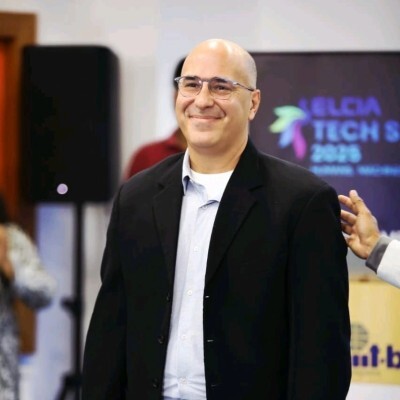

From advanced packaging and RISC-V to AI-driven manufacturing and startup-led innovation, Sharat Kaul, Global Design, Advanced Packaging, and OSAT Advisor, outlines India’s semiconductor opportunities and challenges in an exclusive interaction with Electronics For You’s Akanksha Sondhi Gaur.
Q. Where are India’s biggest gaps today for product-led design innovation?
A. The largest gaps are in product-led design innovation upstream with materials, equipment manufacturing, and semiconductor-grade process technologies downstream. Ironically, India already designs and models equipment for global companies, but manufacturing occurs elsewhere. Dependence on imported electronic design automation (EDA) software and semiconductor equipment is likely to continue for another decade or two.
That is why open ecosystems are important. We are actively studying open source EDA flows, signoff tools, process design kits (PDKs), and intellectual property (IP) ecosystems. Government initiatives such as Shakti Core and OpenROAD implementations at SCL are creating opportunities to reduce long-term dependence. Materials may ultimately be the hardest challenge because the underlying process recipes and know how remain tightly guarded worldwide.
Q. How can India avoid remaining only a design-services or packaging hub and move toward complete product ownership?
A. India’s semiconductor growth has largely been service-led, with talent supporting products owned by global companies. The next phase requires ownership of IP, products, and platforms. That means building indigenous demand in sectors such as agriculture, healthcare, mobility, defence, and industrial electronics, while strengthening capabilities across design, manufacturing, packaging, and systems integration. Product ownership ultimately drives greater value capture and long-term ecosystem sustainability.
Q. Beyond sovereignty, where could Indian RISC-V products first see meaningful commercial adoption?
A. Early adoption is likely in drones, motor control systems, smart meters, Internet of Things (IoT) devices, industrial automation, wearables, healthcare systems, and edge-computing platforms. These markets require flexibility and relatively lower complexity, making them well-suited for indigenous architectures.
Q. What is happening around RISC-V, and why does it matter strategically?
A. Reduced instruction set computing five (RISC-V) is emerging as a strategic requirement for technological sovereignty. Most processor ecosystems today depend on imported architectures, whereas open architectures provide greater ownership and control. RISC-V and open source are India’s golden moment to become relevant in semiconductor product design innovation.
India has already launched initiatives such as the Shakti Processor Programme and VEGA Processor Programme, alongside startups developing indigenous RISC-V solutions, some of which are already shipping products. Combined with open-source EDA tools, RISC-V enables students and companies to design, fabricate, package, validate, and build complete systems. The long-term goal is an end-to-end Indian ecosystem spanning design, silicon, packaging, and finished products.
Q. Many countries are adopting RISC-V. Why could India’s opportunity be different?
A. India’s opportunity extends beyond adopting an instruction-set architecture. Unlike countries that built vertically integrated semiconductor industries over decades, India starts with strong design talent, software expertise, growing electronics manufacturing, and an expanding startup ecosystem.
Because the RISC-V ecosystem is still evolving, India has an opportunity not only to build processors but also to contribute tools, IP blocks, software stacks, security frameworks, packaging technologies, and complete system solutions. The greatest value may come from owning key parts of the ecosystem rather than simply using the technology.
Q. What could be the biggest mistake India makes while building a RISC-V ecosystem?
A. Treating RISC-V purely as a processor-design exercise. Real value comes when software tools, compilers, operating systems, validation environments, security frameworks, packaging technologies, manufacturing pathways and applications evolve together. If development occurs in silos, India risks repeating its historical pattern of strong engineering services without corresponding product ownership.
Q. Could RISC-V create a startup opportunity similar to what Android created for the mobile ecosystem?
A. There are parallels. Android created opportunities not only for operating systems but also for application developers, hardware companies, device makers, and service providers. RISC-V could have a similar multiplier effect.
Startups may focus on AI accelerators, domain-specific IP, security modules, automotive solutions, healthcare platforms, development tools, or specialised semiconductor systems. By lowering barriers to entry, RISC-V enables smaller companies and students to participate in semiconductor innovation in ways that previously required far larger investments.

