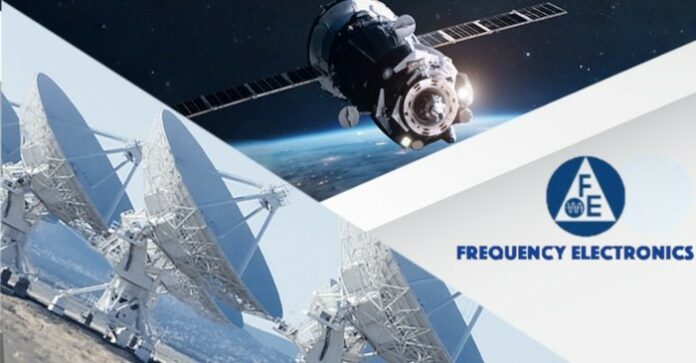

Frequency Electronics supplied the quartz-based timing references for NASA’s Voyager spacecraft. The technology, first developed in the 1970s, remains part of its business in precision timing equipment for space and defence.
Frequency Electronics (FEI) supplied the basic timing references aboard NASA’s Voyager 1 and Voyager 2 spacecraft, both launched in 1977. Voyager 1 reached one light-day from Earth on November 18, 2026, at 5:16:07 a.m. EST. It was then 16.094 billion miles (25.902 billion kilometres) away, making it the first human-made object to travel that far, according to NASA.
FEI’s work for the missions began in 1973, when NASA’s Jet Propulsion Laboratory (JPL) approached the company with a specific requirement: an oven-controlled quartz crystal oscillator that would take up little space, consume little power and withstand deep-space conditions. FEI developed the ultra-stable oscillator (USO), which provided the spacecraft with a frequency reference for radio science experiments.
FEI went on to supply oscillator technology for other space programmes, including JPL’s Deep Space Atomic Clock, the Mars Reconnaissance Probe and the Magellan spacecraft.
FEI was founded on Long Island in 1961. Its manufacturing operations cover the process from raw quartz and high-purity quartz crystal resonators to oscillators and rubidium atomic frequency standards. The company’s space-qualified products are used in satellites, aerospace and defence systems, naval applications, GPS and secure communications.
The distance between Earth and Voyager 1 also affects how the mission is operated. A radio signal takes about 24 hours to reach the spacecraft and another 24 hours to return. Commands sent from Earth therefore take roughly two days to receive confirmation.