Gartner says worldwide wearable device sales to grow 17 percent in 2017

Gartner, Inc. forecasts that 310.4 million wearable devices will be sold worldwide in 2017, an increase of 16.7 percent from 2016 (see Table 1). Sales of wearable devices will generate revenue of $30.5 billion in 2017. Of that, $9.3 billion will be from smartwatches.
Gartner, wearable device, sales growth, India

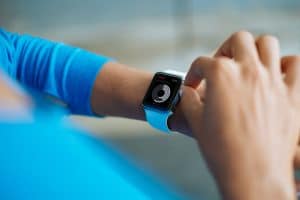
In 2017, 41.5 million smartwatches will be sold. They are on pace to account for the highest unit sales of all wearable device form factors from 2019 to 2021, aside from Bluetooth headsets. By 2021, sales of smartwatches are estimated to total nearly 81 million units, representing 16 percent of total wearable device sales.

“Smartwatches are on pace to achieve the greatest revenue potential among all wearables through 2021, reaching $17.4 billion,” said Angela McIntyre, research director at Gartner. Revenue from smartwatches is bolstered by relatively stable average selling prices (ASPs) of Apple Watch. “The overall ASP of the smartwatch category will drop from $223.25 in 2017 to $214.99 in 2021 as higher volumes lead to slight reductions in manufacturing and component costs, but strong brands such as Apple and Fossil will keep pricing consistent with price bands of traditional watches,” she added.

Table 1: Forecast for Wearable Devices Worldwide 2016-2018 and 2021 (Millions of Units)

- Advertisement -
Device

2016

2017

2018

2021

Smartwatch

34.80

41.50

48.20

80.96

Head-mounted display

16.09

22.01

28.28

67.17

Body-worn camera

0.17

1.05

1.59

5.62

Bluetooth headset

128.50

150.00

168.00

206.00

Wristband

34.97

44.10

48.84

63.86

Sports watch

21.23

21.43

21.65

22.31

Other fitness monitor

55.46

55.7

56.23

58.73

Total

265.88

310.37

347.53

504.65

Source: Gartner (August 2017)

Smartwatches: A market divided between four types of providers
Apple will continue to have the greatest market share of any smartwatch provider. However, as more providers enter the market, Apple’s market share will decrease from approximately a third in 2016 to a quarter in 2021. The announcement of a new Apple Watch expected in September may enable direct cellular connectivity for interacting with Siri, texting and transferring sensor data when the phone or Wi-Fi is not present. We expect other consumer electronics brands such as Asus, Huawei, LG, Samsung and Sony to sell only 15 percent of smartwatches in 2021, because their brands do not have as strong an appeal as lifestyle brands for personal technologies.

Two sub-categories that Gartner expects to perform well are kids’ smartwatches and traditional watch brands, which will emerge as significant segments for smartwatches. Gartner expects kids’ smartwatches to represent 30 percent of total smartwatch unit shipments in 2021. These devices are targeted at children in the two to 13 year-old range, before parents provide them with a smartphone.

The other sub-category, which will account for 25 percent of smartwatch units by 2021, is fashion and traditional watch brands. “Luxury and fashion watch brands will offer smartwatches in an attempt to attract younger customers,” said Ms. McIntyre. A final sub-category is represented by the startup and while-label brands (e.g., Archos, Cogito, Compal, Martian, Omate or Quanta), which will account for 5 percent of smartwatch unit sales in 2021.

Bluetooth headsets to account for 48 percent of all wearable devices in 2017
In 2017, 150 million Bluetooth headsets will be sold, an increase of 16.7 percent from 2016. Sales will increase to 206 million units in 2021, meaning Bluetooth headsets will remain the most sold wearable device through 2021. The growth in Bluetooth headsets is driven by the elimination of the headphone jack by major smartphone providers. “By 2021, we assume that almost all premium mobile phones will no longer have the 3.5 mm jack,” said Ms. McIntyre.

Head-mounted displays remain in their infancy
Head-mounted displays (HMDs) account for only 7 percent of all wearable devices shipped in 2017, and will not reach mainstream adoption with consumers or industrial customers through 2021. “Current low adoption by mainstream consumers shows that the market is still in its infancy, not that it lacks longer-term potential,” said Ms. McIntyre.

Near-term opportunities for virtual reality HMDs among consumers are with video game players. Workers will also use them for tasks such as equipment repair, inspections and maintenance, but also in warehouses and manufacturing, training, design, customer interactions and more. Theme parks, theaters, museums and sports venues will purchase HMDs to enhance the customers’ experience in interactive attractions or movies, and add information and supplemental images at sporting events.

By EB Bureau

- Advertisement -
Loading form…

Industry's Buzz

Anoop Kumar Rai Takes Charge as BEL Director (Marketing)

0
Beyond defence applications, Rai has driven BEL’s diversification into civilian infrastructure Bharat Electronics Limited (BEL) has appointed Anoop Kumar Rai as its Director (Marketing), effective...

BEL Appoints Ambrish Tripathi as Director (Human Resources)

0
Tripathi’s appointment comes as BEL continues to expand its capabilities across defence and strategic technologies Bharat Electronics Limited (BEL) has appointed Ambrish Tripathi as Director...

Suzlon Adds 250 MW Torrent Order, Crosses 1.1 GW in FY27 Orders 

0
Suzlon has secured a 250 MW wind energy order from Torrent Green Energy, taking their cumulative partnership to more than 1.3 GW across three...
Chip Making (representational Image)

India to Revise Semiconductor Rules Within Two Months, Says Piyush Goyal 

0
The planned changes aim to simplify approvals and make it easier for semiconductor manufacturers to source equipment and components from global suppliers.  India will amend...

North American EMS Book-to-Bill Ratio Rises to 1.29 in July 2026

0
The Association cautioned that month-to-month movements can be affected by seasonality and short-term volatility The North American electronics manufacturing services (EMS) sector recorded a book-to-bill...

Learn From Leaders

(L-R) Nikesh Gondchawar, Strategic & Technical Advisor – Robotics Manufacturing; Shrikrushna Kakade, Founder Partner; Nikhil Kakade, Senior Technical Advisor – Robotics & Control Systems, SlightGen Solutions LLP

“A Made-In-India Robotic PCB Soldering System That Automates The Through-Hole Soldering Process!” – Shrikrushna...

0
Electronics manufacturing is complex, and automation often comes at a high cost. To bridge this gap and offer a more affordable solution in India,...
Navdeep Narula, Executive Director, Client and Endpoint Solutions, Ingram Micro, India

“Enterprise Computing Is Shifting From CPU to GPU And Now Toward NPU-Based Systems ”...

0
The shift from CPU to GPU to NPU-based computing is redefining today’s enterprise endpoints. In an exclusive conversation, Navdeep Narula from Ingram Micro discusses...

India’s Robotics Push Opens New Hardware Opportunities

0
How do you build India’s physical AI future when critical robot components still come from overseas? Niqo Robotics reveals where the gaps remain.  India’s push...
Gadhadar Reddy, CEO and Founder, NoPo Nanotechnologies

How A Material Thinner Than Human Hair Could Transform EV Batteries And Electronics –...

0
What if a material 200,000 times thinner than a human hair could transform EV batteries, semiconductors, and advanced electronics? NoPo Nanotechnologies is making that...
Raja Rajeev Kumar, Mentor at IIT Startups, Chairman of the Board of Trustees, LaxmiRamaVarma Holdings International, and Founder and CEO, ChromoSoul Ventures

“Build Strong Startups, and Funding Will Follow”- Raja Rajeev Kumar, IIT Startups, LaxmiRamaVarma Holdings...

0
While AI and software startups attract attention and capital, electronics ventures often struggle for both. Raja Rajeev Kumar from IIT Startups, LaxmiRamaVarma Holdings International...

Startups

(L to R) C2i Semiconductors Founders—Vikram Gakhar, Founder & Director, Mixed Signal; Preetam Tadeparthy, Founder, CTO, VP, Engineering; Ram Anant, Founder & CEO; B.S. Dattatreya, Founder & Director, Power

Bengaluru Startup Targets AI Data Centre Power Delivery

0
C2i is building power systems that can help AI servers use electricity more efficiently and reliably. Two friends, Ram Anant and Preetam Tadeparthy, were working...
Akshar Vastarpara, Founder and CEO, Vicharak

“Our SBCs Are Designed As Complete Edge-Computing Platforms That Combine Everything On A Single...

0
An Indian startup builds affordable edge AI boards for robots, drones, and industry, positioning them as Raspberry Pi alternatives. In an EFY interview with...
(L-R) Sri Kusulu Devalla, Co-Founder and Hetendra Singh Rathore, Founder, Segritech

“We don’t just sort fruit; we match every quality grade with the right buyer.”...

0
An agritech startup has developed an AI-powered machine that sorts and grades fruits directly on farms, helping reduce post-harvest losses by connecting produce with...
Dr Naveen Yanduru, CEO, Axiro Semiconductor Private Limited

“India Can Lead In IP—If It BacksIts Own Builders”

0
Axiro Semiconductor designs RF and satellite chips, ships millions worldwide, and retains its startup mindset while tackling complex technical challenges. In a conversation with...
Dr Sanjay Ahuja, Founder and CEO of Cionlabs, India

“We are solving India-specific challenges rather than offering generic ‘black box’ IoT solutions.”

0
From hybrid mesh networking to AI-enabled edge devices, an Indian IoT startup is developing home-grown solutions to improve connectivity, strengthen privacy and support the...