
PM Modi launches India’s Critical Mineral Mission to secure rare earths for semiconductors, electronics, and EVs, while boosting manufacturing and deepening Japan ties.
Prime Minister Narendra Modi has launched the National Critical Mineral Mission (NCMM) to address India’s shortage of rare earths and strengthen self-reliance in semiconductors, electronics, and electric mobility. The initiative will drive nationwide exploration of critical minerals to unlock resources essential for high-tech industries.
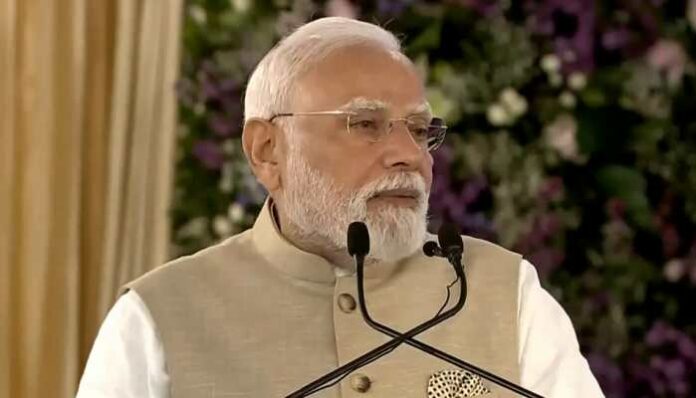
“The Indian government is aware of the shortage of rare earth manganese for the auto industry. To increase capacity in this direction, we have also launched the National Critical Mineral Mission. Under this, more exploration missions will be conducted at different places in the country, and critical minerals will be discovered,” Modi said in Ahmedabad.
The Prime Minister underlined the role of Mission Manufacturing in fuelling futuristic sectors, with semiconductors at the core.
“India is not going to stop here. In the sectors where we have performed well, we aim to do even better. That is why we are emphasizing Mission Manufacturing. In the coming time, our focus will be on futuristic industries. In the semiconductor sector, India is taking off.”
India’s production gains highlight this momentum: mobile phone output has risen 2700 per cent since 2014, while defence production has grown over 200 per cent in the past decade. Modi urged states to create transparent and investor-friendly policies to attract global capital.
“The whole world is looking at India, and no state should lag behind. Every state should seize opportunities, creating competition that compels investors to choose India over any other country.”
Marking a leap in localisation, Modi inaugurated the TDS Lithium-Ion Battery plant in Gujarat, a Toshiba–Denso–Suzuki joint venture that has begun producing hybrid battery electrodes.
“We all know that the most critical part of the EV ecosystem is the battery. Until a few years ago, batteries were entirely imported. With this vision, we laid the foundation of the TDSG battery plant here in 2017.”
On India–Japan ties, Modi stressed their strategic importance in electronics and mobility.
“The relationship between India and Japan goes far beyond diplomatic ties; it is a bond of culture and trust. The journey we began with Maruti Suzuki has now reached the speed of a bullet train.”
He added that Suzuki cars made in India are now being exported to Japan.
“In a way, companies like Maruti Suzuki have become brand ambassadors of Make in India. Now, EVs that will run in dozens of countries will have written on them—Made in India.”