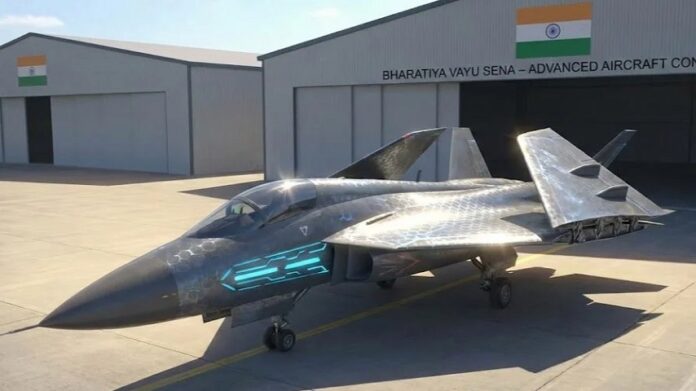

Defence Minister Rajnath Singh says India is developing sixth-generation fighter jets while expanding indigenous electronics and advanced technologies for future warfare.
India is working towards developing sixth-generation fighter jets as part of a long-term push to build indigenous defence capabilities, Defence Minister Rajnath Singh said. He said India is planning for warfare over the next 10–25 years, with domestic technology development at the centre of its strategy.
Large-scale efforts are also underway to manufacture technologies across the aerospace chain, from aircraft engines to drone engines. Singh highlighted electronic warfare, information warfare, AI, drones, autonomous systems and precision weapons as increasingly important to modern warfare, placing electronics, computing, communications, sensing and control technologies at the centre of future defence systems.
“Today we are in the era of fifth-generation warfare, where, along with land, water and air, cyber, space and the human mind have also become new battlefields. The supply chains are also becoming a new ground of geopolitical conflict. New technologies like drones, artificial intelligence, quantum and hypersonic are changing the shape of the entire defence sector.”
Singh said India aims to move from importing military technology to creating its own. India has also conducted a flight trial of a long-range hypersonic missile and tested a long-duration scramjet engine.
“We want India to not just use the military technology of other nations, but to create its own,” he said.
Singh acknowledged challenges in developing sixth-generation fighter technology but said India remains committed to expanding defence manufacturing over the next decade.
India’s defence exports rose from ₹686 crore in 2013-14 to ₹38,424 crore in 2025-26, according to Singh. The country has set a ₹50,000-crore defence export target for 2029.