Bengaluru-based semiconductor equipment manufacturer expands footprint through foreign joint ventures and calls for policy tweaks to support MSMEs.
Bengaluru-based semiconductor equipment supplier KAS Group is targeting revenues of ₹2,500 crore ($300 million) within four to five years, up from an expected ₹300 crore (36 million) in the current financial year. Backed by an order book exceeding ₹500 crore($60 million) and a compound annual growth rate of roughly 65 per cent, the group is expanding its capabilities to serve advanced chip manufacturing. To finance its expansion and a new joint venture, KAS Group plans to raise ₹250 crore ($30 million) in private equity within the next three months, with an additional ₹200 crore ($24 million) committed towards backward integration.
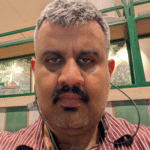
As part of its growth strategy, the group is establishing a joint venture with an experienced overseas partner to manufacture quartz consumables—fragile, short-lifespan components crucial for semiconductor fabrication tools. Operationally, KAS Group functions via UHP Technologies (ultra-high purity gas and chemical delivery systems), KASTECH Equipments (custom research hardware), and KASFAB Tools (contract manufacturing for global OEMs). Managing Director Manjunath Jyothinagara noted that combining external capital with strategic international expertise will be vital to accelerating scale across its business units.
Addressing industry policy, Jyothinagara urged revisions under the India Semiconductor Mission (ISM) 2.0 to lower minimum investment thresholds, enabling micro, small, and medium enterprises (MSMEs) to enter the supply chain. He emphasised that enabling 100 domestic MSMEs to build $50 million businesses over five years could generate a $15–20 billion broader ecosystem. ISM 2.0 was approved by the Union Cabinet with a budget of ₹1.27 trillion ($15.2 billion) , following the initial phase’s ₹76,000 crore ($9.1 billion) outlay that backed 12 major projects.
Managing Director Manjunath Jyothinagara noted: “Looking at three to five years, the sky is the limit… we should be able to comfortably cross about ₹2,500 crore in the next four to five years, but if we also have some support coming along with the strategic partnerships, exceeding this will not be a very difficult task.”
Commenting on domestic industry growth, he added: “India, I don’t think we can wait for 20 years to grow. So we have got to grow faster. And that’s where I’m saying both capital and knowledge are going to be equally critical.”