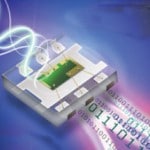
The use of LED lighting in healthcare facilities not only saves energy but also improves the quality of light. This is the primary reason why hospitals and medical practices are gradually shifting to LED lights for diagnostic and therapeutic purposes.
By Baishakhi Dutta
In 24×7 working environments like hospitals, the energy and cost saving potential of LED lighting is substantial. While the LED fixtures have a higher initial cost, they consume less energy and require less maintenance over the long term than fluorescent fixtures.
A few application areas
The following spaces in a healthcare facility can use LED lighting very effectively:
-
A harmonious lighting atmosphere in the entrance halls makes people less apprehensive, inspires confidence and makes the surroundings appear friendlier.
-
For a hospital, corridors and circulation areas are the arteries of the building. Diffused homogeneous lighting that avoids sharp contrasts should be considered. A high level of brightness should be avoided so that patients are not uncomfortable when they are wheeled along on gurneys.
-
In waiting rooms, dimmable wall lighting and table luminaires can radiate a relaxing, domestic ambience.
-
Examination rooms with the optimal light colour and high quality colour rendering assist in patient examination and diagnosis.
-
In imaging rooms, a calming environment can be provided by coloured lighting using LEDs, video projections and animations. These can be selected by the patients to help them feel more at ease and offer a welcome distraction from their illnesses.
-
In patient rooms, use of recessed or surface mounted luminaires, with the addition of spots to create accent lighting, provides a pleasant atmosphere that can be controlled by patients. Added cove lighting provides flexibility in scene setting.
-
A pleasant work atmosphere can be created at the nurses’ station by using task lighting, down lighting and accent lighting on the back wall.
Advantages of LEDs in healthcare
-
Energy efficient: LEDs are now capable of outputting 135 lumens/watt
-
Long lifetime: 50,000 hours or more if properly engineered
-
No warm-up period: LEDs light up instantly – within nanoseconds
-
Not affected by cold temperatures: LEDs will start even in sub-zero temperatures
-
Space efficient: Recessed LED lights require less space above the ceiling
-
Directional: With LEDs, you can direct the light where you want to; thus, no light is wasted
-
Excellent colour rendering: LEDs do not wash out colours like other light sources such as fluorescents, and are preferred for displays
-
Environment-friendly: LEDs do not contain mercury or other hazardous substances
-
Controllable: LEDs can be easily controlled for brightness and colour
 Disadvantages of LEDs in healthcare
-
Higher initial cost: LEDs are currently more expensive than conventional lighting technologies. However, LEDs have a lower cost of ownership compared to conventional lights, considering their significantly lower energy and maintenance costs. So when one evaluates the total cost of ownership, LEDs are far more affordable than incandescent or halogen lamps.
-
Heat dissipation: An LED’s performance largely depends on correctly engineering the fixture to manage the heat generated by it. Excess heat causes deterioration of the LED chip itself. An inefficient heat management design or overdriving the LED leads to overheating of the package, and eventual system failure. Overdriving the LED or not engineering the product to manage heat in high ambient temperatures may result in overheating of the LED package, leading to device failure.
Why use LED lighting in hospitals?
-
To reduce energy consumption by up to 50 per cent with LED lighting and up to 80 per cent through lighting controls.
-
LEDs have found their way into automatic lighting systems and electronic light management. For example, doctors can pre-set their lighting while examining patients. Sensor-driven systems can adjust lights in hallways and patient rooms, based on occupancy and daylight availability.
-
Directional LED lights can be aimed at the area that is to be examined, making them ideal as examination lamps and surgical lights.
-
LED light protects the skin and tissue from exposure to ultraviolet light or infrared radiation.
A checklist before making an investment
Here are some facts about LEDs that design professionals, healthcare providers and facility managers should be aware of:
-
LEDs and fluorescent lamps operate differently: Fluorescent lamps are bright, losing less than 10 per cent of their initial light output, and then burn out. On the other hand, LEDs gradually become dimmer without burning out, making it difficult for maintenance staff to know when the modules aren’t giving off the desired illumination levels and need to be replaced. This can pose problems in certain areas like operation theatres, where appropriate light levels are very important. Therefore, having maintenance protocols for replacements is important.
-
Today’s light sources are better at mimicking daylight: New equipment currently offers improved dimming and colour-tuning properties. Nowadays customers have the ability to select colour-tuning LED products, which help in adjusting the colour temperature of electric lights, making them similar to daylight.
-
A variety of applications: The energy efficiency of LEDs has made them the preferred choice in surgical and procedural task lighting. Experts also recommend LEDs for more diverse applications like exterior usage, decorations, downlights, high ceiling areas, imaging rooms and more.
What the future holds
According to an Equentis Capital report, the Indian healthcare industry is expected to reach a turnover of US$ 158.2 billion by the end of 2017, as it is growing at a CAGR of 18 per cent. Therefore, the LED industry foresees a huge demand for energy-efficient, innovative LED lighting in this sector.