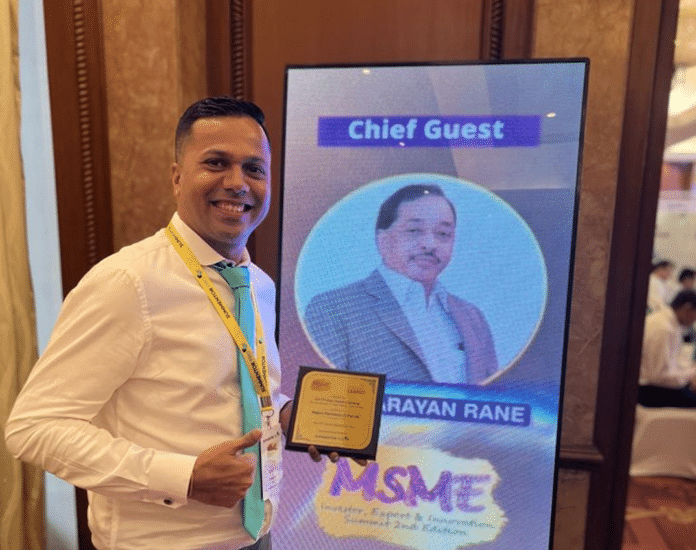

“In 2020, We Started Manufacturing To Leverage The Favorable Schemes And Policies Introduced By The Government Of India To Boost Make-In-India In The Electronic Sector”

With the introduction of PLI schemes and government initiatives, the Indian electronic manufacturing industry is growing manifold. Dileep Jain, CEO, Rajguru Electronics in conversation with Sudeshna Das, consulting editor, EFY Group, shares his views about the Indian electronic system design and manufacturing (ESDM) ecosystem and his company’s strategies to grow by leveraging the government support.


Dileep Jain, CEO, Rajguru Electronics

Q. What is your view on the growth potential of the Indian electronics system design and manufacturing (ESDM) sector in the next five years?

A. India has set a target to reach USD 300 billion in electronics manufacturing with USD 120 billion in exports by 2025-26. From the current levels, that would mean 8 times growth in the next 4-5 years in exports alone and 4 times growth when seen in the context of overall revenue and manufacturing share in global value chains.

The electronics goods import bill is second only to the country’s oil import bill. Therefore, the government of India has taken several steps to boost electronics manufacturing in India. This in turn will reduce import dependence and increase exports. The Make in India program, National Policy on Electronics ( 2019), Production Linked Incentive (PLI) Scheme for the electronics sector, the Modified Special Incentives Scheme, Electronics Manufacturing Clusters (EMC) Scheme, and several other schemes are designed to provide incentives for domestic manufacturing, localisation of electronics manufacturing, inviting foreign direct investment and, boosting exports. All these government initiatives are attracting huge investment in this sector. For example, Foxconn has invested in a semiconductor manufacturing unit in Gujarat.

The government expects 2.5% of the gross domestic product (GDP) to be generated by the ESDM sector while aiming to create over 130 million new jobs through appropriate initiatives.

Q. How do you plan to leverage government initiatives?

A. The government would like to reduce the electronic import dependence of the country. Therefore, lots of incentives and supportive policies are in place. Considering the same, we decided to build our modules in India itself. In 2020, we have started manufacturing. We have explored government schemes for the same. We received funds under a Government scheme to set up laboratories in schools and colleges. Therefore, initially, we started manufacturing electronic products that are useful for school and college laboratories.

Gradually, we are expanding our horizon and targeting the internet of things (IoT) market, sensors market, and much more. We are planning to leverage the PLI scheme for the same. Now we have received a great response and we have over 100 products available today. They are available in larger quantities as well. Our next goal is to produce PCBs for IoT products. We look forward to taking advantage of all the available government schemes and resources for the same.

- Advertisement -

Q. As a growing company what are your sustainability strategies?

A. We have taken a proactive role in electronic waste (e-waste) management. We collect them from various places, store them and reuse those as raw materials for manufacturing our future products.

We aim to provide students with the relevant products that they need. We have already started to provide schools with stationary materials and much more. So this way through these small actions we are giving back to the community. As we grow more we will surely be doing that even more.
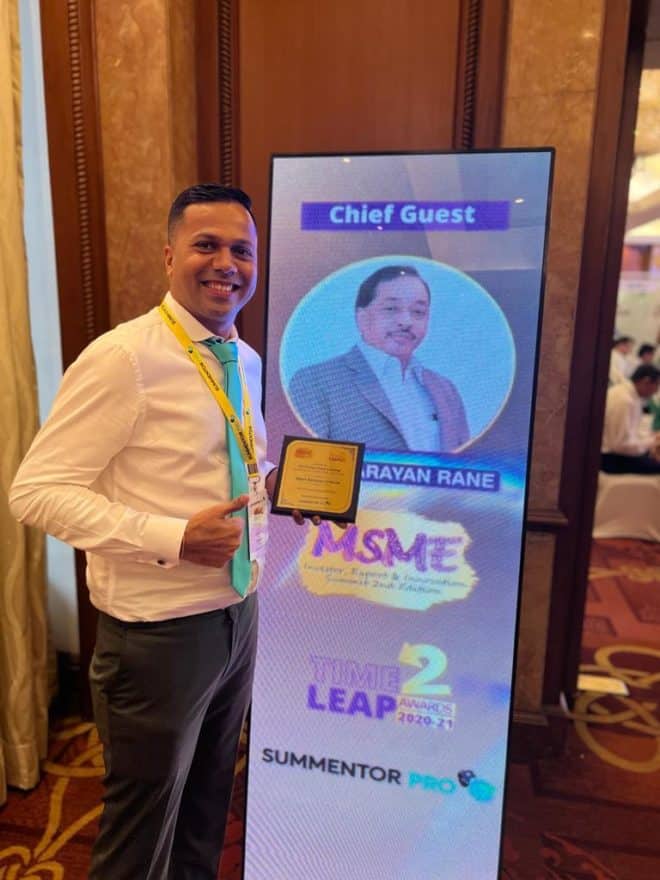
We use various materials along with e-waste. However, we never differentiate between academic and industrial products. For example, we have designed and developed a 4G module that was made in India only. All these products are used in home automation. Here we have an Arduino board equivalent. These used to be quite expensive but we have made them at a very economical price. Which makes it not only just portable but highly cost-effective as well. This works exactly like an Arduino board and has the same functionality.


- Advertisement -
Loading form…

Industry's Buzz

Vietnam Plans US$136.3 Billion Investment in Power Generation and Grids by 2030

0
The revised plan also targets 10,000–16,300 MW of battery energy storage capacity by 2030 Vietnam is planning investments of approximately US$136.3 billion in power generation...
TSMC

TSMC Posts Record $46.7bn Q3 Revenue as AI Demand Surges

0
Taiwanese foundry giant beats forecasts with 50 per cent top-line growth ahead of detailed third-quarter earnings release. Taiwan Semiconductor Manufacturing Co (TSMC) reported record third-quarter...
Micron

Micron Settles Netlist AI Patent Dispute for $600m

0
US memory giant agrees five-year licensing deal for high-bandwidth AI memory technology, ending litigation after Texas court verdicts. Computer-memory manufacturer Netlist has announced that Micron...

Astute Group Appointed Franchised Distributor for Samwha Capacitor Group

0
Strategic agreement expands Astute’s passive and magnetic component line-card ahead of Electronica 2026 in Munich. Astute Group has signed a global franchise distribution agreement with...

Waldom Highlights Supply Chain Challenges in India’s Electronic Components Market

0
Distributors face pressure to improve component availability while managing inventory costs and supply chain risks. Waldom has highlighted supply chain challenges and opportunities in India’s...

Learn From Leaders

Does India’s Chip Packaging Growth Need Local Materials At Scale?

0
What will it take for specialised semiconductor materials manufacturing to grow in India? Packaging volumes will be a key factor as OSAT facilities move...
Ronak Kumar Samantray, Founder, TM2Space Technologies Pvt Ltd.

“Our goal is to build data centres in space.” – Ronak Kumar Samantray, TM2Space

0
A space startup aims to build orbital data centres, letting users run AI models and store data on satellites while also supplying satellite hardware...

India’s Photonics Puzzle Is Finally Coming Together 

0
Can India turn its scattered photonics capabilities into a stronger industry? A new association aims to connect the ecosystem and strengthen the domestic value...
Jin Bains, CEO, Mini-Circuits

Mini-Circuits CEO Jin Bains on Navigating High-Frequency Component SWaP-C Constraints, Emerging Markets, and Career...

0
In this exclusive, Jin Bains, Chief Executive Officer (CEO) of Mini-Circuits, explains in a conversation with Dilin Anand of EFY about areas of emerging...

India Needs Not a Hundred, But Thousands of Chip Diversified Companies 

0
Can India build a semiconductor ecosystem beyond fabs? Indiesemic believes thousands of diversified chip companies are needed to make that possible. India’s semiconductor push is...

Startups

PowerMon

Aquaexchange Brings Monitoring And Automation To Shrimp Farming

0
The startup has developed an AI- and IoT-enabled platform that helps shrimp farmers manage farms, access financing, monitor operations, and connect with markets. The startup...

Drone-Like Aircraft For Logistics From BluJ Aerospace

0
Hyderabad-based BluJ Aerospace is developing indigenous electric and hydrogen-powered vertical take-off and landing (VTOL) aircraft for remote cargo transport. BluJ Aerospace, a Hyderabad-based aerospace startup...
Jash Jetly, Co-founder and CEO of EVE

“The cloud isn’t the only way to run AI. We’re proving it can happen...

0
A startup is building a decentralised AI and communication network that runs across everyday devices instead of centralised cloud servers. In an interview, Jash...
Mohit Gupta, founder and CEO, TYLsemi

Building AI Chips, One Block at a Time 

0
What if building an AI chip became as simple as assembling reusable blocks? The startup is working to make custom silicon accessible beyond the...
Seema Johar, Co-Founder and Product Director, Compcarta Solutions Pvt Ltd

“We Let Designers Focus on Innovation, Not Infrastructure.”- Seema Johar, Compcarta Solutions

0
In an exclusive interview, Seema Johar of Compcarta speaks with EFY’s Akanksha Sondhi Gaur about why setting up an EDA environment can be harder...