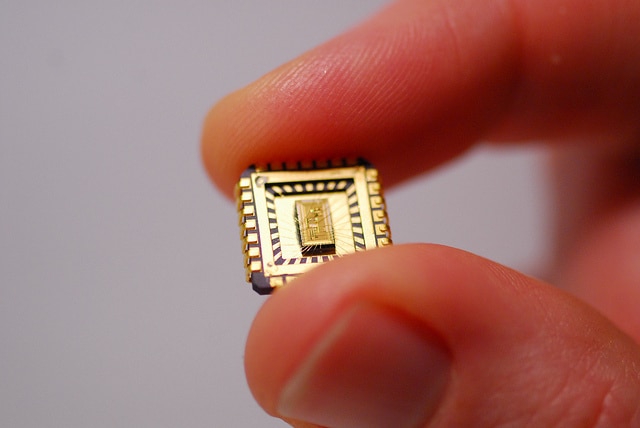

According to a new market report published by Transparency Market Research, the global sensors in mobile phone market is expected to reach a value of US$ 20,046.0 Mn by 2026 on account of growing smartphone adoption and sensor technology across the mobile industry.
The market is projected to expand at a CAGR of 6.01% during the forecast period from 2018 to 2026. North America is anticipated to experience healthy growth followed by Middle East & Africaduring the forecast period. The interface sensor segment is expected to see flourishing growth, owing to rising demand for proximity sensors, ambient light, IR, UV sensors, NFC sensors, and touch sensors in smartphones.
Emerging technologies in mobile phones driving the global sensors in mobile phone market
Rapid developments in technologies have led the mobile industry to increase the number of consumers. There is significant need for technological solutions for sensor technology due to its advance features that helps in enhancing the quality of smartphones. This is likely to create strong demand for smart sensors in the near future. Vendors across countries such as China, India, the U.S., Australia, Germany, Finland, Singapore, and Denmark are focusing on enhancing the technological aspects of sensor technology. Public agencies as well as private companies are also emphasizing on manufacturing sensors for mobile phones mainly due to the benefits offered by sensor technology, as sensors are highly effective in improving the performance of mobile phones.
Sensors in Mobile Phone Market: Scope of the Report
The sensors in mobile phone market is segmented based on sensor type and geography. In terms of sensor type, the motion sensors segment is anticipated to experience flourishing growth during the forecast period. This is mainly due to increasing use of accelerometer, gyroscope, compass, and other magnetic sensors in smartphones across the world. In addition, growth of motion sensors is also expected to be supplemented by increasing demand for advance technological solutions across the mobile industry. By 2026, motion sensors are projected to cover around 40% of the global market. Apart from this, interface sensors also play a vital role in supplementing the growth of the sensors in mobile phone market. Vendors are integrating various solutions to enhance the interface sensors due to the increasing demand for proximity sensors, ambient light, IR, UV sensors, NFC sensors, and touch sensors in smartphones. Furthermore, security sensors have a strong opportunity in the sensor market due to the increasing adoption of fingerprint sensors embedded in smartphones. Strong smartphone players such as Apple, Samsung, Vivo, Oppo, etc. are using this sensor for their smartphones in order to offer reliability in terms of security. Security sensors are anticipated to have more than 20% market share by 2026 due to the growing penetration of fingerprint sensors and demand for advance technology for security in smartphones.
Asia Pacific is leading the sensors in mobile phone market with more than 50% share globally. This is due to increase in advance technologies for sensors and also high penetration of smartphones in the region. Furthermore, strong presence of sensor manufacturing vendors across the region is contributing to growth of the market. As China is the leading country for smartphones manufacturing, Asia Pacific is contributing the highest market share in the sensors in mobile phone market.
In terms of new opportunities, North America and South America are expected to witness healthy growth during the forecast period. Increasing awareness of sensor technology as well as adoption of advance and technological solutions in the mobile phone industry across countries such as Singapore, India, South Korea, Brazil, Canada, and the US is expected to offer prominent opportunities to the sensors in mobile phone market.
The research study includes profiles of leading companies operating in the global sensors in mobile phone market. Some of the key players profiled in the market include Alps Electric., Bosch Sensortec, Fujitsu Limited, Hillcrest Labs, Inc., InvenSense Inc., MEMSVision., Murata Manufacturing Co., Ltd.., Goertek Inc., Panasonic Corporation, Pyreos Limited, Qualcomm Technologies, Inc., Senodia Technologies, Sensirion, Silicon Laboratories, Inc., and STMicroelectronics.
(Source: PR Newswire)