

The strategic electronics sector accounts for 6-7 per cent of the overall Indian electronics market. And it is anticipated to grow at a compounded annual growth rate of 20-30 per cent. A recent symposium organised by Keysight Technologies focused on the Indian aerospace and defence test and measurement market
By Shweta Sengar
Strategic or defence electronics, especially in aerospace, is a sensitive domain and India’s current dependence on imports is a cause of concern. Strategic electronics is a niche segment characterised by high-cost and sophisticated technologies. A solid R&D base is required to remain at the forefront of strategic electronics technology. The Department of Electronics and Information Technology (DeitY) has the necessary expertise in this field, along with a robust infrastructure to undertake R&D activities in this pivotal sector. It’s very important to develop state-of-art technology for designing, developing and upgrading mission-critical systems in the defence and civilian domains. The primary goal, here, is the indigenisation of products as well as technologies, to overcome hurdles like the unavailability of highly advanced technology and propel growth in this segment. Electromagnetic wave applications, intelligent -sensors, RFID, micro-robotics, intelligent materials, microelectronics systems, micro-systems for manufacturing nano-materials, convergent technologies, deep space exploration, etc, are some of the newest technologies being promoted in this domain.
Current scenario
A lot of strategic electronics projects like the millimetre wave facility, millimetre wave antennae, etc, have come up in the country. And many more facilities are being established in different parts of the country.
At present, the strategic electronics industry in India is dominated by the defence public sector undertakings (DPSUs) and ordnance factories, which together contribute almost 90 per cent of the total domestic manufacturing output. Ordinance factories and DPSUs have played an important role in developing the local industrial base in this sector. These DPSUs typically outsource almost 20-25 per cent of their production requirements to private companies. Also, a large number of medium- and large-sized companies are entering this segment or are evaluating an entry into this market. Additionally, around 6000 MSME units work closely with the DPSUs and private sector.
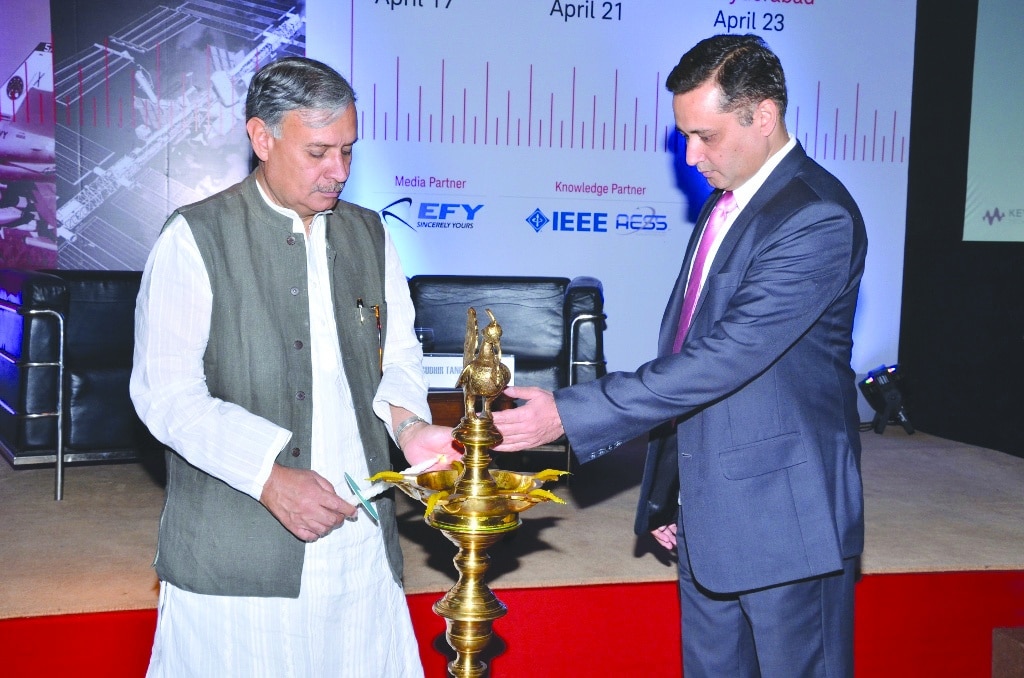
Recently, Keysight Technologies hosted its Aerospace and Defence Symposium, with the theme, ‘Focus where it counts.’ The organisers of the symposium claim it was the biggest technical gathering of aerospace and defence engineers and scientists who work on strategic electronics in India. Addressing the gathering at the event, Sudhir Tangri, country general manager, Keysight Technologies India Pvt Ltd, said, “India’s aerospace and defence sectors have undergone tremendous changes in recent years, with the government focusing on building comprehensive ‘Made in India’ defence systems and launching mission-critical aerospace projects.”
Importance of home-bred technologies
A lot of issues and trends were addressed at the symposium, ranging from innovation in advanced test systems to solutions that deliver mission-critical results using accurate test and measurement tools. The major highlights of the event were discussions on military communications, electronic warfare, radar systems, the latest test and measurement theories, challenges and recent innovations in technology.
Highlighting the importance of home-bred technologies in the aerospace and defence sector at the symposium, Rao Inderjit Singh, union minister of state, Ministry of Defence said, “It is important to develop domestic technologies in the aerospace and defence sector.” He also emphasised the central government’s ‘Make in India’ initiative encouraging symposium attendees to build indigenous and customised technologies. He further added, “The government has launched the ‘Make in India’ initiative to promote manufacturing in the country. The Ministry of Defence (MoD) aims to create conditions conducive for domestic manufacturers, both public and private, to play an active role in a strategic electronics domain.”
Overcoming the challenges
There are a lot of challenges that are faced by the country in the herculean task of modernising India’s armed forces to deal with the rapidly changing security scenario and the aspirations of the defence industries to become globally competitive. The strategic electronics industry has the potential to contribute immensely to the ‘Make in India’ vision of Prime Minister Narendra Modi.
“Today, the Indian aerospace and defence market is among the most attractive globally, and the government is keen to leverage this in order to promote investments in the sector. India ranks amongst the top 10 countries in the world in terms of military expenditure and has established itself as a prime importer of defence equipment. India allocates almost 1.8 per cent of its GDP (gross domestic product) for defence spending – of which 40 per cent is allocated to capital acquisitions. Only about 40 per cent of our equipment is manufactured in India, mainly by public sector undertakings,” said the minister.
Given the ‘Make in India’ initiative, the strategic electronics segment is ready to take off.
|
Highlights of the symposium The sessions at the symposium were carefully designed to address the issues and emerging trends in the aerospace and defence test and measurement market. The major sessions were:
|
With inputs from the organising team of Keysight’s ‘Aerospace and Defence Symposium’ held at New Delhi on April 21, 2015