


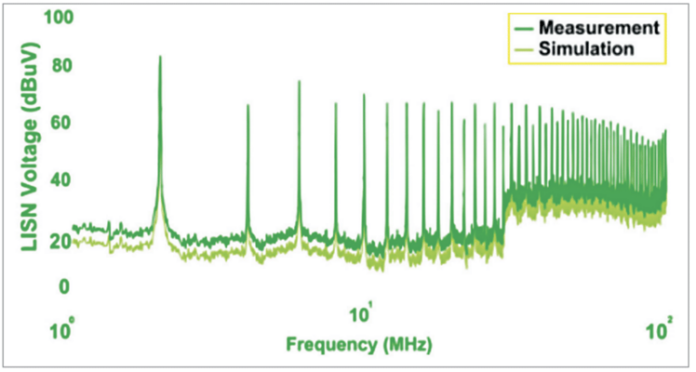

Every electronic device has a semiconductor chip that needs to have compliance certifications. But EMI/EMC contributes to a significant number of compliance failures in electronic devices. That’s the problem SimYog aims to solve.
SimYog Technology, a company based in Bengaluru and Austin (USA), is a spinoff from IISc. Founded in 2017, SimYog’s mission is to be “Agile for Hardware.” “We want to help startups and companies in electronic design,” says Dr Dipanjan Gope, CEO of Simyog Technology and Associate Professor at IISc. “We provide design tools and simulation tools that would aid in hardware development.”
Today, the number of electronic and electrical parts of most systems are growing faster than ever. A future-generation car or a drone is like a next-gen PCB! Hence, the way we design electronics is also changing. If you look at the automotive industry, a lot of electronics is packed together in close proximity. This increases the chances of their interfering with each other.
The noise generated by each one of these components can affect and hurt the performance of the others. It is therefore important to ensure electromagnetic compatibility. It is vital to make sure that these components pass electromagnetic compatibility (EMC) test the very first time.
The problem with EMC testing is that it is handled in the physical stage. Once you have the hardware, only then can you take it to a laboratory and test it. Since the hardware is available only during the final stages of the design cycle, it becomes very difficult and time-consuming to adjust the hardware in case the test fails.
Compliance-Scope, a tool designed by SimYog, enables a designer to test EMC in the early design stages. “When you test at an early stage, there are ways of fixing the problem and it will be much less expensive. There’s no need to cancel projects or make huge changes in the design,” explains Dr Gope.
Compliance-Scope is a virtual EMI/EMC laboratory that lets engineers do such tests with just the design files rather than the actual hardware. “It shows some diagnostics so the designer can use them to reduce emissions,” says Dr Gope.
The company uses a specialised two-pronged approach—one is based on physical science (computations, circuits, and electromagnetics) and the other is based on data science. With these two pillars combined—data science and physical science—it is possible to predict how a device will behave in the lab.
“We are further offering our products on the cloud. Right now, we are in the automotive sector, but we want to make our tools available in the IT and aerospace sectors too,” mentions Dr Gope. “The journey continues!”

