Govt wants 'Made in India' PCs

The government has recently announced its decision to select only domestically manufactured electronic goods for its various projects, each worth a billion dollars and at various stages of launch. As a result, it has asked global hardware makers to set up shop in India quickly, says a Times of India report.

To make the ‘Made in India’ cut, the value addition has to be 25 per cent in the first year and 30 per cent in the second year. Currently, electronics giants such as Samsung, LG, Dell and HP import 90 per cent of hardware parts. The value addition in electronics is a mere US$ 2 billion and the government expects a significant jump in future.

The question is will foreign companies play ball? Most companies are disappointed with the new government policy. They wanted a tax incentive-led manufacturing ecosystem to shift manufacturing bases to India.

“In the long run, the policy will give more opportunities for investment in manufacturing. But companies have reconciled to the fact that 25 per cent value addition in the first year is not possible, not even for competitors,” says Alok Bhardwaj, senior vice-president of Canon India and president of IT and electronics hardware manufacturers’ lobby, MAIT. He claims the government has no option but to procure the same way as it does now, at least for a few more years.

But government officials don’t buy this argument. “This is an industry where 100 per cent FDI is allowed. If established players hesitate, new ones will set up shop. The government procurement will be worth thousands of crores of rupees, and no one can afford to ignore it,” a senior official of department of information and technology said on the condition of anonymity.

- Advertisement -

Federation of Indian Chambers of Commerce and Industry secretary general Rajiv Kumar, however, says that the government’s push will work. “It is an impetus both for current manufacturers to increase value addition and for new players to begin afresh,” he says.

Yet, the government may still not have its way. WTO rules also say no country can impose duty on import of electronics products. As most of the high-valued components are small in size, it makes economic and logistics sense for global hardware makers to ship components from select locations rather than manufacture it in India.

And given the possible non-availability of domestically produced electronics products at least in the first couple of years because of the delays in setting up shop, introduction of the policy may dilute its vision, says a government official connected to the policy. Ministries and departments may be given a free hand to choose the items for which they want to apply this policy. “But once a department chooses an item, it has to procure at least 30 per cent of that item domestically,” said the official.

In some products, there is already value addition in India. In the case of batteries, 40 per cent of value addition is happening in India. “But every brand has 40 per cent value addition in batteries. Where is the comparative advantage for anyone?” asks Bhardwaj of MAIT.

For electronics makers, the challenge is not just to convince their global boards to establish facilities in India , but also to convince their suppliers to do the same. Dell, for example, recently conducted a survey among 35 global suppliers. Half of them said they had never considered India for investment. And those who were toying with an idea to establish facilities in India are mainly driven by a stable tax regime, opportunities for sales within India and possibility of realising operational cost savings among others, says the company’s internal survey report.


- Advertisement -
Loading form…

Industry's Buzz

CG Power Partners with IIT-Delhi to Research On Power, Semiconductors

0
The MoU aims to combine CG’s domain expertise and manufacturing strength and IITD’s research capabilities. CG Power and Industrial Solutions (CG) signed a five-year memorandum...

Protolabs Opens GCC in Hyderabad

0
President and CEO of Protolabs, Suresh Krishna said that India provides exceptional engineering talent that fits perfectly into Hyderabad’s strong technology ecosystem. Global digital manufacturing...
The internal manufacturing facility of Zelio E-Mobility

Zelio E-Mobility Gets BSE Approval to Raise $18M Capital for Future Expansion

0
Zelio reported a 120 per cent year-on-year (Y-o-Y) increase in consolidated operational revenue, from ₹134.78 crore in H1 FY26 to ₹296.66 crore. The rapidly expanding...
Image for representation purpose

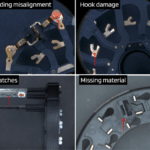
Industrial CT And AI Expose Hidden Defects In Automotive Electrical Connectors

0
Two connectors may carry the same part number but differ in material and dimensions. Lumafield found such discrepancies in its examination of 1,451 automotive...
Frequency Electronics

Frequency Electronics’ Voyager Oscillators Put Precision Timing In Focus

0
Frequency Electronics supplied the quartz-based timing references for NASA's Voyager spacecraft. The technology, first developed in the 1970s, remains part of its business in...

Learn From Leaders

Rohin Y, CEO and Co-Founder, LightSpeed Photonics, India

“We reduce latency by shortening the distance signals travel through copper and extending that...

0
As AI data centres scale, how can optical connectivity overcome the limits of electronic interconnects? In an interview, Rohin Y of LightSpeed Photonics speaks...
SK Venkataraghavan, Director, Solutions and Services Group, Lenovo India

“Everybody wants to jump into AI, but many organisations are still not ready from...

0
In an exclusive interaction with EFY's Saba Aafreen, Lenovo's S. K. Venkataraghavan discusses the challenges of moving enterprise AI from pilots to production, with...
Santhosh Kumar, Managing Director at Texas Instruments India

“India Is Becoming A Place To Design Products For The World”- Santhosh Kumar, TI...

0
As Texas Instruments marks 40 years in India, Santhosh Kumar, managing director and president, TI India, speaks about the company’s evolution towards end-to-end product...

The Eye That Spots Defects Before They Happen

0
https://youtu.be/vanxJYT2LIo Most inspection machines tell you a board failed. Delvitech's tells you when it is about to.Every inspection stage in a factory traditionally needs its...
Pravin Patel, Founder and Chairman, Brio Agri, India

“Our goal is not to replace farmers, but to empower them with better tools,...

0
In an exclusive interaction with EFY's Saba Aafreen, Pravin Patel, Founder and Chairman of Brio Agri, discusses building hydroponics and controlled-environment agriculture in India,...

Startups

Jaisimha Rao, Founder and CEO, Niqo Robotics

“Our Robots Are Tractor-Mounted, With the Tractor Providing Propulsion, So the System Does Not...

0
A robot may work perfectly in a lab, but taking it to a real farm is a different test altogether. In an exclusive interaction...

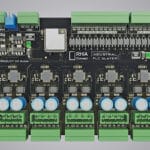
RHIA’s PLC Slayer Eliminates Fragmented Architectures In Industrial Automation

0
The startup’s innovation integrates separate controllers, sensors, and motor drivers into a single, flexible industrial automation platform. Does building industrial-grade automation always have to be...

EVE NET Turns Spare Smartphone Capacity Into An AI Cloud

0
What if the phone in your pocket could help run AI? A Mumbai-based startup wants to cut AI computing costs by tapping into millions...

Vimag Labs’ Magnet-Free Motors Set To Redefine EV Efficiency

0
Can software replace rare-earth materials? This Bengaluru startup uses virtual magnets to eliminate traditional permanent magnets, boosting EV motor efficiency up to 95 per...

Pine Labs Q2 FY27 Profit Soars 6.5x

0
Pine labs said that it processes 25 million transactions per day, a 22 per cent increase from the previous year. Fintech company Pine Labs, reported...