



Most inspection machines tell you a board failed. Delvitech’s tells you when it is about to.
Every inspection stage in a factory traditionally needs its own machine, one for the screen printer, another for pre-reflow, another for post-reflow. We wanted to replace that with one hardware platform, configurable for different board sizes and production needs, running the same software throughout.
One machine, any stage
The Horus machine line is an artificial intelligence (AI)-native inspection platform designed to cover different quality-control stages in a factory. The same platform can perform solder paste inspection (SPI) after the screen printer, pre-reflow inspection before the oven, and post-reflow inspection after the oven, with plated through-hole (PTH) inspection coming soon. It can already handle encapsulation and underfill analysis, as well as inspection of metallic or plastic parts on PCBs.
Unlike conventional machines designed for a single application, Horus uses the same software across different hardware configurations. These include single-lane inspection for boards up to 550 × 560 mm, an internal tilt unit for inspecting both sides, dual-lane configurations for higher throughput, and Horus Max for boards from 715 × 800 mm, and lengths up to 1.8 metres.
We also wanted programming to be both fast and precise. Our software automatically recognises the component being inspected and associates the information needed for high-performance inspection, reducing operator intervention while maintaining program quality.
Typically, programming time can be reduced tenfold. More importantly, one program can be created for multiple inspection stages instead of separately programming SPI, pre-reflow, post-reflow, and other machines. This simplifies programming, reduces operator dependence, and allows the same underlying technology to be deployed across the factory.
AI at the core
There is no major upskilling requirement for operators moving to our platform because the software guides them through programming using AI. Even an operator with limited experience can learn the system quickly and achieve high inspection performance. This is because we built the platform around AI from the beginning, rather than taking a conventional inspection system and adding AI tools later. That is why we call it AI-native.
Every inspection involves artificial intelligence, whether it is optical character recognition (OCR), solder joints, components, or other board analysis. For example, conventional OCR can generate many false calls, but our neural networks read much as the human eye does, bringing false calls close to zero. The same approach is used for solder-joint, component, and other inspections, with proprietary neural networks developed specifically for each inspection task.
Catching the drift before the defect
Predictivity adds another layer. It is a patented Delvitech tool that uses neural networks to continuously analyse what is happening across the production line, from after the screen printer to before and after the oven. Instead of waiting for an error, the system can identify process deviations while they are still within acceptable tolerances and predict what is likely to happen next.
For example, if a solder joint is progressively changing, the system can flag the deviation and provide possible causes before it becomes an actual error. The operator or manager can then change parameters manually or allow the system to do it automatically. This creates a closed loop in which the platform inspects production, learns through its neural networks, identifies what is going wrong, and feeds that information back to improve the process.
We also define our systems as capable of physical AI because they do more than analyse what they see. They can understand changes, learn from them and change their behaviour based on what is happening around them. For example, conditions can change while a board is being produced, creating an external event that we cannot directly control. Simply analysing that change with AI would not, by itself, make the system physical AI. The difference is that our technology can understand the change, learn from it and adapt its actions accordingly, allowing it to control the effects of external changes and complete the loop independently.
We are testing this advanced software for the first time at a customer site in India, with the objective of reducing production costs, improving first-pass yield, and maintaining more consistent quality. The main challenge when discussing ROI with customers is that this remains a relatively new concept, so they first need to understand how the technology works and where its value comes from.
The ROI starts before the board becomes scrap
Once the technology is understood, the ROI becomes much easier to explain. If a production line is generating 100 errors per minute and predictivity can prevent 40 per cent of them, the customer needs fewer people at the repair station, less replacement material, less downtime, and fewer tests. The impact is even greater for boards that cannot be repaired, such as mobile phone or automotive boards. If 10 defective boards per hour would otherwise be scrapped and predictivity saves four, the customer recovers the cost of four boards every hour. In some cases, a complete line can deliver ROI in under 20 days, depending on the product and its cost. For electronics manufacturing services (EMS) companies, avoiding scrap by catching errors earlier can significantly change the economics of production.
Predictivity can identify several process problems before they become end-of-line failures. For example, if solder-joint volume starts reducing, the system can raise an alert before it reaches an unacceptable level, allowing the operator to clean or wash the stencil on the screen printer. If the solder volume falls too low, it can lead to a tombstone effect or cause a component to be soldered but no longer remain coplanar. Detecting this change in real-time can help prevent the problem from developing further.
The system can also identify a component that is initially placed within tolerance but gradually starts rotating by a few degrees. This could indicate an issue with the solder joint, a mechanical problem in the pick-and-place machine, or a dirty nozzle. By catching that gradual change early, predictivity can prevent it from becoming an actual production error. These are examples of the major process errors that can be avoided before they reach the end of the line.
From Pasta to PCBs: A Platform That Learns
Delvitech started in 2018 after about a year of studying the technology with universities and researchers in the United States, Switzerland, and Germany. I wanted to build a technology company rather than another product company within optical inspection, so the technology had to remain agnostic to how it would eventually be used.
My experience in electronics also made the customer problem clear. Every inspection stage traditionally requires a different Automated Optical Inspection (AOI) machine — one for the screen printer, another for pre-reflow, another for post-reflow and so on. Some competitors offer 17, 18, or even 20 different machines. I asked why we should bring that same complexity to customers. Instead, I wanted to create one platform that could be replicated 20, 30 or 40 times, wherever it was needed in a factory.
Making that possible required solving two major challenges. The first was hardware. We needed an optical head capable of inspecting different objects with very high precision and speed, but the market did not have cameras, projectors, or communication hardware fast enough for what we wanted to achieve. Our R&D team therefore developed much of this technology in-house. From a 50 × 50 mm window, we can acquire around 80 gigabits of information in 0.2 seconds, transfer it, and analyse it in less than 0.2 seconds. The system uses high-speed cameras and projectors, very high-performance communication hardware, and a computer that is effectively a server station with multiple GPUs, approximately 1 TB of RAM, and powerful CPUs.
The second challenge was software. The hardware was capable of inspecting whatever went under the optical head, but the software had to match that flexibility. Whether we placed a ring, a piece of pasta, a tablet, or a PCB under the lens, the system needed to adapt and inspect it. What we have produced is a very fast human eye with a very fast brain to understand what it sees. If we teach it electronics, it learns electronics; if we teach it tablets or mechanical watch parts, it learns those applications. While the target application changes, the optical head itself remains entirely object-agnostic.
That is what makes this a technology platform rather than a product. Today, we are applying it to AOI for assembled PCBs, but we are moving towards microelectronics at around 2.5-micron resolution, followed by chiplet inspection at higher resolution. In parallel, we are developing an inline X-ray system, and over time the same technology could move into areas such as food, pharma, and mechanics. Building a product company would have required a much smaller investment, but our investors understood the difference and supported the development of an agnostic technology platform.
A $10 Million Bet on Bengaluru
From a business perspective, the last two years have been very strong for us, with growth of around 300-350 per cent in each year. We expect 2026 to finish around 350 per cent higher than 2025, with 2027 projected to be another 300 per cent to 400 per cent bigger than 2026. This growth is not limited to India; we are also seeing strong development across the Middle East, Africa, and America.
India, however, has become particularly important. I have been coming here every two or three months for the last four years, and India was a bet for Delvitech and me. The results have given us enough confidence to invest more than US$10 million in a mass-volume production factory in Bengaluru. The facility will have more than 60,000 square feet of production space, computer numerical control (CNC) machines to manufacture mechanical parts in-house, and an initial capacity of around 100 systems per month.
This will be more than an assembly plant. It will combine assembly, certification, customer training for India and Asia, spare-parts delivery, and R&D, with an India-based R&D team eventually working closely with our team in Switzerland. India is already one of our top three markets, alongside the growing US market and Europe, where we remain strong across Switzerland and other countries including Italy, Germany, France, the Czech Republic and Austria. Our objective in India is to bring significant technology capability into the country and support Indian IM and EMS companies in achieving higher production quality.
The operator may leave, but the knowledge stays
Retaining skilled manpower is a major challenge in India, Mexico, and other countries where manufacturers are taking on more subcontracting work. Application engineers, technicians and operators do not always remain in the same factory, moving for reasons including salary and location. We support customers through regular training sessions in Bengaluru, where engineers can keep their teams updated on our systems.
The bigger advantage comes from our neural networks. They learn what is happening in production, and what they learn belongs to our customers. When an operator leaves, the customer may lose that person’s programming knowledge, but the production knowledge captured by the algorithms remains with the customer. The knowledge accumulated during production therefore does not leave the factory every time an experienced operator moves on.
Beyond the PCB
My vision is to position Delvitech as a global leader in AI-driven AOI, providing a unified software, hardware, and programming ecosystem that spans the entire electronics lifecycle—from semiconductors to final assembly. We are already moving into microelectronics and semiconductors, with another inspection frontier, not available elsewhere, planned for disclosure in 2027.
Looking beyond the electronics sector, we intend to leverage strategic mergers and acquisitions (M&A) to bring our technology to the pharmaceutical, textile, plastics, and food industries. Fuelled by rapid advancements in AI, GPUs, and computational speed, we are advancing toward this vision much faster than originally anticipated.
Watch the full Interview:
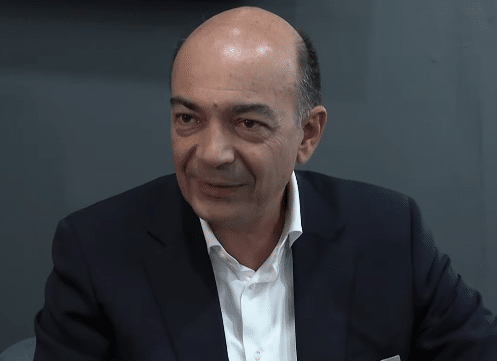
This article is based on an exclusive interview with Roberto Gatti, Founder and CEO of Delvitech, by Dilin Anand of EFY.

