
Two connectors may carry the same part number but differ in material and dimensions. Lumafield found such discrepancies in its examination of 1,451 automotive connectors.
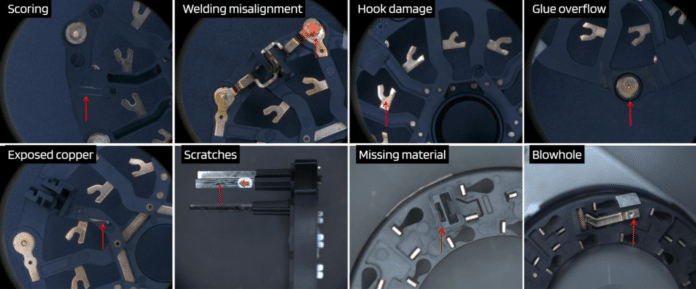
Lumafield’s examination of 1,451 automotive electrical connectors found differences in material composition, trapped air, wall thickness and moulding accuracy.
TE Connectivity DT06-6S housings sourced from unauthorised distributors stood out in the comparison. Their X-ray attenuation was 18% lower than that of genuine units, suggesting they may contain less glass fibre than the PA66 GF15 nylon specified in TE’s drawings.
Measurements told a similar story. Of the eight part numbers examined, seven showed dimensional differences between genuine and open-market connectors. Four open-market versions had thinner walls. The difference was particularly pronounced in the Amphenol AT06-6S, whose walls were 20% thinner, leaving it with roughly one-third less bending strength.
Lumafield’s analysis of US National Highway Traffic Safety Administration data found that connectors were cited in about 2% of automotive recall campaigns since 2010. The campaigns affected more than 17.6 million vehicles.
To look inside the components, Lumafield scanned all 1,451 connectors using its Triton industrial CT scanner. The scans produced more than 800,000 cross-sectional images. Its Quality Agent AI then examined them for void size, wall thickness, shape deviation and X-ray attenuation.
“Incomplete inspection coverage is a challenge we regularly see causing escapes and recalls in the industry,” said Andreas Bastian, Co-Founder and CTO of Lumafield.