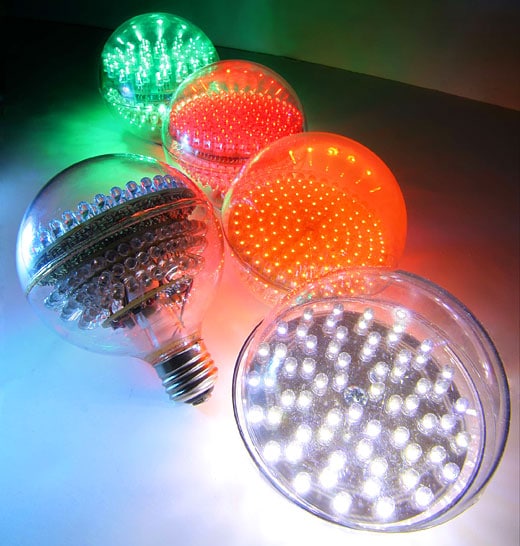

An “energy” revolution akin to the Green and White revolutions that occurred few years ago altering the agriculture and dairy sectors, is the need of the hour in India. And, Light Emitting Diode (LED) lighting will be at the heart of such a revolution. Mandatory norms of energy efficiency for new buildings/facilities, incentive support for energy-efficient projects, Integrated Lighting Management Systems (ILMS) for street lighting, and phasing out of energy-guzzling lighting products could trigger an energy-efficiency revolution in India.
The LED lighting market in India is at a nascent stage and these lighting systems are yet to make inroads into the market, which is currently dominated by compact fluorescent lamps (CFLs) and T5 fluorescent lamps (T-FL). Poor penetration is due to high upfront cost of LED lighting systems, absence of standards, testing, measurement and verification protocols, and low level of awareness.
LED lighting systems are anticipated to play significant role in reducing India’s overall energy requirements. Energy consumption can be reduced by usage of LED lighting for street lighting, in conjunction with ILMS. Implementing energy saving performance contracts (ESPC) for residential and commercial segments and integrating LED lighting controls and systems with building management systems will further lower energy costs of a building. Some LED lighting suppliers are bundling ESPC services along with their lighting products and energy-saving solutions, to diversify their revenue stream.
Current policies on energy efficiency might become redundant considering the construction sector’s growth rate in India. The construction market is booming again and has been forecast to increase from USD 100 billion in 2010 to USD 154 billion by 2015, and USD 500 billion by 2025. Investments in green buildings are projected to increase to USD 30 billion by 2015.
Currently, seven mega cities are proposed to be built along the 1,500-km long Delhi-Mumbai Industrial Corridor (DMIC) with the help of Japanese government and Japanese corporations such as Matsushita, Hitachi, and Mitsubishi. A total of 24 mega cities have been planned – along the line of states like Uttar Pradesh, Haryana, Rajasthan, Madhya Pradesh, Gujarat, and Maharashtra – with the seven proposed cities to be completed by 2018-19 in the first phase. The whole DMIC project cost is estimated at USD 90 billion.
Prices of LED lighting systems have fallen by more than 30 percent in the past 2-3 years due to increasing adoption and manufacturing technology improvements. Mass commercialization and acceptance will lead to a further fall in prices, which will make these products more affordable for commercial segments as well as low and middle-income households in the residential segment. With 20 percent of electricity consumption in a building attributed to lighting systems, there is indeed a great potential for LED lighting to gain prominence in India. One of the major schemes that the Bureau of Energy Efficiency (BEE) is implementing during the 11th Five Year Plan (FYP) (2007-12) includes – Bachat Lamp Yojana, an ongoing program to promote energy-efficient and high-quality CFLs as replacement for incandescent bulbs. Going forward, in the 12th and 13th FYPs, the Government must make efforts to replace these CFLs with LEDs.
Energy Conservation Building Code (ECBC), which sets minimum energy performance standards for new commercial buildings, has stipulated energy use of 110 kWh/m2/year as against the national benchmark of 180 kWh/m2/year. BEE is also targeting to reduce energy consumption by municipal street lighting systems, which currently adopt energy-guzzling lamps.
The Indian market is highly driven by the principle of ‘value for money’. Offerings in future will be aimed at providing better quality and durable LEDs at low prices. The LED market in India was completely import-dependent in the past. However, few companies in India are now entering into joint ventures with foreign companies. Cheap imports from China, Taiwan, and Korea by distributors and dealers have been found to be of poor quality that has hurt the confidence of genuine users. Absence of regulations and standards form a conducive market environment for such unorganized sectors to thrive. Today, India being a growing market for LEDs, many overseas companies are setting up manufacturing plants to cater to the growing needs of commercial, municipal (street lighting), and residential customers.
Cities of the future will most certainly witness dramatic changes in urban planning. It is thus imperative to incorporate smart concepts and greater information technology (IT) usage to monitor usage, reduce leaks/slippages, and aid in efficient delivery mechanism through effective demand management. This means that going forward, lighting companies would have to work in sync with software companies, and energy service companies (ESCOs), building management solution providers, and public agencies/urban local bodies, to bring various “smart” concepts to fruition.