
Germany-based ASYS Group, an industry leader in the field of process technology in electronics manufacturing, is an expert in handling, screen printing, laser marking and PCB de-panelling equipment, providing a wide range of high-end world-class German engineered products and solutions to its customers.
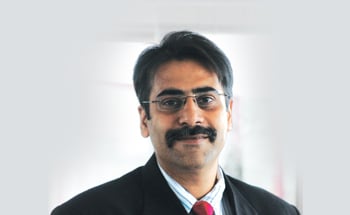
Srabani Sen of Electronics Bazaar caught up with Shailendra Mathur, general manager, India, ASYS Group, on the company’s business activities and future plans in India.

Tuesday, February 12, 2013: EB: With the Indian government making serious effort to boost electronics manufacturing, do you see the market for SMT machines in India expanding?
Overall, the industry is happy with the government initiatives for the development of the electronics manufacturing sector. The Modified Special Incentive Package Scheme (M-SIPS) and the Electronics Manufacturing Cluster (EMCs) development scheme would certainly benefit both IT and electronics companies in setting up manufacturing facilities.
However, like all schemes, the actual benefits for the industry will only manifest itself if there is a sustained and committed realisation of these schemes at Ground Zero.
If the schemes are successful, it certainly will translate to higher sales and revenues for the SMT industry.
EB: Since when has ASYS been operating in India, and how has it grown over these years?
ASYS localised service support was available to Indian customers over the last few years through our Indian field service engineers and our Singapore-based Asia service support centre. However, in late 2011, ASYS deployed a local India entity in line with its vision of ‘global products with localised service’. This was the right time, when our machine base in India was increasing rapidly and we took this step with renewed determination to be a leader through product and service excellence.
Although our ‘official’ Indian presence has been very short, we have been able to make our mark in the market. We have garnered a good customer base in the last year. Considering this momentum at the onset, I think it is a good start for our Indian operations and our aim is to grow stronger every year. This has been possible through the hard work of our Asia team and our channel partners.
EB: How important is the Indian market for ASYS and why?
India today is a market with high demand for electronics across different verticals. The electronics industry is undergoing the kind of growth that has never been seen before, and hence, it is imperative that there is an environment where manufacturing will grow and sustain itself. With this huge potential, it is obvious that India is a very important market for ASYS. We’ve established a strong foundation for the Indian market by establishing an India office, allocating 50 per cent of our personnel resources to service support, and setting up an active direct sales and channel partner network.
We see a lot of business possibilities with our diversified product portfolio, not only for PCBA (PCB handling, marking, de-panelling, testing and screen printing) but also for solar, final assembly for electronics, tray and transfer handling, specially designed automation, process and clean room technology, dry storage and other storage systems.
EB: Of the major SMT machines, which machines sell well in India and, according to you, what could be the reason for this?
We believe that for a few years, the Indian market is and will continue to be dominated by the SME segment, which is a low volume, high mix requirement. In such a market, a flexible X-Y mounter is the order of preference.
For ASYS, this is good news since we have a unique product range for the SME segment comprising screen printers, de-panelling, laser marking and final assembly.
EB: Which verticals of the Indian electronics industry are driving the growth of the SMT equipment market in India?
India has the potential to drive the SMT equipment market propelled by the growth of just a single vertical. Looking at the current business scenario, we feel the immediate driver of the Indian electronics industry will be the LED vertical, which will contribute to the growth of the SMT market significantly.
EB: What marketing strategies do you follow in India? Are these strategies working well?
ASYS’ India operation is very new. Our product portfolio is very wide, with some brands like Ekra that is very well known while others have a relatively lesser reach. The overall situation is diverse and dynamic and therefore, it is too early to have a single long term ASYS marketing strategy in place. Our immediate task is to strengthen our existing customer base and make our presence felt. Once customers have had a chance to review any one of our products, we are confident that our German machine quality, best price performance ratio and lowest cost of ownership will help us win business.
EB: With less of manufacturing happening in India and with the number of SMT vendors increasing in India, what’s your edge over the competition?
This has been an issue for many years now and a few companies have even pulled out of the business. However, this is true for any vertical where the size of the market itself is small and it lacks consistent growth over the years. This is precisely why schemes like M-SIPS and EMCs are absolutely essential.
Our edge over the competition is the overall value proposition that we deliver. ASYS is synonymous to high quality German engineered machines, and our localised direct service support coupled with the lowest cost of ownership is making us win business over our competitors.
EB: ASYS has a branch office in India, while other brands are being sold in India through distributors. Is this an advantage?
Yes. Our own presence is clearly an advantage to both the customer and ASYS. While we get to know first-hand about customers and their expectations, the benefits to customers are many. Customers get a faster, more efficient response, are assured of high quality of service, get application support directly from the OEM, and are assured of better overall handling of all sales and service issues and redressals.
EB: What are the new SMT machines you have added to your product range over the last six months? How are these technologically advanced?
At ASYS, a high percentage of our resources are allocated to R&D. Over the last six months, we have introduced new software for our screen printers called SIMPLEX. The software allows the user the ease and comfort of a smartphone-like operating system where all functions are clearly visible, easily accessible and extremely simple to program and operate.
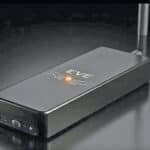
On the de-panelling machine range, we have launched a new machine specifically for the Asia market, the Model DIVISIO 1000, which is the ideal combination of a good price and great performance. It allows both milling and sawing operations in dual mode, on the same platform. Additionally, all functions are automated with the need for very limited user intervention, giving the operator the experience of a high-end automatic machine at an affordable price.
Another addition is our new laser marking system, the Insignum 2000 TWIN, which can mark both the top and the bottom side of a PCB simultaneously. Customers do not have to flip the PCB to mark both sides and thus they save on the cycle time of the process.
EB: Do you have products that are cost-effective and target SME companies?
A lot of our SME customers have contributed to our growth. So, certainly, ASYS recognises and addresses this with a two-pronged approach. On one hand, we are continually taking feedback from different regions on customers’ expectations, and on the other, we are continually focused on R&D to deliver state of the art machine platforms, which are a true reflection of German engineering—all at affordable prices for SMEs. The end results are very simple operating software like SIMPLEX, which are visual-driven, helping the operators in SMEs (who have limited education) to operate the machine efficiently. Another example mentioned earlier is the DIVISO 1000 machine, which is truly a system that addresses SME requirements.
EB: What is your global business strategy? In which countries do your machines sell the most?
Our global strategy is to be the preferred vendor among all ranges, with high quality products and services. Although ASYS today is represented in 40 countries worldwide, a large percentage of our business comes from Europe, China and America. We aim to put India on this list.
Electronics Bazaar, South Asia’s No.1 Electronics B2B magazine