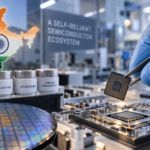
While the revised policy mandates sourcing of sensitive telecom and electronic equipment and technology from domestic equipment makers, the private sector has been exempted from the changed rules
By EB Bureau
Saturday, April 19, 2014: We are all aware that the government had approved the Preferential Market Access (PMA) policy mandating preference for certain categories of domestically manufactured electronic goods in February 2012. This policy prescribed preference for domestic manufacturers on the following two counts: (a) in procurements for government use, and (b) in procurements of electronic goods with security implications.
However, several objections were raised by global companies with respect to the application of the policy on electronic goods with security implications. After considering these objections, in July 2013, the government decided to review the policy.
The review was done in consultation with all concerned ministries, government departments and other stakeholders. A revised policy was drafted and placed before the Cabinet for its consideration. This was then approved by the Cabinet, and notified by the Department of Electronics and IT (DeitY) in December 2013.
The revised policy
According to the revised PMA policy, local sourcing of electronics will be mandatory for government departments, barring the Ministry of Defence, and will be valid for a period of 10 years. While the revised policy mandates sourcing of sensitive telecom and electronic equipment (and technology) from domestic equipment makers, it has exempted the private sector from the changed rules. However, it will cover the schemes and grants made by the Central government.
Each ministry/department has to issue a notification about the sector-specific electronic products for which domestic manufacturers will be accorded preference. Generic products, which are procured across sectors, such as computers, communication equipment, etc, will be notified by DeitY and the Department of Telecommunications (DoT).
The revised proposal places emphasis on establishing a two-tiered governance mechanism to oversee the implementation of the policy. In Tier I, a National Planning and Monitoring Council for Electronics Products (NPMC-EP) will design a 10-year road map for electronic products identified for notification under the policy.
In Tier II, concerned ministries/departments will issue notifications on the electronic products identified, along with the necessary compliance requirements for these products to be eligible for government use, based on the approval of NPMC-EP.
The revised PMA policy adds that all state governments can announce preference for domestic manufacturers on the same lines as the Karnataka and Andhra Pradesh state governments.
The notification issued by each ministry/department will specify the percentage of procurement to be made from domestically manufactured electronic products, which will be more than 30 per cent of the total procurement value of that electronic product.
Further, each ministry/department will also specify the domestic value addition required in an electronic product for it to satisfy the terms of the PMA. However, such specifications should not be below the generic definition of domestically manufactured electronic products provided in the policy (that is, the percentage of domestic value addition in terms of the bill of materials (BOM) going up from 25 per cent in the first year to 45 per cent in the fifth year).
The revised policy supersedes the policy dated February 10, 2012. However, the notifications issued under the earlier policy will remain in force till they are reviewed. It may be recalled that DeitY had issued detailed notifications regarding six electronic products – desktop PCs, laptops, tablets, dot matrix printers, smart cards and LEDs – and DoT had issued notifications regarding 23 telecom products, prescribing the level of value addition required for a product to qualify as ‘domestically manufactured’.
For any questions or clarifications regarding the policy, readers can contact S K Marwah, director, DeitY (smarwah@deity.gov.in)
Electronics Bazaar, South Asia’s No.1 Electronics B2B magazine