
MNRE keen to give big push to solar manufacturing

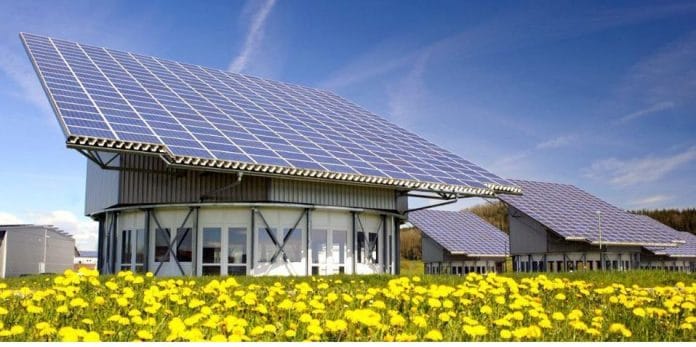
The Ministry of New and Renewable Energy has released a concept note of a proposal to build India’s manufacturing supply chain covering polysilicon, wafers/ingots, cells and modules to accelerate the growth of the solar photo-voltaic sector.
MNRE, solar power, solar manufacturing, India
Image for representational purpose only

MNRE is proposing a slew of subsidies and incentives, including direct financial support of more than ₹11,000 crore for manufacturers to expand and upgrade, a 12 GW Central Public-Sector Undertaking (CPSU) domestic content requirement (DCR) programme to create robust domestic demand, an increasing DCR requirement from modules to polysilicon, 30 per cent central financial assistance, cheaper loans, a custom duty exemption and cheaper power.

The concept note is open to comments and suggestions until December 31. The programme aims to strengthen the ‘Make in India’ campaign, reduce the country’s dependence on foreign manufacturers, and make domestic manufacturers competitive with their international counterparts.

Indian solar installations have risen from just 6 MW in 2009 to a cumulative total of approximately 20 GW to date, with another 9.5-10 GW of installations expected this year alone, according to the Mercom India Q3 Market Update.

The government is planning a three-pronged approach to support local manufacturers that includes: providing a level playing field with the imposition of anti-dumping duty on cells and modules, creating demand through a DCR programme, and supporting manufacturers financially by providing multiple subsidies outlined in this policy proposal.

- Advertisement -

To ensure a guaranteed market, the policy proposes a 12,000 MW CPSU (this is higher than the earlier proposed 7.5 GWs) programme that would have to comply with World Trade Organization rules.

If these incentives are seriously implemented and there is clear visibility for the next five years of market demand, then more manufacturers from China and other countries may decide to establish manufacturing units in India, reported Business Line.


- Advertisement -
Loading form…

Industry's Buzz

thyssenkrupp

thyssenkrupp Expands Automotive Electronics R&D In Pune

0
thyssenkrupp Automotive Technology is expanding automotive electronics and software R&D in Pune, planning to grow its engineering team beyond 300 to support global programmes...

Nuuk and EPACK Durable Partner to Manufacture Small Appliances in India

0
Direct-to-consumer brands team up with contract manufacturers to boost domestic production of air fryers and circulator fans.  Direct-to-consumer (D2C) home appliance brand Nuuk has joined...

Potential US Curbs Bears Down on Chinese Optical Chip Stocks

0
Shares of upstream laser chip suppliers suffered steeper declines compared to downstream optical transceiver manufacturers. A report by Morgan Stanley, earlier this month, warned...
Prime Minister Modi

Modi Flags 6G And Domestic Electronics Production At IMC 2026

0
Prime Minister Narendra Modi has outlined India's next telecom priorities at India Mobile Congress 2026, linking the 5G-to-6G roadmap with semiconductor production, domestic electronics...
Fujitsu

Fujitsu-Owned 1Finity Deploys 200+ Engineers To Expand India’s Optical Networking Business

0
Japan’s Fujitsu-owned 1Finity is expanding its India networking business with more than 200 engineers as AI and data-centre growth drives demand for optical networking...

Learn From Leaders

Does India’s Chip Packaging Growth Need Local Materials At Scale?

0
What will it take for specialised semiconductor materials manufacturing to grow in India? Packaging volumes will be a key factor as OSAT facilities move...
Ronak Kumar Samantray, Founder, TM2Space Technologies Pvt Ltd.

“Our goal is to build data centres in space.” – Ronak Kumar Samantray, TM2Space

0
A space startup aims to build orbital data centres, letting users run AI models and store data on satellites while also supplying satellite hardware...

India’s Photonics Puzzle Is Finally Coming Together 

0
Can India turn its scattered photonics capabilities into a stronger industry? A new association aims to connect the ecosystem and strengthen the domestic value...
Jin Bains, CEO, Mini-Circuits

Mini-Circuits CEO Jin Bains on Navigating High-Frequency Component SWaP-C Constraints, Emerging Markets, and Career...

0
In this exclusive, Jin Bains, Chief Executive Officer (CEO) of Mini-Circuits, explains in a conversation with Dilin Anand of EFY about areas of emerging...

India Needs Not a Hundred, But Thousands of Chip Diversified Companies 

0
Can India build a semiconductor ecosystem beyond fabs? Indiesemic believes thousands of diversified chip companies are needed to make that possible. India’s semiconductor push is...

Startups

PowerMon

Aquaexchange Brings Monitoring And Automation To Shrimp Farming

0
The startup has developed an AI- and IoT-enabled platform that helps shrimp farmers manage farms, access financing, monitor operations, and connect with markets. The startup...

Drone-Like Aircraft For Logistics From BluJ Aerospace

0
Hyderabad-based BluJ Aerospace is developing indigenous electric and hydrogen-powered vertical take-off and landing (VTOL) aircraft for remote cargo transport. BluJ Aerospace, a Hyderabad-based aerospace startup...
Jash Jetly, Co-founder and CEO of EVE

“The cloud isn’t the only way to run AI. We’re proving it can happen...

0
A startup is building a decentralised AI and communication network that runs across everyday devices instead of centralised cloud servers. In an interview, Jash...
Mohit Gupta, founder and CEO, TYLsemi

Building AI Chips, One Block at a Time 

0
What if building an AI chip became as simple as assembling reusable blocks? The startup is working to make custom silicon accessible beyond the...
Seema Johar, Co-Founder and Product Director, Compcarta Solutions Pvt Ltd

“We Let Designers Focus on Innovation, Not Infrastructure.”- Seema Johar, Compcarta Solutions

0
In an exclusive interview, Seema Johar of Compcarta speaks with EFY’s Akanksha Sondhi Gaur about why setting up an EDA environment can be harder...