
Government may extend financial support of Rs 8,730 crore in FAME II

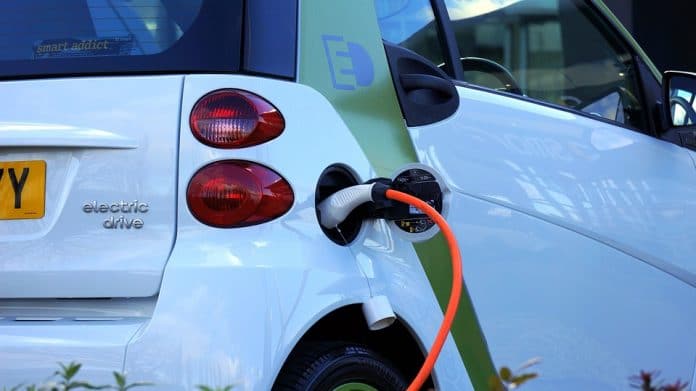
The government is likely to extend financial support of Rs 8,730 crore for the second phase of the FAME India spanning five years but the incentives will be restricted to new energy vehicles used for public transport, commercial purposes and high-speed two-wheelers.
Image for representational purpose only

According to officials in the Heavy Industry Ministry, which has proposed the outlay and road-map for the scheme, the government has decided to adopt a ‘technology agnostic’ approach and only advanced chemistry batteries will be promoted in the Phase II of the scheme.

The second phase of the scheme, which was expected to be implemented from April 1, is likely to be delayed and the proposals entailing financial support to the tune of Rs 8,730 crore are likely to sent to the Union Cabinet for approval soon, an official said.

Out of the Rs 8,730 crore, support to the tune of Rs 5,550 crore has been proposed as demand side incentives during the second phase of the scheme spanning five years, said sources.

The fund support includes Rs 2,500 crore for buses, Rs 1,000 crore for four-wheelers, Rs 600 crore for high-speed two wheelers (with maximum speed greater than 25 km) and Rs 750 crore for high-speed three-wheelers.

- Advertisement -

The proposed plan for the second phase has been submitted recently to government think tank NITI Aayog, which is in the process of collating inputs from related ministries including Power and Road, Transport & Highways.

The phase one or pilot phase of the scheme was to expire on March 31 and is likely to be extended by few more months, another official added.

Making it clear that the government’s focus is on public transport and commercial vehicles, a top government official told PTI, “Support under FAME II, will be extended exclusively to public transport and/or commercial transport. However, two-wheeler segment with maximum speed greater than 25 km/h will continue to be supported for all users.”

The proposal also seeks to link incentives to demand for electric vehicles and their localisation level to promote ‘Make in India’ programme.

“It is proposed to begin with 50 per cent localisation; to be increased to 60 per cent by second year and 70 per cent thereafter. Proportionate reduction in incentives by 10 per cent each year after Year 2 is envisaged,” the official added.

The government has also decided not to specify any type of technology for providing support under the scheme with “all zero emission vehicles (ZEV), including fuel cell electric vehicles (FCEV), envisaged to be supported”.

“The proposed scheme is also intended to support hybrid and plug-in hybrid vehicles to build volume of EV components which are similar for electric and hybrid vehicles,” the official said, adding, however, stringent norms based on optimal energy saving as per market viability would be defined for strong hybrid vehicles.

The official further said in order to prevent very high-end vehicles to take advantage of government incentives, it has been proposed to restrict incentives to vehicles with ex-factory prices lower than a particular threshold value.

These ex-factory prices range from Rs 1.5 lakh for high-speed two-wheelers to Rs 3 crore for buses, while for four-wheelers, including strong hybrid and plug-in hybrid, it is capped at Rs 15 lakh.

For heavy duty trucks, the factory price has been capped at Rs 2 crore and for light commercial vehicle it is Rs 10 lakh.

“The incentives proposed are in proportion to the fuel efficiency of these vehicles when compared to corporate average of vehicles of that category,” the official said.

Under the FAME II, the ministry has also proposed that in cases where vehicles are sold without batteries for any fleet of 50 vehicles and above, operators can claim incentives for purchase of bulk batteries.

The official also said the proposal aims to balance the extra acquisition cost of zero emission vehicles compared to internal combustion engines (ICE) to be recovered through operational savings within a maximum period of three years for all vehicles and for busses in seven years.

On the infrastructure front, under the second phase of the scheme, the government plans to set up a network of charging stations in all metros, cities with million plus population and smart cities.

The Heavy Industry Ministry had estimated an overall requirement of Rs 14,000 crore for Faster Adoption and Manufacturing of Electric (and Hybrid) scheme, dubbed as FAME India.

- Advertisement -
Loading form…

Industry's Buzz

ASMl Holdings

ASML and TSMC Partner to Advance Next-Generation Semiconductor Mask Tech

0
The chipmaking giants target a shift to larger 12-inch photomasks to boost manufacturing productivity and lower advanced node costs.  ASML and Taiwan Semiconductor Manufacturing Company...

Ultraviolette to Build Major EV Factory in Tamil Nadu

0
The Indian electric vehicle manufacturer plans to produce up to 500,000 units annually at its new automated facility in Hosur.  Electric vehicle pioneer Ultraviolette Automotive...
Drone

Karnataka to Build $5.1m Drone Testing Hub

0
The state government targets advanced aerial mobility expansion with a dedicated testing facility in Chikkaballapura.  Karnataka is set to bolster its aerial mobility ecosystem by...
Telecommunications sector

US Backs Africell with $100m Loan to Counter Huawei in Africa

0
The Trump administration finances the US-owned telecoms operator to expand trusted mobile network technology across the continent.  The US government is set to provide a...
CXMT

China’s CXMT Takes Top Spot with 82 per cent Profit Margin

0
The DRAM manufacturer’s record profitability eclipses Samsung and SK Hynix as conventional memory prices surge.   China’s leading DRAM manufacturer, ChangXin Memory Technologies (CXMT), has achieved...

Learn From Leaders

India’s Photonics Puzzle Is Finally Coming Together 

0
Can India turn its scattered photonics capabilities into a stronger industry? A new association aims to connect the ecosystem and strengthen the domestic value...
Jin Bains, CEO, Mini-Circuits

Mini-Circuits CEO Jin Bains on Navigating High-Frequency Component SWaP-C Constraints, Emerging Markets, and Career...

0
In this exclusive, Jin Bains, Chief Executive Officer (CEO) of Mini-Circuits, explains in a conversation with Dilin Anand of EFY about areas of emerging...

India Needs Not a Hundred, But Thousands of Chip Diversified Companies 

0
Can India build a semiconductor ecosystem beyond fabs? Indiesemic believes thousands of diversified chip companies are needed to make that possible. India’s semiconductor push is...
L Venkata Subramaniam, CEO, Qbit Force, Andhra Pradesh

“We Aim To Make Quantum Computing More Visible, Understandable, And Open To Build On”...

0
From building India’s first open quantum hardware ecosystem to assembling a working quantum computer in just four months, Qbit Force is redefining how deep...
(L-R) Nikesh Gondchawar, Strategic & Technical Advisor – Robotics Manufacturing; Shrikrushna Kakade, Founder Partner; Nikhil Kakade, Senior Technical Advisor – Robotics & Control Systems, SlightGen Solutions LLP

“A Made-In-India Robotic PCB Soldering System That Automates The Through-Hole Soldering Process!” – Shrikrushna...

0
Electronics manufacturing is complex, and automation often comes at a high cost. To bridge this gap and offer a more affordable solution in India,...

Startups

Manivannan Subramaniam, Director R&D, CIYES Systems

“We Want to Build Globally Competitive Deep-Tech Products from India” –  Manivannan Subramaniam, CIYES...

0
Can India build globally competitive deep-tech products? Manivannan Subramaniam of CIYES Systems believes it can. In this interview with EFY's Nitisha Dubey, he discusses...

Raptee.HV, Rajalakshmi Engineering College Launch EV Centre of Excellence

0
The facility is among the first initiatives under Raptee.HV Academy Raptee.HV has launched a Centre of Excellence for Electric Mobility at Rajalakshmi Engineering College (REC),...

Agnikul Cosmos Opens New Facilities to Advance Reusable Rocket Development

0
STIF has been designed and fabricated in-house to test complete reusable rocket stages under flight-like conditions Indian space-tech company Agnikul Cosmos has inaugurated two new...

Zenergize Technologies Raises $4 Million Pre-Series A to Scale SiC Power Electronics

0
The fundraise comes after a year of rapid product development and commercialisation Zenergize Technologies, an R&D-driven deep-tech company developing indigenous Silicon Carbide (SiC)-based power electronics,...
Gadhadar Reddy, Co-Founder and CEO, NoPo Nanotechnologies

Nopo Nanotechnologies’ Carbon Nanotubes Turn ‘Not Possible’ To ‘Now Possible’

0
Can single-walled carbon nanotubes (SWCNTs) significantly improve EV batteries? This startup says it has turned what was once considered ‘not possible’ into ‘now possible.’ An...