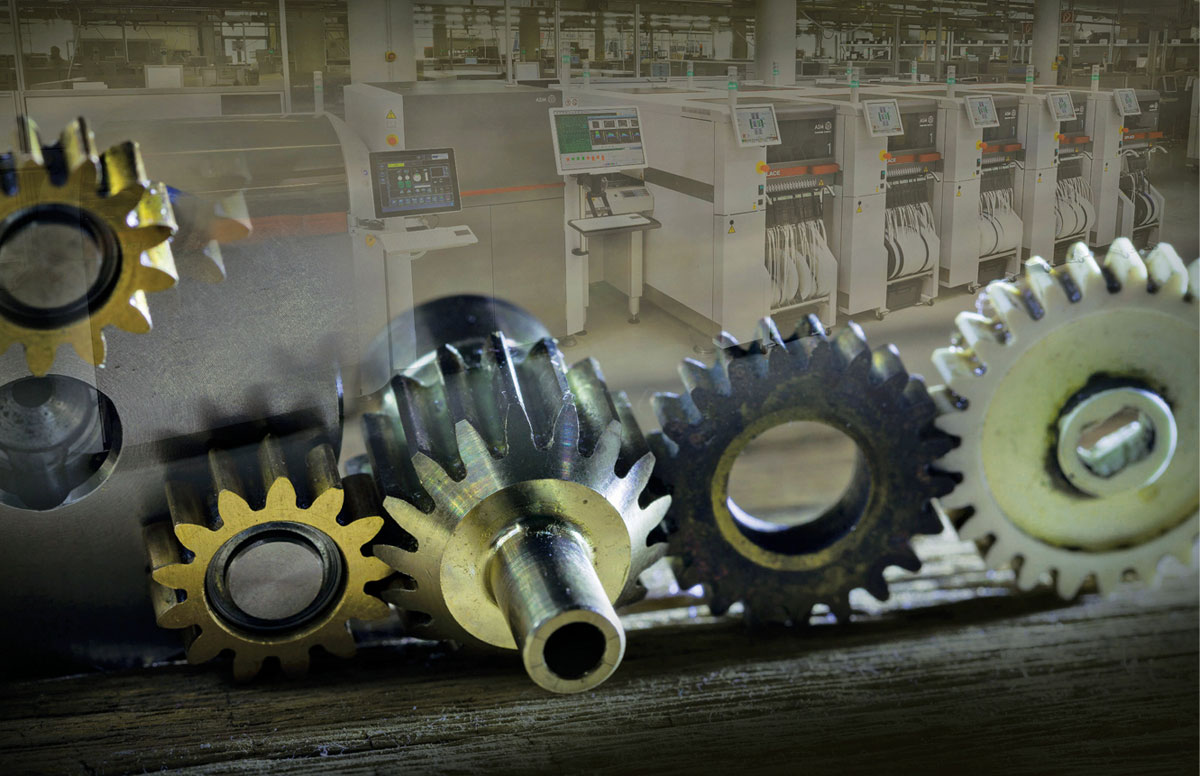
The Ministry of Environment, Forests and Climate Change has allowed the import of second-hand machines, with a residual service life of at least five years, for use in electrical and electronics manufacturing units. While some industry veterans feel this is a positive move, others have a different viewpoint.
By Baishakhi Dutta
The Ministry of Environment, Forests and Climate Change (MoEF&CC) has stated in its latest notice that second-hand plant machinery with a residual life of at least five years, which can be used for manufacturing electronic and electrical products, will not require explicit permission from the committee monitoring the import of hazardous and other waste.
This gives some breathing space for electronics manufacturing services (EMS) companies, as it makes the investments in their production line more affordable. Surface mount technology (SMT) machines are the biggest investments when starting an EMS unit. Hence, many firms consider investing in good-condition second-hand SMT machines a viable alternative to the costlier new ones.
Spurring domestic manufacturing
At present, depending on the scale of the business and the production targets, the cost of an SMT machine ranges between US$ 50,000 and US$ 300,000. For a startup, this is a massive amount to invest. With the uncertainty of the returns on investment, a lot of thought has to be given to such high expenditure. In comparison, second-hand SMT machines are available at just 30-40 per cent of the price of new machines.
Another option is to buy re-serviced machines. In this case, used machines are taken back by the vendor and stripped down, all the worn out parts are replaced, and the machine is re-assembled. But this process is generally more expensive than purchasing used SMT machines.
Suresh Nair, director, Leaptech Corporation, believes that the main reason customers look for used machines is to keep the capital investments low. Also, some companies look for machines for a small, short-term project, which may run for only a few months.
Praveen Madaan, country head – India (SMT Division), Juki India Pvt Ltd, says that Indian companies are facing tough competition from Chinese companies when it comes to the end product price. “Chinese companies can offer lower prices due to large scale production. Capital investment in plant and machinery for electronics manufacturing is more or less the same in both countries; rather, it is cheaper in India in some cases for the imported machines.”
Madaan feels that second-hand machinery is a good option for small scale production or for startups, where customers can afford long downtime. However, investing in second-hand machines could turn out to be very expensive in terms of downtime for any new, large scale production facility making good quality products. “In the case of multinational companies, some may already have surplus equipment elsewhere as well as the internal expertise to service and repair second-hand equipment. They will also have networks worldwide to procure the spares required to run second-hand machines successfully,” says Madaan.
Alok Gupta, director, Prosem Technology India Pvt Ltd, states that the import of pre-owned machinery can help in reducing the overall cost of setting up the plant. “In India, the cost of capital is very high due to the high interest rates, so any step that lowers the cost of setting up a plant, helps the industry,” says Gupta. He adds that since there are not many domestic SMT equipment manufacturers, most of the SMT machines are being imported.
Until now, handset and other component assembly and manufacturing units had to wait for a long period to receive the permission from the committee monitoring the import of second-hand equipment. The new regulations from the MoEF&CC have done away with these hassles. Companies now just need to submit the necessary documents, and can import the machinery used for manufacturing electronic and electrical products without any further permissions.
So could India becoming a dumping ground?
Soni Saran Singh, executive director, NMTronics, expresses his concerns about India gradually becoming a dump yard of used Chinese machinery. “The cost of capital equipment is highly competitive and right now, most equipment are being manufactured in China, Japan, Korea and Taiwan. The end user price is more or the less same in China as well as in India,” explains Singh.
Singh believes that the import of used machines is actually a step backwards for India. “On the one hand, the government wants to boost electronics manufacturing, yet on the other hand, it has permitted the import of older technologies. This won’t help the country move forward. Most leading equipment manufacturing companies have a manufacturing base in China since the demand is very high there. A similar policy, encouraging global equipment makers to begin manufacturing in India, should be formulated by our government. By allowing the import of used machinery, the government is actually favouring the Chinese companies, which are dumping their machines in India,” says Singh.
Aditya Ratnaparkhi, executive director, EMST Marketing Pvt Ltd, expresses similar concerns, stating that one of the main issues related to allowing the import of second-hand machinery is that often such markets become the dumping grounds for developed markets to get rid of their outdated equipment. He says, “At present, when technology is advancing at a rapid pace, such decisions often result in outdated and end-of-life equipment being imported in the country. Often such equipment does not adhere to industry standards or specifications, or to safety and environmental standards. Power consumption also is an issue, as these machines are not equipped with the latest energy-saving features.” He also worries that such machines are often dumped in emerging markets and thus sold at much cheaper rates, which tends to hurt the domestic manufacturers of capital equipment.
Rajoo Goel, secretary general, ELCINA, shares his concerns about how this move by MoEF&CC will affect the domestic manufacturers of such equipment. He says, “This step has been taken to allow the import of capital equipment for ESDM manufacturers at a competitive cost. There is a safeguard in this, which says that the minimum productive life of the equipment should be five years so that sub-standard equipment is not allowed into the country under this provision. However, the key to protecting the interests of the domestic capital equipment manufacturers is not to allow the import of equipment that is already being manufactured in India.”
| The industry speaks “India should not become a dump yard of older, used machines. The government should encourage these equipment manufacturers to set up their manufacturing bases in India.” — Soni Saran Singh, executive director, NMTronics India Pvt Ltd “The import of second-hand machines is good as long as they are in good condition and have a long residual life.” — Suresh Nair, director, Leaptech Corporation“Overall, it is a positive step but it should be restricted to a fixed time period, say, for three years, till the domestic industry gets established.” — Rajoo Goel, secretary general, ELCINA“While making such policies, the government of India needs to find a balance between ensuring that the interests of domestic capital equipment manufacturers are not harmed and maintaining fair competition.” — Aditya Ratnaparkhi, executive director, EMST Marketing Pvt Ltd“The initial cost could be lower but running costs will be higher. Machine downtime will be higher.” — Praveen Madaan, country head – India (SMT Division), Juki India Pvt Ltd “The import of pre-owned equipment is a welcome step. It allows many new fringe players to have their own setup and increases job creation.” “An opportunity to scale up domestic electronics manufacturing is emerging due to such government initiatives. We should hence encourage this move.” |
The pros and cons
When asked about the quality of the imported production equipment, Singh says that this is a very subjective matter, and depends on the user. “The older machines will have frequent breakdowns, but this may not matter for some companies. A company like NMTronics is willing to extend long-term credit for the purchase of new capital equipment,” he adds.
Supporting Singh’s view, Madaan says, “Currently, second-hand machines are being imported. Usually, they have very limited warranty or no warranty at all. Local service and support for old models is also limited, and imported spare parts are not easily available.”
Nair’s view on the development, however, is totally different. “The import of second-hand machinery was never an issue, for these have been imported regularly for a very long time. The difference now is that the machinery’s life and residual value has to be assessed by chartered engineers and duly approved by the customs department. The assessed value stands as the final figure for duty calculation, irrespective of the invoice value,” says Nair.
Overall, a welcome move
One of the major drivers of this initiative has been the growing number of domestic mobile handset manufacturing units. The Indian Cellular Association (ICA) has been highlighting the challenges faced by various handset manufacturers and brands when investing in such capital equipment.
India’s domestic handset and component equipment manufacturing plants have multiplied from just two in 2014 to over 120 today – a major achievement for the domestic manufacturing ecosystem. For better cost-efficiencies, these units can look for second hand machinery rather than new equipment. With the import regulations eased, India can look forward to even more manufacturing units being set up in the near future.
Vinod Sharma, managing director, Deki Electronics, says this is a step in the right direction. “Most of these capital goods are special-purpose machines which are not being made in India. The scale of our operations is not yet large enough to encourage local manufacturing of these machines,” says Sharma.