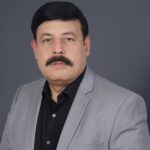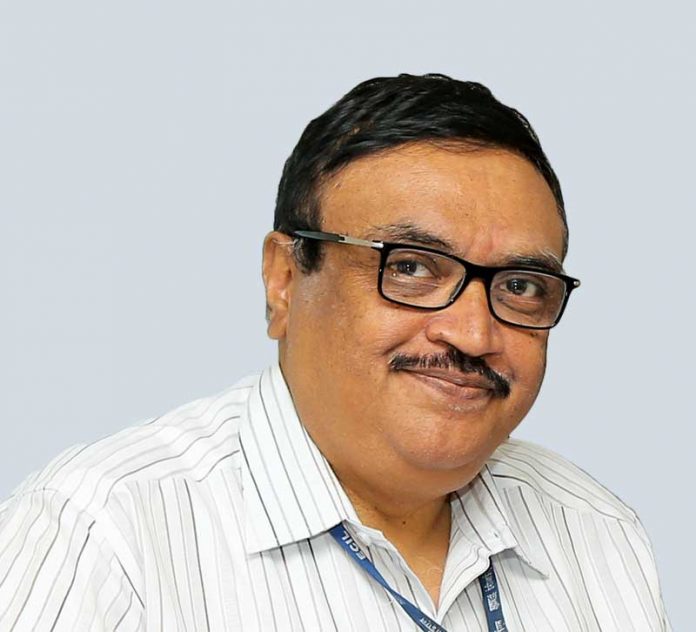

Defence is a core sector that drives the growth of other industries. Even in the developed countries, the first technology breakthroughs are often in defence, and the benefits from them subsequently permeate to other sectors. In India, we have ignored the defence manufacturing sector for a while now, but with the participation of the private sector and OEMs, we are starting to work with developed countries to improve our technological prowess. To understand this scenario better Ankita K.S. from the EFY Group talked with Utpal Sen, head-strategic electronics division, Electronics Corporation of India Limited (ECIL).
EB: How would you define the growth of the Indian defence electronics industry today?
This industry is at the threshold of a new era and its growth is going to be multi-fold. This growth is expected to be tremendous in the future, with the infrastructure that is being created by the government and the other industries today. We have well-trained people in India, the industry is showing interest and all the required policies are in place. Now, there are only some directives related to budgets that are pending from the government, and once these are in place, there is promising growth ahead.
EB: What are the major challenges in this industry?
The major problem earlier was the need for multiple approvals; the private sector especially did not have the resources. Today, with the strategic partnership model, we can initiate the technology transformation of the private sector too. Apart from this, one major problem prevalent across India is that while we do bring in modern technologies, we tend to stick to the basic one even while the technology improves, and soon we are forced to import the latest again. This attitude needs to be changed.
EB: What is India’s market potential when it comes to defence?
The need for defence electronics is huge in India and currently, we are importing most of what we require. Our needs alone are so vast, that when we start producing electronics on our own, the Indian market itself would prove to be good enough for domestic manufacturers. Though our government is in talks with countries like Vietnam and Indonesia for exports, there are certain missiles and equipment that we can never export.
EB: Today, MSMEs are the main revenue generators. How do you think they will grow over the next four to five years?
This will depend on the government orders. If orders start flowing in, then certainly, the MSMEs will automatically create more employment. MSMEs are the main producers of electronics in India. We can give them the technology and they will produce the sub-systems. Going forward, there will be big orders that MSMEs will not be able to execute themselves due to cost constraints; so they will benefit by working with the government and the bigger companies in the private sector.
EB: What are the main policies that have come out in the last one year and what are the major challenges in their execution?
One major policy is related to strategic partnerships, which is slowly taking shape. There is a need for further liberalisation in the foreign direct investment (FDI) policy too. The current FDI policy allows companies from other nations to invest up to 26 per cent in the Indian firm, but the major challenge here is that the foreign companies would like to sell their products but not share their technology. We are asking for the technology too, which is, in fact, the right policy in order to avoid risks later. This is slowing multinationals from investing here as they are not ready to share technology. I would say that even if the process is slow, let it move at its own pace and let’s not compromise on what we want.
EB: How is the industry-academia partnership between ECIL and various institutes evolving and has it proved to be beneficial?
At ECIL, we are working with IIT Hyderabad, IIT Delhi and IIT Bombay. Right now, the way we work at ECIL is that if somebody develops the technology, we take the responsibility of manufacturing and marketing it. Whenever we have difficulties with some algorithms or code, we go to the IITs and they help us in the modelling. We have also identified certain institutes and given them a few critical products to work on. We do import sub-systems for them, if required, and the product is designed and built by the institutes. This partnership is very beneficial for the defence industry as well as for the students.
EB: What are the modern technologies that you are working on at ECIL today?
One is software defined radio (SDR) that we are working on with PRC (Professional Regulation Commission) in collaboration with many other partners. Another major technology we are working on is programmable logic controllers (PLC), which we had already produced but are refining it further for ISRO. We work with engineers from ISRO and design these controllers together. Now, all ISRO’s satellites have our PLCs, and we make sure nobody can place any bug inside these.
EB: What would be your advice to upcoming engineers?
The young engineers of today should look at something other than IT and software. There are so many other interesting fields like microwave, radio frequency and semiconductors. If more people start working in these fields, India can become one of the greatest countries. The main problem I have noticed today is that students do not love core engineering, but feel writing programs and software is the only thing that has any future. That mindset needs to be changed. There are a lot of opportunities in defence electronics if you know your basics well and are determined to do something for your country.