


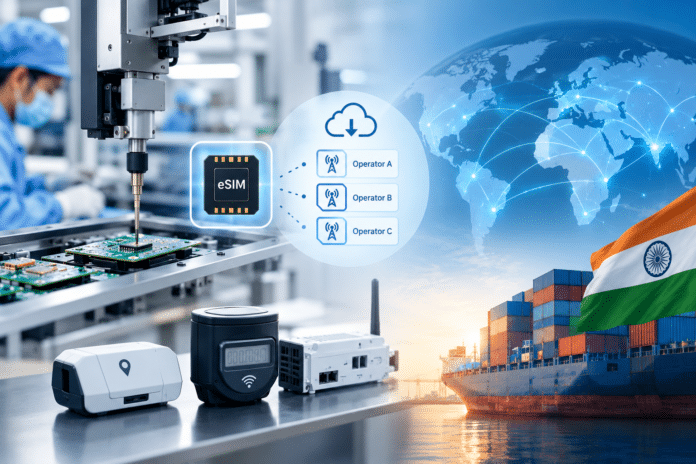

Could factory-stage eSIM provisioning give Indian manufacturers a simpler way to manage connectivity for overseas markets?
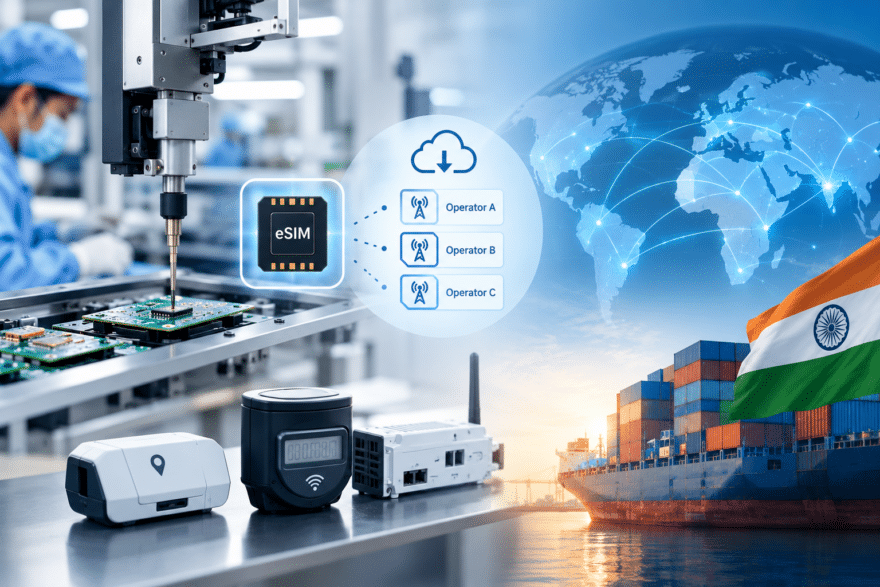
In an exclusive interaction with EFY, Sachin Arora, Head of Connectivity and IoT for India at Giesecke+Devrient (G+D), explained how in-factory profile provisioning (IFPP) allows manufacturers to prepare compatible devices with eSIM profiles during production. These profiles contain the network subscription information needed to connect to a mobile network.
For export markets, this can reduce the need to fit different physical SIM cards for different markets. Once a device reaches its destination, it may be able to download a compatible local mobile network operator’s eSIM profile remotely, allowing connectivity to be changed without physically replacing a SIM card. This can be useful for products such as vehicle tracking units and smart meters that remain in service for years.

“If you have an eSIM in the device, you just export it, and whoever is buying or using it can download any local subscription,” said Arora.
The GSMA, the mobile industry association, has developed specifications for integrating IFPP into manufacturing. SGP.41 sets out the architecture and requirements for in-factory profile provisioning, while SGP.42 describes its technical implementation.
Stay tuned for the full interaction with Arora to explore how factory-stage eSIM provisioning could support India’s connected-device exports and the opportunities for expanding SIM-module packaging and assembly in the country.

