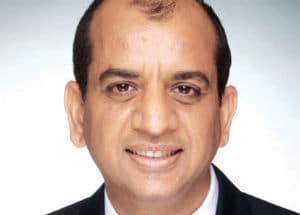

 May 15, 2015: From being just a liaison office, Renesas Electronics India Pvt Ltd has taken a step forward by setting up an Indian entity. The company now plans to focus on training, product design and development, and marketing. Sunil Dhar, managing director, Renesas Electronics India Pvt Ltd, shares the company’s roadmap in a conversation with Gunjan Piplani of Electronics Bazaar
Double digit growth in India
EB: How is the Indian subsidiary of Renesas progressing? Are things moving as planned, better than planned or have some unforeseen challenges come up?
Renesas’ Indian operations have evolved from a liaison office prior to 2010, to the establishment of a branch office in 2010, and then a permanent Indian incorporated entity in 2014. This evolution is the result of the ‘India Vision’ blueprint we had laid out for our business expansion in India.
Setting up a wholly-owned subsidiary has allowed us to expand our footprint to accelerate business growth, and we are glad that things are progressing as per our plan. We have four offices now in Bengaluru, Delhi, Mumbai and Pune. We’ve been enjoying double-digit year-on-year revenue growth from the Indian market. Our microcontroller, analogue and power products and related solutions are in demand not only among small and medium enterprises (SMEs) but also among Indian and global multinational companies (MNCs) based in India.
EB: How have your partners and customers reacted to the setting up of the subsidiary? Have their expectations gone up, thus raising the bar for you?
The response has been overwhelming. We have travelled extensively in the past year to various Tier I and Tier II cities, sharing our plans and our commitment with our key supporters, and the message has been very well received.
Setting up an Indian entity has definitely raised the expectations of our partners, and we are progressing in the right direction to satisfy them.
There are certain limitations within the regulatory operational framework regarding a branch office set-up. So in order to overcome these limitations and instil higher levels of confidence among our customers, we incorporated a permanent establishment here.
EB: With respect to India, which is the hottest region? How would you rank the regional markets?
It is very hard to pinpoint which one region is the ‘hottest’. If I look at the domestic customers, they are pretty much spread across the map. However, for our MNC customers and their design centres, the market is clearly leaning towards the south. Regarding the automotive ecosystem, it was stronger in the west earlier, then gained momentum in the north and is now picking up in the south.
EB: What role has the Singapore office played during the incorporation of the Indian entity?
We are transferring most of the Indian business-related operations to India now. However, we will continue to work as a team with the Singapore office for some more time because it has been the headquarters for this region for a long time and there is a lot of embedded knowledge in that office—in both the engineering and business domains. So it will support the Renesas India office for some more time.
Product development and training
EB: How has the decision-making power of Indian design houses changed over the years?
I can vouch for the fact that design companies in India have changed distinctly from having very little power, to enjoying a medium level of decision-making powers, today. I can say with confidence that in another 10 years, there will be many design houses taking care of the full product development cycle here.
EB: When are we going to see the launch of the Pune development centre? And is there any benchmark that you can share for the Bengaluru centre?
Renesas understands the unique needs of emerging markets where feature requirements are often unique in certain ways, and price points are one of the most competitive globally. In order to expand Renesas’ footprint in markets like India, we are establishing an India Solutions Centre, which will engage with the Renesas headquarters to develop new ‘Best Fit’ products and reference solutions specifically for India.
The process of establishing a solutions centre in Pune and Bengaluru has already begun. The foundation stone has been laid by setting up an automotive solutions design laboratory in our Pune office and the work is in progress for the Bengaluru centre. Our goal is to become a trusted semiconductor solutions provider in India.
EB: Will the business model for your design centre be based on a ‘pay-for-a-design’ model, or will it be free, with a long-term business plan attached to it?
While our core interest remains the marketing of Renesas semiconductors, the models will be decided on a case-by-case basis to ensure that it is a win-win situation for each involved party and addresses the needs of each business situation. The final ownership of these reference solutions will anyway rest with our customers, as they need to embed the designs into their own ecosystems of design, qualifications, validation, quality and manufacturing processes.
EB: Is there a plan in place to hire engineers for these solution centres?
Hiring will be ramped up gradually in line with the solutions roadmap. We intend to start with Pune, for automotive design. The designers will collaborate with customers to ensure the best fit not only on specifications but also price points, by finding the ‘best fit’ products and technology. If we don’t have the competence in-house, we intend to collaborate with independent design houses by setting up win-win business models with them. We are looking at a base team of about 10 engineers to start with. The aim is to critically enable our customers to build the solution that they need for their future roadmap.
EB: Can you share with our readers the details or plans regarding Renesas Tech-Days. Will it happen in 2015 too?
Tech-Days and marketing seminars are an integral part of our long term marketing strategy. We have been doing a lot of events across cities and where our customers are located to showcase our latest technology, products and solutions, as well as the strength of our team and the entire ecosystem.
These events are a good learning experience for our existing and prospective customers. They also help us learn more about what the market needs and what development activities are happening at our customers’ locations. As shared earlier, we also plan to bring the Global Developers Conference, which is usually held in USA every alternate year, to India in the 2015 fiscal year.
EB: Renesas is traditionally positioned as a microcontrollers (MCU) firm. But you seem to have a whole portfolio of power management components and more. Can you shed some light on these ‘other’ devices?
We are very strong in power management components, thanks to the merger with NEC, especially in the insulated gate bipolar transistor (IGBT) segment. Hence, for applications like motor controls, not only do we offer some of the MCUs but also power management components, thus providing a more comprehensive solution to our customers.
The road ahead
EB: After setting up the Indian subsidiary, how do you plan to engage your customers and the community in India?
Our approach to the market is two-pronged. First, we go over to the original equipment manufacturers (OEMs) and customers, and so on. We have also done ecosystem promotions like the GR-Sakura. We will continue on that path and there will be a progression towards the hobbyist communities and university students. We will of course look at customers in Tier 1, Tier 2 and Tier 3 cities, and also at integrators.
As we expand our market share at a global level, there will be a need to fill all the design slots with qualified engineers who understand Renesas.
EB: With the setting up of the India office, is there any change in expectations from India? Will India remain important with respect to sales that happen here, or for sales that happen globally due to design wins in India?
There are two aspects to look at. First, the solutions that will enable Indian customers to sell their products abroad. This is definitely happening with our customers who are exporting their products. The other part is the ‘Best Fit Solutions’, which we will bring to customers in geographies outside India. For instance, we have a two-wheeler working group that is focused on India at this moment but also looking at possibilities in ASEAN and North Asia.
Added to the above are the designs in India that have evolved through our multinational customers here, which may give us revenues in other geographies.
EB: What are the major initiatives that the Indian subsidiary is planning to undertake in the next 12 months, besides setting up the Bengaluru centre?
There are many activities planned for both automotive and non-automotive business units over the next 12 months. These include marketing seminars, road shows, presentations, intensive training for our field engineers, and also contests and internships for university students.
Over the past six months, we did a multi-city road show for our non-automotive microcontrollers. This was a great experience in terms of understanding customer requirements and showcasing our product road map.
For the first time, we are announcing the Renesas Summer Internship under the University Programme in June 2015. This will increase the level of industry-academia interactions, and we will get a chance to showcase our technology leadership and expertise to budding engineers.
We are also planning a Developers Conference in 2015, which will be one of our most advanced and intense training sessions. During this event, the market can look forward to some exciting introductions on technology, not seen in the past.