China Initiates Antitrust Probe Into Nvidia For Violating Anti-Monopoly Laws

The antitrust probe into Nvidia by Chinese authorities adds uncertainty to the company’s operations and growth in one of its most significant markets.

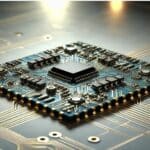
China’s State Administration for Market Regulation has initiated an antitrust investigation into U.S. semiconductor giant Nvidia, focusing on potential violations of China’s anti-monopoly laws and commitments made during Nvidia’s $6.9 billion acquisition of Mellanox Technologies in 2020. This move comes amid escalating tensions between the U.S. and China over semiconductor technologies. 

The U.S. has recently tightened export controls, restricting China’s access to advanced AI chips and chipmaking equipment. In response, China has implemented measures such as halting shipments of critical materials essential for chip production to the U.S. 

- Advertisement -

Nvidia, a leading supplier of AI chips, has been significantly impacted by these U.S. export restrictions, compelling the company to offer modified versions of its products to the Chinese market. Despite these challenges, Nvidia’s products remain integral to major Chinese tech companies, contributing substantially to its sales.

In 2019, Nvidia announced its acquisition of Mellanox, a move that promises significant advancements in technology. By April 2020, China’s market regulator granted approval for this strategic deal. However, this approval came with an important stipulation: Nvidia must supply its cutting-edge graphics processing unit (GPU) accelerators, as well as Mellanox’s high-speed network interconnect equipment and related software, to the Chinese market. This supply must adhere to principles that are fair, reasonable, and non-discriminatory, ensuring a balanced playing field for all stakeholders involved.

- Advertisement -

Nvidia’s cutting-edge chips are crucial in the AI era, but the company was restricted from selling its A100 and H100 GPUs, the key components for AI models—to customers in China in August 2022. In response, Nvidia creatively modified those designs to create the A800 and H800, effectively bypassing those restrictions. On the other hand, Huawei is swiftly gaining ground with its alternatives. Earlier this year, it provided samples of the Ascend 910C processor to major Chinese server companies for testing, bringing it closer to launching the upgraded 910B, which it claims rivals Nvidia’s popular A100.

The statement from the China Semiconductor Industry Association (CSIA) reflects escalating tensions between the United States and China in the semiconductor industry, highlighting geopolitical and economic rivalries. The association’s call to shun U.S. chips, even involving prominent members like Nvidia Technical Service (Beijing), signals several potential implications.

The antitrust probe into Nvidia by Chinese authorities adds uncertainty to the company’s operations and growth in one of its most significant markets. If Nvidia is found in violation of antitrust laws, Beijing could impose significant fines, impacting its profitability. Chinese regulators could force Nvidia to unwind certain acquisitions if they are deemed anti-competitive, affecting its market presence and strategy in China. According to the experts, additional regulatory measures might limit Nvidia’s ability to operate freely, such as restrictions on market access or business practices.

- Advertisement -

Industry's Buzz

Shell

Aditya Birla Renewables to acquire Shell-backed Sprng Energy in $1.8 billion clean energy deal

0
The acquisition will add 5 GW of renewable capacity to Aditya Birla Renewables' portfolio, strengthening its position in India's rapidly expanding clean energy market. Aditya...

Ather Energy to bring out the first mass-market electric scooter on August 29,2026

0
The new scooter, built on Ather's next-generation EL platform, marks the company's entry into the mass-market electric scooter segment with a focus on affordability,...

Aimtron Electronics Partners with Nanta Tech to Manufacture Allbotix Robotics

0
The agreement marks a strategic shift for Aimtron from conventional EMS offerings toward specialised manufacturing for Industry 4.0 applications Aimtron Electronics (India) Limited has entered...
Semiconductor Chip (Representational Image)

Global chip equipment market set to reach record $165.9 billion in 2026: SEMI

0
Rising AI investments and demand for advanced memory and chipmaking technologies are expected to push global semiconductor equipment spending to new highs through 2028. Global...
Hero MotoCorp

Hero MotoCorp to invest $116 million in Ather Energy, strengthen EV partnership

0
The fresh investment will raise Hero MotoCorp's commitment to Ather Energy as it deepens its presence in India's fast-growing electric two-wheeler market. Hero MotoCorp has...

Learn From Leaders

Raja Rajeev Kumar, Mentor at IIT Startups, Chairman of the Board of Trustees, LaxmiRamaVarma Holdings International, and Founder and CEO, ChromoSoul Ventures

“Build Strong Startups, and Funding Will Follow”- Raja Rajeev Kumar, IIT Startups, LaxmiRamaVarma Holdings...

0
While AI and software startups attract attention and capital, electronics ventures often struggle for both. Raja Rajeev Kumar from IIT Startups, LaxmiRamaVarma Holdings International...
Athil Krishna, Founder & CEO, iHUB Robotics

“We are building humanoid robots that can replicate human tasks.”- Athil Krishna, iHUB Robotics

0
This Indian startup is building humanoid robots from scratch. Athil Krishna of iHUB Robotics speaks with Nidhi Agarwal from Electronics For You about the...
Sandeep Patil, CTO, Yudu Robotics and RedNerds, India

“Meaningful learning happens when you start small and build through hands-on experience.”- Sandeep Patil,...

0
As robotics education shifts toward hands-on learning, integrated hardware-and-software platforms are becoming essential. Sandeep Patil from Yudu Robotics and RedNerds discusses with EFY's Nidhi...
Shri Amitesh Kumar Sinha, Additional Secretary, MeitY, and CEO of ISM

“Nodes Above 28nm Should Enter Commercial Production By 2028, 28nm Expected By 2029” –...

0
Launched in 2021 and operationalised in 2022, the India Semiconductor Mission (ISM) is driving India’s ambition to build a self-reliant semiconductor ecosystem spanning manufacturing,...

HYKON: Building for Energy Markets Before They Exist 

0
As India’s power ecosystem undergoes rapid change, innovators are being pushed to rethink how energy is generated, stored and delivered. In a sector where most...

Startups

ThermoPod

Chiltier’s Personal Wearable Cooling System Based On The Peltier Effect

0
An India-based startup is turning thermoelectric technology into a portable, personal cooling system, delivering real-time body-temperature control through wearable devices—no air-conditioners, no large infrastructure,...
Athil Krishna, Founder & CEO, iHUB Robotics

“We are building humanoid robots that can replicate human tasks.”- Athil Krishna, iHUB Robotics

0
This Indian startup is building humanoid robots from scratch. Athil Krishna of iHUB Robotics speaks with Nidhi Agarwal from Electronics For You about the...
Semiconductor

Why Capability, Not Capacity, Is Driving India’s Semiconductor Investment Story

0
What separates semiconductor companies that attract funding from those that do not? As investor priorities evolve, proprietary IP, financial discipline and scalable business models...
Dhaval H Kotecha, Managing Director at RapidRadio

“Most Companies Import RFID Hardware. We Chose to Build It in India.” – Dhaval...

0
RapidRadio is driving India’s automation push with indigenous RFID readers and OEM modules. How did it turn RFID into the unseen engine behind tolling,...

The Innovator’s Paradox

0
From the warm intro tax and familiarity trap to the innovation penalty, hardware tax, and SaaS-blind capital pool, inventors must navigate a series of...