This past week marked a major win for the global electric vehicles market. PepsiCo, a brand normally associated with beverages and snacks, recently became an exemplary champion of the EV cause, when it made the biggest public pre-order of Tesla Semis till date.
Given that heavy-duty vehicles involved in freight transportation currently contribute over 40% of exhaust emissions, PepsiCo’s decision to procure 100 electrically-powered big rigs represents a major positive step towards mass adoption of electric vehicles and other cleaner alternatives to environmentally-damaging petrol and diesel vehicles.
Let’s look at the recent developments from the world of electric vehicles:
- Volvo to sell only hybrid and electric cars in India after 2019
Swedish automobile manufacturing giant Volvo has announced plans to only sell hybrid, electric and battery-powered cars in India after 2019. The move is in line with the company’s vision to transition to cleaner alternatives to petrol and diesel-based vehicles globally.
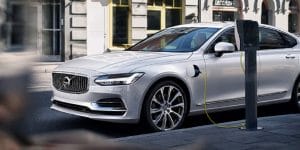
As per Inc42, Volvo is aiming to sell over 1 Mn electric vehicles worldwide by 2025, with India being a major target market. Elaborating further, Volvo Auto India MD Charles Frump said recently, “We must follow the same strategy in India and if we would want to be the leaders here when it comes to electrification, then we have to be the first in line. Globally, by 2019, every new product will either be full battery electric, hybrid or plug-in hybrids and we are certainly going to do the same in India.”
“This was a part of the global strategy. We were the first mass automotive company to say that post 2019, it will be all-electric vehicles. That is ahead of the pack and that promise goes for India as well. The advantage we have is that the entire product range at present can be converted to electrified cars which means, the volumes of electrified luxury cars will be heavily skewed towards Volvo,” Frump added.
- Is Xiaomi gearing up to sell EV in India?
Joining the group of companies that are working to enhance the availability of electric vehicles in India is an unlikely name, Xiaomi. Famous for its smartphones and other gadgets, this Chinese company has adopted an expansion roadmap revolving largely around plans to sell electric vehicles in the country.
As per a recent regulatory filing made with the Registrar of Companies (RoC), Xiaomi is looking to potentially sell “all types of vehicles for transport, conveyance and other transport equipment, whether based on electricity or any other motive or mechanical power, including the components, spare parts.”
Declining to shed light on the reasons behind the company’s sudden interest in electric vehicles, a spokesperson for Xiaomi said to Inc42, “We have expressed our interest to bring several of our non-smartphone products to India multiple times, but only after ensuring that we have picked the right product and customised it to India’s needs.”
- ICF partners with E-Gle to launch EVs in the country
Not-for-profit organisation, India Centre Foundation (ICF) has announced a partnership with Japanese EV manufacturer e-Gle to launch electric vehicles across passenger, public passenger and larger mobility segments in India. Through the alliance, ICF will gain access to e-Gle’s in-wheel motor-based EV technology.
Commenting on the newly-forged collaboration, e-Gle President and CEO Hiroshi Shimuzu said, “We are delighted to be a part of the National Electric Vehicle Initiative (NEVI). We believe that India’s mobility transformation presents an enormous economic opportunity, innovative business models and supportive policy frameworks that can help make India a global hub for manufacturing electric vehicles and their components.”
NEVI, for the uninitiated, is an initiative aimed at faster adoption of electric vehicles in India. The initiative is being discussed at the ongoing Global Partnership Summit (GPS) 2017 in Delhi, reported Inc42.
- Govt. nod mandatory before OEMs can supply electric buses under FAME
The Indian government has ordered original equipment manufacturers (OEMs) to seek the approval of the Department of Heavy Industry prior to availing incentives for supplying electric buses under the FAME India scheme. Aimed at promoting the use of EVs in multimodal public transport to help lower pollution levels in urban areas, the scheme offers incentives of up to $451 (INR 29,000) one electric bikes and $2,146 (INR 1.38 Lakh) on cars to suppliers.
The decision to make government nod mandatory, as per sources, is geared towards facilitating the smooth rollout and management of incentives availed under the FAME India scheme.
An official from the department said, “All proposals for supplying electric buses by OEMs registered under FAME India Scheme shall be first brought to the notice of the Department of Heavy Industry in writing. Once a go-ahead is given by DHI, the OEMs will become eligible for FAME incentives. OEMs (original equipment manufacturers) are, therefore, requested to follow the above instructions and await the directions from DHI before accepting any order where it is proposed to avail benefits for fully electric buses under the FAME India scheme”, reported Inc42.
- Maruti to benefit from parent Suzuki’s EV tie-ups
In the last several months, Japanese automotive giant Suzuki has doubled down in its efforts to gain a stronghold of the Indian EV market. In line with this goal, the company has partnered with a number of other players, including Denso and Toshiba, both of which would be supplying the core technology and fuel cells needed for Suzuki to manufacture lithium-ion batteries in its factories within the country.
Last month, it joined hands with Toyota to launch EVs suitable for Indian traffic and road conditions by 2020. However, the company is trying to protect its Indian subsidiary from the risks involved in manufacturing electric vehicles, while also allow it to reap the benefits directly. As per sources, in all of these partnerships, Maruti Suzuki India does not have any direct equity participation, which means that it will likely not be affected if the parent entity runs into losses or any other difficulties.
Elaborating further, Maruti Suzuki Chairman R. C. Bhargava said, “The whole tie-up between Suzuki and Toyota is specifically for the Indian market. Hence, it is solely going to benefit Maruti. The Gujarat plant is also operated (and owned) by Suzuki but it has benefitted only Maruti.”
While the electric vehicles market remains a lucrative destination for corporates and startups like Volvo, Xiaomi and Suzuki in India, there are quite a few challenges that need to be overcome to make EVs ready for mass adoption.
Manufacturing electric vehicles domestically, for instance, comes with the hurdle of high costs. Similarly, the production of batteries is largely an expensive affair. To be able to mitigate these challenges, the Indian government will have to focus its efforts on facilitating technological disruption. If need be, the government must also consider banning the production and sale of fossil fuel-powered vehicles entirely like France and Britain.