Domestic Drone-Makers Want PLI Expansion

Garuda Aerospace CEO, Agnishwar Jayaprakash, suggested that PLIs should be accompanied by service-linked incentives.

The drone industry asks for an expansion and increase in the budget of the production-linked incentive (PLI) scheme for drones, according to the chairperson of the Steering Committee for Advancing Local value-add and Exports (SCALE). SCALE operates under the Ministry of Commerce and Industry and is chaired by Pawan Goenka, who is also the chairman of IN-SPACe, the regulator of India’s private space industry.

The PLI scheme for drones is small but has been well-received by companies. The primary request from the industry is to broaden the scheme to allow more participants and to increase the financial outlay. This sector predominantly benefits startups and micro, small and medium enterprises (MSMEs). The idea is fuelled by the feedback from a stakeholder meeting on PLI schemes organised by the Department for Promotion of Industry and Internal Trade. The meeting involved over 1,200 stakeholders from 14 different sectors.

During the fiscal year 2022-23, the Ministry of Civil Aviation allocated Rs 30 crore under the PLI scheme to beneficiaries for drones and drone components. Introduced in September 2021 to support indigenous drone manufacturing and services, the scheme offers a total incentive of Rs 120 crore over three financial years, nearly doubling the total revenue of all Indian drone manufacturers in 2020-21.
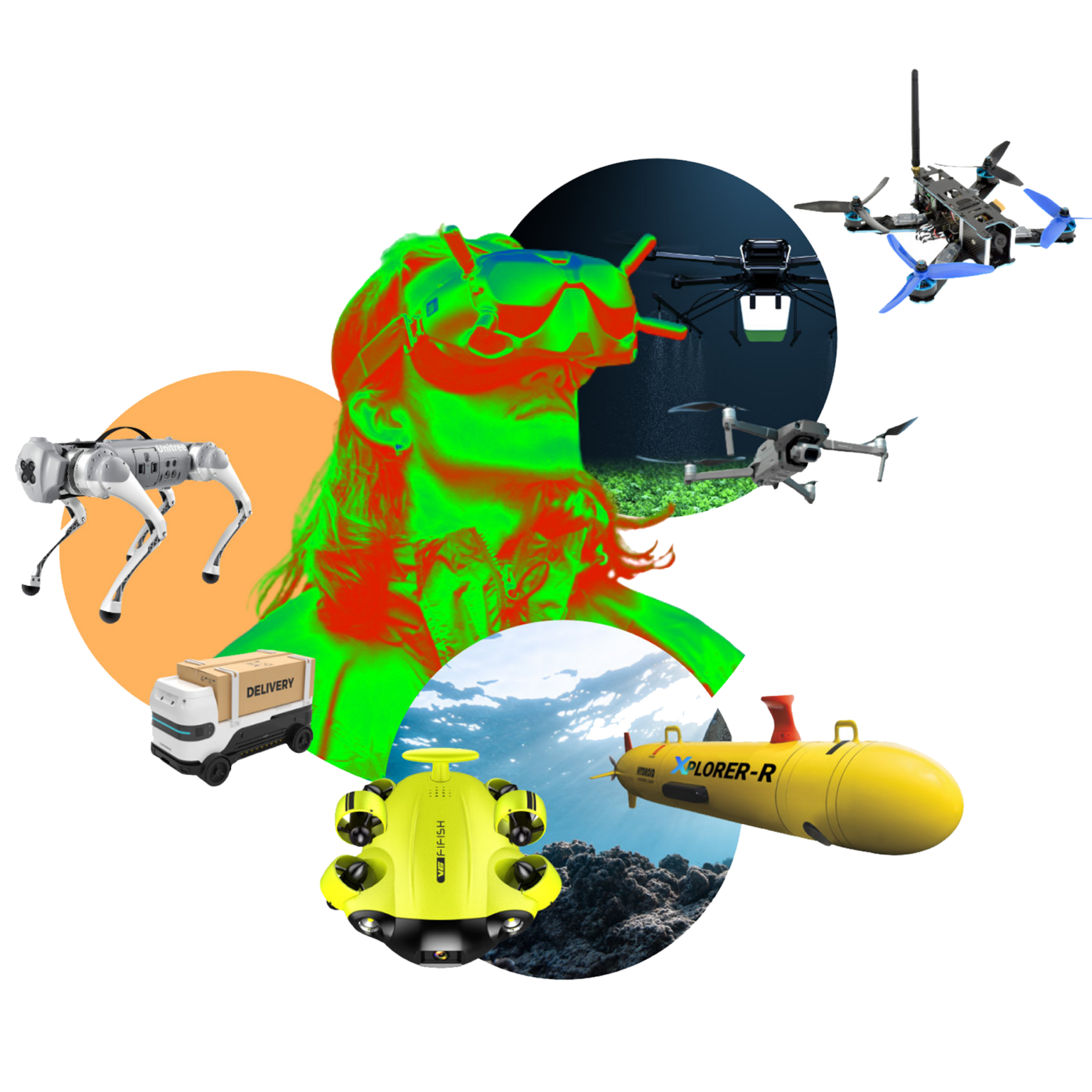
drone
Representational image from Drone Vidya

The scheme provides a uniform PLI rate of 20% for its duration, a move described by the government as “exceptional treatment” for the drone industry. Eligibility criteria for MSMEs and startups are set at minimal annual sales turnover, and the scheme also covers developers of drone-related software. A provisional list of 23 PLI beneficiaries, including 12 drone manufacturers and 11 drone component manufacturers, was released in July 2022.

- Advertisement -

Vipul Joshi, CFO of ideaForge Technology Limited and one of the 23 PLI beneficiaries, emphasised the scheme’s role in evaluating value addition and promoting local development within the industry. An increase in the scheme’s budget from Rs 120 crore would help reduce import dependence, enhance domestic manufacturing of drones and components, and generate job opportunities in the sector.

Agnishwar Jayaprakash, CEO of Garuda Aerospace and also a PLI beneficiary, highlighted the need for checks and balances to prevent substandard products from benefiting from the scheme. He suggested that production-linked incentives should be accompanied by service-linked incentives, noting the discrepancy between the 35 to 40 DGCA-licensed drone manufacturers and the 3.5 lakh drone users in the country.


- Advertisement -
Loading form…

Industry's Buzz

Intex Unveils Expansion Plans for its Portfolio

0
The announcement comes amid strong growth in Intex’s Consumer Durables business Intex Technologies has recently unveiled its plans to expand its Home Appliances portfolio. The...
Chip Making (representational Image)

Rashi Peripherals Forms Semiconductor JV With Japan’s Restar

0
Backed by record Q1 FY27 earnings, Rashi Peripherals is expanding into semiconductor and embedded solutions through a strategic partnership with Restar Corporation. Rashi Peripherals has...
EV (Representational Image)

Ola Electric Opens Doors To Dealers As EV Competition Intensifies 

0
The EV maker will transition company-owned stores into experience centres while dealer partners drive sales, service and expansion across India.  Ola Electric has overhauled its...

Microchip Technology Sees Strong Q2 On AI Data Centre, Industrial Chip Demand 

0
The chipmaker forecast revenue and earnings above Wall Street estimates, driven by growing demand from AI data centres alongside recovering industrial and automotive markets.  Microchip...
Tata Motors

Tata AutoComp Bets Big On Railways With ₹300-Crore Manufacturing Push 

0
The auto components maker is investing in propulsion and railway seating plants in Pune while targeting orders from Vande Bharat, hydrogen, and high-speed rail...

Learn From Leaders

Gadhadar Reddy, CEO and Founder, NoPo Nanotechnologies

How A Material Thinner Than Human Hair Could Transform EV Batteries And Electronics –...

0
What if a material 200,000 times thinner than a human hair could transform EV batteries, semiconductors, and advanced electronics? NoPo Nanotechnologies is making that...
Raja Rajeev Kumar, Mentor at IIT Startups, Chairman of the Board of Trustees, LaxmiRamaVarma Holdings International, and Founder and CEO, ChromoSoul Ventures

“Build Strong Startups, and Funding Will Follow”- Raja Rajeev Kumar, IIT Startups, LaxmiRamaVarma Holdings...

0
While AI and software startups attract attention and capital, electronics ventures often struggle for both. Raja Rajeev Kumar from IIT Startups, LaxmiRamaVarma Holdings International...
Athil Krishna, Founder & CEO, iHUB Robotics

“We are building humanoid robots that can replicate human tasks.”- Athil Krishna, iHUB Robotics

0
This Indian startup is building humanoid robots from scratch. Athil Krishna of iHUB Robotics speaks with Nidhi Agarwal from Electronics For You about the...
Sandeep Patil, CTO, Yudu Robotics and RedNerds, India

“Meaningful learning happens when you start small and build through hands-on experience.”- Sandeep Patil,...

0
As robotics education shifts toward hands-on learning, integrated hardware-and-software platforms are becoming essential. Sandeep Patil from Yudu Robotics and RedNerds discusses with EFY's Nidhi...
Shri Amitesh Kumar Sinha, Additional Secretary, MeitY, and CEO of ISM

“Nodes Above 28nm Should Enter Commercial Production By 2028, 28nm Expected By 2029” –...

0
Launched in 2021 and operationalised in 2022, the India Semiconductor Mission (ISM) is driving India’s ambition to build a self-reliant semiconductor ecosystem spanning manufacturing,...

Startups

Vervesemi IPs and ICs portfolio

Vervesemi Integrated AI/ML-Based Analogue IP Blocks For Chips

0
An Indian startup is developing semiconductor IP blocks that enable chips to adapt to signal imperfections through real-time AI/ML-driven learning within silicon systems. Most people...

Rapid Radio’s Indigenous RFID Reader Platform That Enables Numerous Applications

0
RapidRadio’s innovation is not another RFID reader but a complete electronics platform that enables manufacturers to develop their own solutions faster and with greater...
Gadhadar Reddy, CEO and Founder, NoPo Nanotechnologies

How A Material Thinner Than Human Hair Could Transform EV Batteries And Electronics –...

0
What if a material 200,000 times thinner than a human hair could transform EV batteries, semiconductors, and advanced electronics? NoPo Nanotechnologies is making that...
Raj Anupam, Co-founder, MCS Cargar with India’s first portable flexible DC fast charger

Shifting EV Charging From Fixed Stations To Flexible Parking Locations- Raj Anupam, MCS Cargar...

0
How can EV charging become more flexible and accessible? Cargar aims to answer that question with portable fast chargers that can be deployed wherever...
Pratap Narayan Singh, Founder Director at Vervesemi

“Our IP is not a block—it is a self-learning signal chain.”- Pratap Narayan Singh,...

0
What if semiconductor chips could learn, adapt and correct their own errors? Pratap Narayan Singh of Vervesemi speaks to EFY's Nidhi Agarwal about building...